




RICHMOND, Va. -- After more than a year of examining problems facing Virginia nursing homes, a state advisory panel has made establishing a minimum staffing standard its top priority as lawmakers prepare to return to Richmond for the 2027 General Assembly session.
The panel was first formed in 2025 under an executive order issued by then-Governor Glenn Youngkin partly in response to CBS 6's investigative reporting on nursing home oversight failures. A version of the body was continued under Governor Abigail Spanberger's administration.
For Susan Daniel Fayad, the debate is personal.
Her mother, a former nurse, recently died after spending the final years of her life in a Henrico nursing facility.
“There were times where she wasn't taken care of the way that she should have,” Daniel Fayad said.
Daniel Fayad said she regularly visited the facility, raised concerns with management, contacted the long-term care ombudsman and filed complaints with the Virginia Department of Health.
She said her experience convinced her that Virginia needs stronger nursing home oversight and more caregivers.
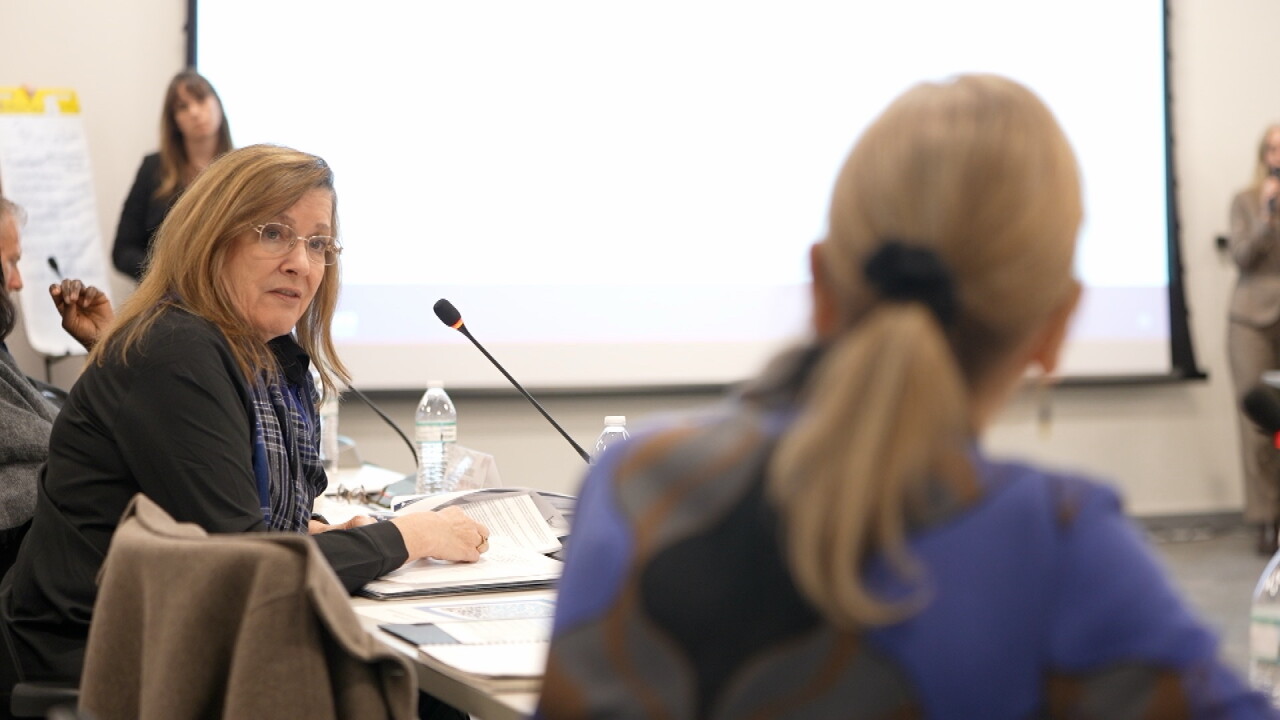
So she attended Wednesday's Nursing Home Oversight Advisory Panel meeting, the final meeting of 2026, to advocate during public comment.
“We need a smaller ratio in terms of nursing to residents,” Daniel Fayad said. “There are a lot of caring nurses, and they can't do it all alone.”
Staffing mandate tops panel's priorities
Staffing has repeatedly surfaced during the panel's work, and Wednesday, members put that issue at the top of their list.
The panel arrived at its priorities after VDH received more than 100 suggestions on improving care and oversight from panel members and state agencies.
Panel members were then asked to evaluate recommendations based on their potential impact and effort required for implementation. During the meeting, members voted on which of the proposals they considered most important.
Establishing minimum nursing home staffing levels finished first, receiving votes from nine out of 12 members. Launching a state-funded program to recruit and train more certified nursing assistants finished second with votes from seven members.
The vote represents a prioritization of proposals rather than final adoption of a specific staffing requirement. Panel members did not settle on a specific staffing ratio or hours-per-resident standard.
One frontline caregiver who attended the meeting said any eventual standard needs to be enforceable.
Tomeka Coley, a certified nursing assistant, described the physical toll of working short-staffed and situations where residents can be left waiting for basic needs.
“The ratio has to be enforced because it is breaking us down,” Coley said. “And to be in a facility where you know somebody needs to go to the bathroom or somebody needs to do something, but you can't do it because you're already in a bunch of mess right here, and you can't get over there.”
Second Virginia study also recommends staffing requirement
The panel's vote comes as a separate state study has also focused attention on nursing home staffing.
In October, the Joint Commission on Health Care released a report that said Virginia performed poorly on certain staffing ratings and should adopt a mandate. The report recommended a minimum level of 3.09 acuity-adjusted nurse hours per resident per day to take effect in fiscal year 2029, with the minimum gradually increasing in following years.
Earlier this month, commission members voted to endorse most of the recommendations stemming from that study. But they did not endorse policy options to create a hardship fund or good-faith exemptions for nursing homes that fail to meet the standard.
During Wednesday's panel meeting, Delegate Rodney Willett (D-Henrico) said he has committed to carrying legislation recommended through that process. He added the panel's input would also help inform what goes into his bill.
But Jared Calfee of AARP Virginia warned that simply passing a staffing requirement would not necessarily produce meaningful change. He warned against a lenient standard that would allow for enforcement "loopholes."
“If we implement a minimum staffing level, and the bill is riddled with ways for facilities to get out of actually having to do that, and we can all pat ourselves on the back and say we put a standard in place, but it's not actually going to be high impact,” Calfee said.
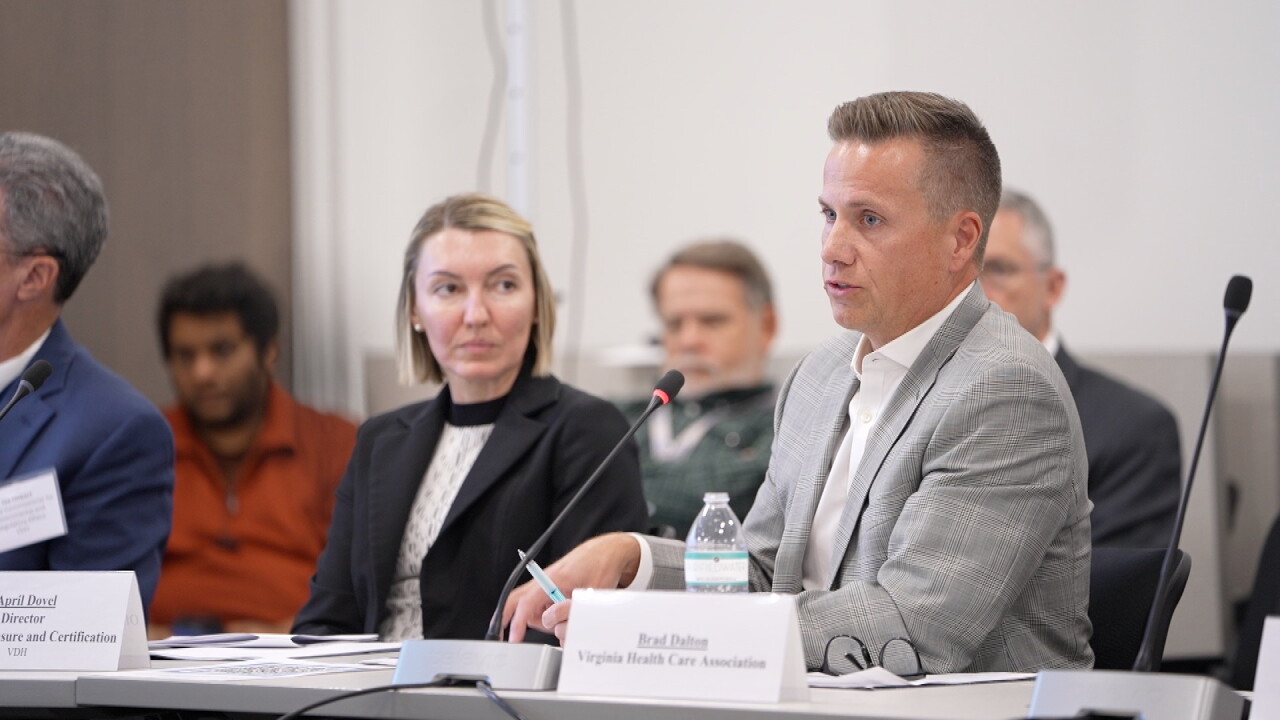
Brad Dalton, chief operating officer of American Healthcare LLC, said while he supports a staffing standard, it should be coupled with supports for providers.
He said he was encouraged that the panel identified CNA recruitment efforts as a priority, which he said is a considerable challenge in rural areas.
“Recruiting and getting those CNAs there are very important,” Dalton said. “And there are a lot of very good facilities in the state, and a lot of good rural facilities in the state that need help with that recruiting and with the housing and the transport as well.”
Panel also considers financial and corporate accountability
Rounding out the rest of the panel's five highest-ranked priorities, according to the vote, were:
- fully funding Virginia's long-term care ombudsman program
- increasing scrutiny of nursing home owners' business history during the licensure process
- requiring facilities to spend at least 70% of their revenue on resident care and bedside staff.
Joani Latimer, the state's long-term care ombudsman, said a thorough vetting of any owner who wants to buy nursing homes in Virginia is "so basic, so common sense."
"None of us who have hired anybody would ever hire somebody that had a horrible resume," Latimer said. "That seems like if we don't do that, we are kind of starting from failure. And history, usually, as we know, is the best predictor of future."
Virginia lawmakers approved changes earlier this year aimed at strengthening the state's review of nursing home ownership changes, though regulations implementing those changes are still being developed.
The proposed 70% spending threshold also prompted a discussion about how much nursing home revenue, much of which comes from taxpayer-funded programs, reaches residents and bedside care versus related-party expenses and corporate profit.
Calfee said the point of such a spending mandate would be to "get at the large profits of nursing homes providing substandard care."
Those concerns also resonated with Daniel Fayad.
“Where is the money going? Where are our tax dollars going?” she asked. “Are they going into healthcare? Are they going into helping these patients out?”
Dalton said his organization does not specifically track such a percentage but questioned how a fixed threshold would account for fluctuating operating expenses.
Share your nursing home stories with the CBS 6 Investigative Team: Email Melissa Hipolit and Tyler Layne

'Stop protecting corporate owners and start protecting human lives'
The ultimate fate of many of the panel's ideas will depend on what happens after Wednesday's meeting.
According to VDH, the panel recommendations will be included in an annual report that is due from Health Commissioner Dr. Cameron Webb to the governor and General Assembly by Dec. 1.
Some recommendations will require action from lawmakers, while others involve additional resources, regulatory changes, stronger enforcement of existing requirements or administrative action.
The panel's final meeting of the year also drew pointed public comments from frontline worker Victoria Jackson, a certified nursing assistant.
She questioned the nursing home industry's political influence and urged policymakers not to allow campaign contributions to stand in the way of reforms.
“Stop taking checks from the industry you regulate,” Jackson said. “Stop protecting corporate owners and start protecting human lives. Ask yourself, when are you finally going to grow a spine?”
For Daniel Fayad, any changes will come too late for her mother.
But she hopes speaking publicly can help ensure other residents and their families receive better care.
“Everyone needs to know that they are taken care of,” Daniel Fayad said. “Everyone needs to know that their life mattered, and that they deserve to be treated with respect and dignity.”
CBS 6 is committed to sharing community voices on this important topic. Email your thoughts to the CBS 6 Newsroom.
Watch Tyler Layne's reporting on CBS 6 and WTVR.com. Have something for Tyler to investigate? Email him.

-
Giving You A Voice
-
Your Voice, Your Story
🎙️ WTVR Podcasts
-
Eat It, Virginia! with Scott and Robey
Untold with Catie Beck
-
 Facebook
 TikTok
 YouTube
 Blue Sky
 Instagram
 Threads
 X


