




RICHMOND, Va. — Nearly a year ago, more than a dozen organizations across the commonwealth received "devastating" news from the state health department that their funding to provide HIV care and services to poor Virginians would suffer a significant cut. While some providers have said they were never told exactly what caused the funding loss, CBS 6 has learned a "billing error" by the health department played a role.
At the Health Brigade clinic in Richmond, the mission stays focused on serving low-income patients in Central Virginia, many of whom are uninsured, including those who live with HIV.
“There's an intersection of multiple issues that it takes to make sure that they stay in care and that they get the social, emotional support that they need to continue to live with this. It's a hard disease to live with," said the non-profit's executive director Karen Legato.
Because of that reality, Legato said the clinic offers case management, mental health services, emergency relief, and other wraparound services to these clients. She said the idea is that by keeping people housed, fed, and stable, it helps individuals remain healthy and medically compliant, thus reducing the risk of transmission.
For many years, she said those supports have been funded through what's called the federal Ryan White Part B program, which operates in every state. In the commonwealth, the program is managed by the Virginia Department of Health (VDH).
But in the spring of 2025, Legato said she was informed by VDH, with hardly any notice, that Health Brigade's program would take an overall 75% funding cut.
“When that news came, and came suddenly, it was devastating," Legato recalled. "You go into a crisis mode at that point.”
She said Health Brigade almost immediately lost its ability to help over 100 clients post-incarceration, eliminated mental health services, gutted emergency assistance, and decreased its staff of case workers.
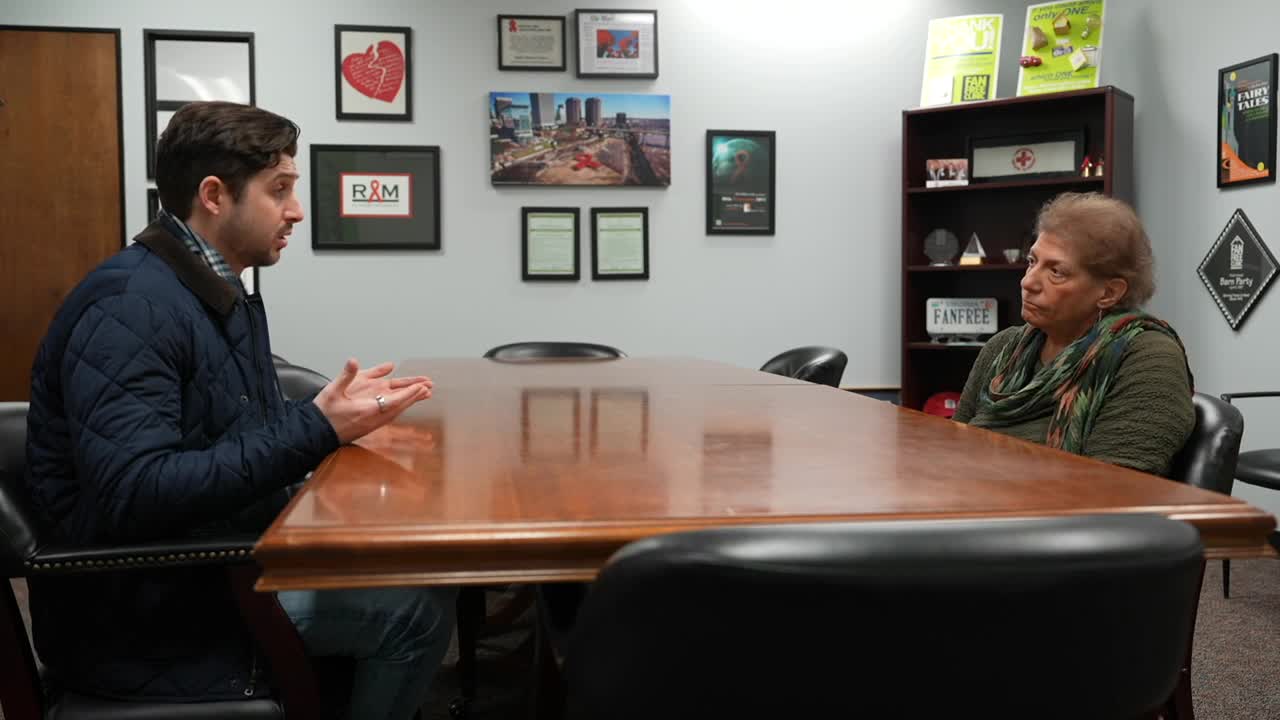
“What is happening to the patients that you are no longer able to serve?” reporter Tyler Layne asked.
“That’s a good question. Are they lost to care?" Legato said. "Once you start interrupting the cycle of care and the way things are set up, if they drop out of care, we don't know where to find them.”
And as other area providers either completely cease Ryan White operations or also greatly reduce their services, she said that threatens the prevention of HIV spread. According to data presented publicly by VDH in January, its Ryan White program dropped its number of direct service providers from 27 to 14 and decreased the number of approved services from 21 to 7.
There's two primary ways Ryan White is funded in Virginia. The first is through federal grants, and those amounts have not changed much year over year. The second is through rebates that VDH collects through pharmaceutical companies. That amount has changed in recent years, and that's what VDH was attributed the funding loss to.
According to data VDH presented in January, its amount of available Ryan White funding dropped from $82 million in 2023 to $55 million in 2025 across all funding sources. The data showed VDH went from receiving $32 million in rebates in 2023 to $16 million in 2024. VDH then went from having $13 million in rebate carryover in 2024 to $1.5 million in 2025.
As to how that happened, multiple providers have said they've never received a clear answer from VDH. So, CBS 6 contacted one of the major HIV pharmaceutical companies, Gilead, with questions.
Gilead said since early 2025, it has been working with VDH to resolve a "billing error for rebates" that occurred from 2021 through 2023 after identifying "issues with claims submission." The company said "VDH agrees" that its Ryan White program "unintentionally received some rebate payments and is working with Gilead to determine an appropriate repayment plan."
"To be clear, Gilead overpaid rebates due to a billing error by Virginia — it did not cut them," a Gilead spokesperson said.
The company said this problem has not happened in any other state. It referred questions about the cause and total amount of invalid rebates to VDH.
VDH did not provide a direct answer when CBS 6 asked for the total amount in invalid rebates it received and only said it is "working directly with the manufacturer to resolve the matter." When we asked what caused the error, the agency cited "changes in nomenclature and process."
When we asked how the billing error affected overall funding for the program and whether it will be able to fully fund the program moving forward, the agency only said, "VDH continues to submit claims to manufacturers."
“Did you guys ever know that there was this billing issue with Gilead dating back to 2021?” Layne asked Legato.
“No clue. Had no idea. In fact, this is the first time I've heard it," she answered.
State Health Commissioner Dr. Cameron Webb told lawmakers in January that "future rebate totals are uncertain" and that VDH was seeking additional funding through supplemental and emergency sources.
As another grant year is expected to begin in April, Legato said Health Brigade faces even more uncertainty and doesn't know how much, if any, funding it will continue to receive. Legato feels the state should have done more to restore funding sooner.
“I mean that's unethical to me, because that means we haven't done what we can for the people across the Commonwealth who need the services," Legato said.
CBS 6 is committed to sharing community voices on this important topic. Email your thoughts to the CBS 6 Newsroom.
📲: CONNECT WITH US
Blue Sky | Facebook | Instagram | X | Threads | TikTok | YouTube


