


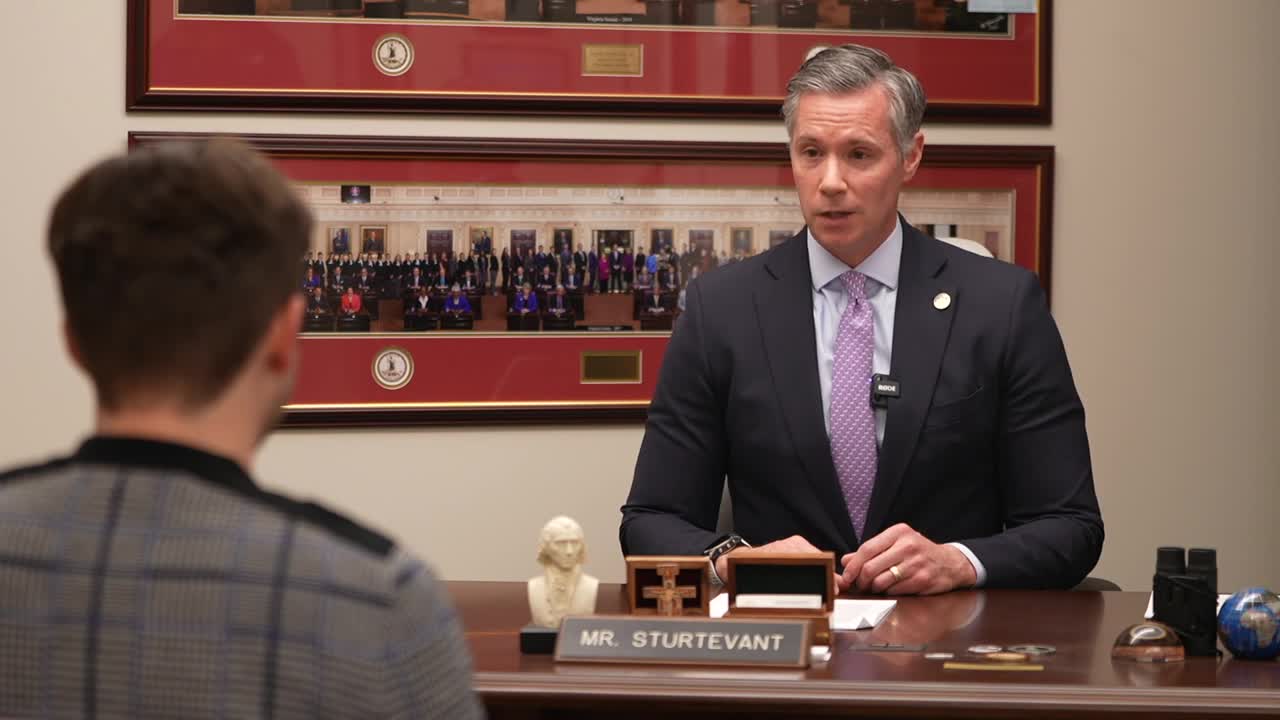


RICHMOND, Va. — A state lawmaker's belief that Virginia nursing homes "are supposed to be focused first and foremost on the care of their residents, not their bottom line and not their profit margin" is fueling a proposed measure that aims to crack down on the financial practices of some facilities.
Senator Glen Sturtevant, a Republican representing Chesterfield and Colonial Heights, has introduced a bill in the current General Assembly session following CBS 6's investigative reporting on a facility in his district, Colonial Heights Rehabilitation and Nursing Center, that paid exceptionally high rent to a related party, according to experts who reviewed its financial filings. The for-profit nursing home with low overall quality and staffing ratings was at the center of mass arrests in December 2024 in connection to an alleged elder abuse investigation and is still under investigation by a special grand jury for alleged criminal activity that developed into "a pattern relating to the care," according to prosecutors.
“It was your reporting that really delved into the financial details of the rent that this particular facility was paying effectively to itself, I think, is something that really is a driving force for this legislation," Sturtevant told CBS 6.
Watch: As embattled Virginia nursing home provided low-rated care, financial records show it was 'highly profitable'
A related party transaction occurs when a facility pays another company under common ownership for goods or services. These transactions must be identified on the cost reports that all nursing homes submit to state and federal regulators. The reports are used by the government to determine how much Medicaid and Medicare funding facilities should get. For many nursing homes, a majority of their revenue comes from Medicaid and Medicare sources.
In fiscal year 2022, Colonial Heights reported paying $2.6 million in rent to a related party landlord.
By fiscal year 2024, that amount increased significantly to $6.1 million.
When CBS 6 asked the facility about the reported rise in costs, a spokesperson said, “The rents are believed to be fair market value, and all governmental filings were submitted by qualified professionals who are not identified in any irregularities.”
Using the state's fair rental value system, the maximum Medicaid reimbursement the facility could have received for capital costs in fiscal year 2024, if all residents were Medicaid members, would have been around $2 million.
CBS 6 conducted a similar analysis of the financial filings of Henrico Health and Rehab, which has been identified by the government as Virginia's worst-performing nursing home. There, rent to a related party increased from $1.6 million in fiscal year 2022 to $3.1 million in fiscal year 2024. The maximum Medicaid reimbursement for capital costs in fiscal year 2024 would have been around $917,000. A spokesperson for the facility said the rent increase at Henrico Health and Rehab was due to market conditions and investments into the building that went toward beds and mattresses, chairs, paint, and oxygen concentrators.

Local News
Analyzing the finances of Virginia's lowest-rated nursing home: 'It's egregious'
“What we want to make sure that we have in Virginia as a statewide policy is that we have some protections in place so that every available dollar that should be going to patient care is going to patient care to hire more doctors and nurses and staff so that we have more health care providers in these facilities providing ongoing care to these very vulnerable patients," Sturtevant said.
In an effort to accomplish that goal, Sturtevant's bill would first require nursing homes that pay rent to a sister company to publicly disclose that information on their websites.
Further, it would direct the state Medicaid agency, the Department of Medical Assistance Services, to reduce value-based funding for facilities that pay "excessive rent" to a related party, which is defined as above 125% of an established fair rental value benchmark. A value-based payment is essentially bonus funding meant to reward nursing homes that achieve certain quality outcomes.
“Dollar for dollar, the state is going to hold back incentive and bonus funds so that we are not essentially subsidizing these ridiculously high rent payments that some nursing homes may be charging and paying to themselves," Sturtevant said.
According to the bill's language, there would be exceptions for nursing homes that provide proof of capital investments, unusual market conditions, or "other good cause."
CBS 6 asked the prominent industry lobbying group, the Virginia Health Care Association (VHCA), for its position on the proposal. Spokesperson Amy Hewett said the organization was still in the bill review process which includes gathering feedback from stakeholders and engaging with lawmakers to better understand intent and potential impacts.
Generally, the industry has long maintained that Medicaid funding does not fully cover costs and that nursing homes operate on very thin margins. Hewett has previously told CBS 6 that the VHCA supports financial transparency but added, "because long term care is chronically underfunded, ancillary services and related parties sometimes help keep these facilities viable."
Consumer advocates, however, point to research showing some facilities may be overstating expenses and underreporting profits. Guidance from the federal inspector general's office stated this practice can typically appear in real estate transactions.
State Advocacy Director for AARP Virginia Jared Calfee said he has not yet reviewed Sturtevant's bill in-depth yet, but said broadly speaking, "AARP Virginia strongly supports efforts to improve transparency in nursing home ownership. For-profit facilities regularly siphon money to related parties and in doing so can avoid accountability for how public dollars are spent."
These practices, Calfee said, take taxpayer dollars away ensuring quality of care for residents.
“We as Americans contribute our taxes, pay our taxes, to help provide this type of care for people who really need it, not for big corporations and private equity and hedge funds to pad their profits on these large nursing home portfolios that they own," Sturtevant said.
The bill has not yet been heard by any General Assembly committees that would ultimately decide on whether to advance the legislation toward passage.

Local News
In-Depth Investigations: Voices from Virginia Nursing Homes
CBS 6 is committed to sharing community voices on this important topic. Email your thoughts to the CBS 6 Newsroom.
📲: CONNECT WITH US
Blue Sky | Facebook | Instagram | X | Threads | TikTok | YouTube


