




RICHMOND, Va. — Richmond-area shoppers are increasingly spending their food dollars outside traditional supermarkets, with discount retailers, warehouse clubs and convenience stores now accounting for more than half of all grocery spending in the market, according to a new industry report.
The 2026 Food World Mid-Atlantic Market Study, an annual retail analysis covering 89 counties and cities from Central Pennsylvania to Norfolk, values the Richmond food and grocery market at approximately $4.88 billion annually. The study covers the 12-month period ending March 31, 2026.
Walmart leads all food retailers in the Richmond market with an estimated $847.4 million in annual sales across 17 local stores — roughly 17 cents of every dollar spent on food and household goods in the area.
That share grew from the prior year without a single new store opening. The company plans to remodel 7 of its Richmond-area locations over the next year.

Photo Galleries
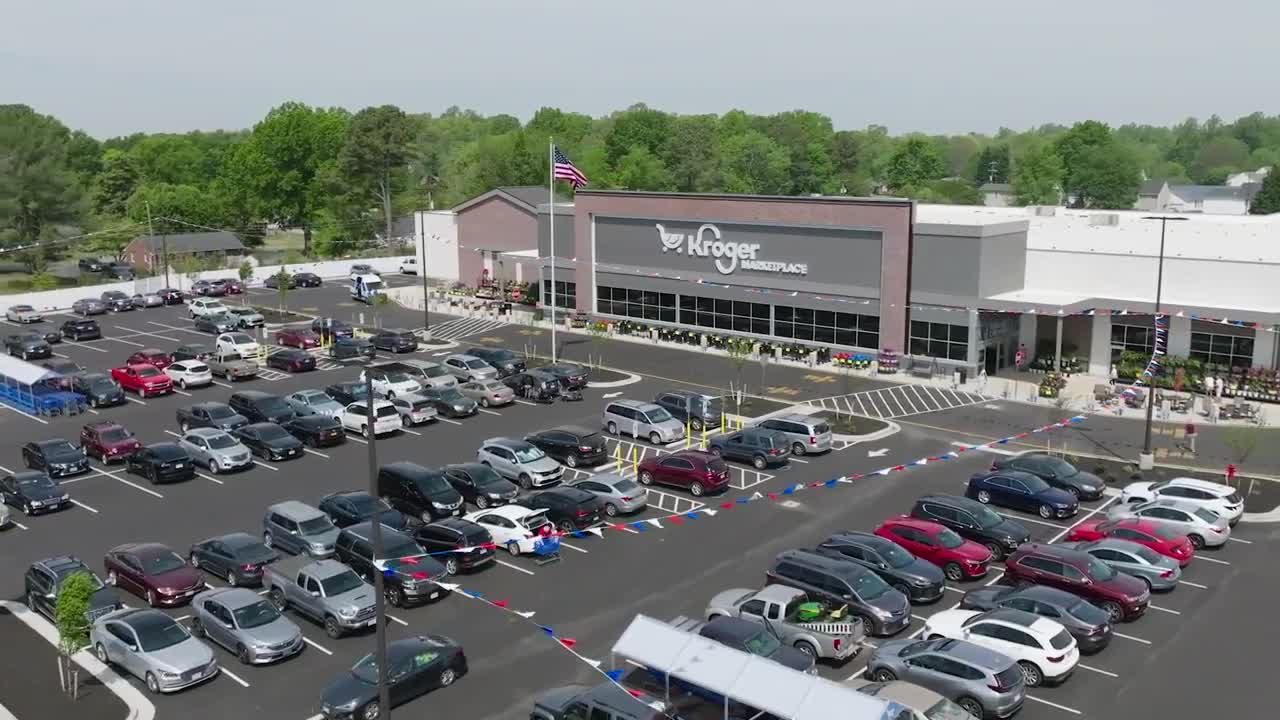
PHOTOS: Massive new Kroger Marketplace opens in Mechanicsville
Among traditional supermarkets, Kroger leads with an estimated $732.3 million in annual sales at 18 stores.
The chain opened a 118,000-square-foot Kroger Marketplace in Mechanicsville in April. The report describes the $40 million store, which is now the largest in the Mid-Atlantic, as a standout new location.
Food Lion ranks second among traditional supermarkets with 50 stores and an estimated $685.3 million in sales, followed by Publix with 16 stores and an estimated $276.6 million in annual sales.
Non-traditional grocery options — including warehouse clubs, convenience stores, drug stores and mass merchants — now account for more than 54% of all food and household goods spending in the Richmond market.
Convenience stores alone account for roughly 14% of the market. Wawa operates 35 Richmond-area locations, generating an estimated $313.9 million in annual sales. 7-Eleven operates 97 Richmond-area locations with an estimated $270.5 million in annual sales.
Drug stores are also a significant part of the non-traditional grocery picture. CVS operates 56 Richmond-area locations and generates an estimated $329.1 million in annual sales. Walgreens operates 30 local locations with an estimated $214.5 million in annual sales.
Target operates 12 Richmond-area locations with an estimated $203.9 million in annual sales, capturing a 4.17% share of the overall market. The retailer is another option for shoppers, combining grocery and household purchases.
Richmond Grocery Market at a Glance
Estimated annual sales in the Richmond food and grocery market
| Retailer | Est. Annual Sales | Market Share | # of Stores |
|---|---|---|---|
| Walmart SuperCenter / Neighborhood Market | $847.4M | 17.35% | 17 |
| Kroger Includes Marketplace stores | $732.3M | 14.99% | 18 |
| Food Lion | $685.3M | 14.03% | 50 |
| CVS | $329.1M | 6.74% | 56 |
| Wawa | $313.9M | 6.43% | 35 |
| Publix | $276.6M | 5.66% | 16 |
| 7-Eleven | $270.5M | 5.54% | 97 |
| Walgreens | $214.5M | 4.39% | 30 |
| Target | $203.9M | 4.17% | 12 |
| Wegmans | $139.3M | 2.85% | 2 |
| BJ's Wholesale Club | $138.8M | 2.84% | 3 |
| Aldi | $109.8M | 2.25% | 13 |
Source: Food World Mid-Atlantic Market Study, June 2026. Measuring period: April 1, 2025 – March 31, 2026. Sales figures are estimates. Market share figures reflect total food, drug, HBC, general merchandise and tobacco sales across all retail channels.
Warehouse clubs also hold a growing share. BJ's Wholesale Club operates three Richmond-area locations with an estimated $138.8 million in annual sales. Costco operates two locations with an estimated $108.5 million in sales, and Sam's Club operates three locations with an estimated $107.5 million in sales. Combined, the three club operators account for roughly 7.3% of the Richmond market.
Aldi, which operates 13 stores in the Richmond market, generated an estimated $109.8 million in annual sales — a figure that grew from the prior year despite no new store openings.
The report points to rising food prices as a key driver of the shift. Lettuce prices rose approximately 16% from April alone. Tomato prices climbed roughly 40% compared to a year ago. Beef prices increased approximately 13% year-over-year.
A Gallup poll cited in the report found roughly three in four Americans believe the economy is getting worse — a level of economic pessimism the report compares to the COVID pandemic period.
The report also notes that federal reductions to SNAP benefits have created additional financial strain for many households.
No major new supermarket openings are expected in the Richmond market in the near term, according to the report. One development to watch: a Whole Foods store is planned for Midlothian.
EDITOR'S NOTE: The Food World study does not include dollar stores such as Dollar General and Dollar Tree in its survey methodology. As a result, spending at those retailers is not reflected in the market figures above.
-
Your Voice, Your Story
🎙️ WTVR Podcasts
-
Eat It, Virginia! with Scott and Robey
Untold with Catie Beck
This story was initially reported by a journalist and has been converted to this platform with the assistance of AI. Our editorial team verifies all reporting on all platforms for fairness and accuracy. To learn more about how we use AI in our newsroom, click here.
-
 Facebook
  TikTok
  YouTube
 Blue Sky
 Instagram
 Threads
 X
X


