




RICHMOND, Va. — As Richmond City Council considers lowering the city’s real estate tax rate, Mayor Danny Avula and top administrative officials are warning that a slowing economy and pending financial commitments could make a significant tax cut difficult to sustain.
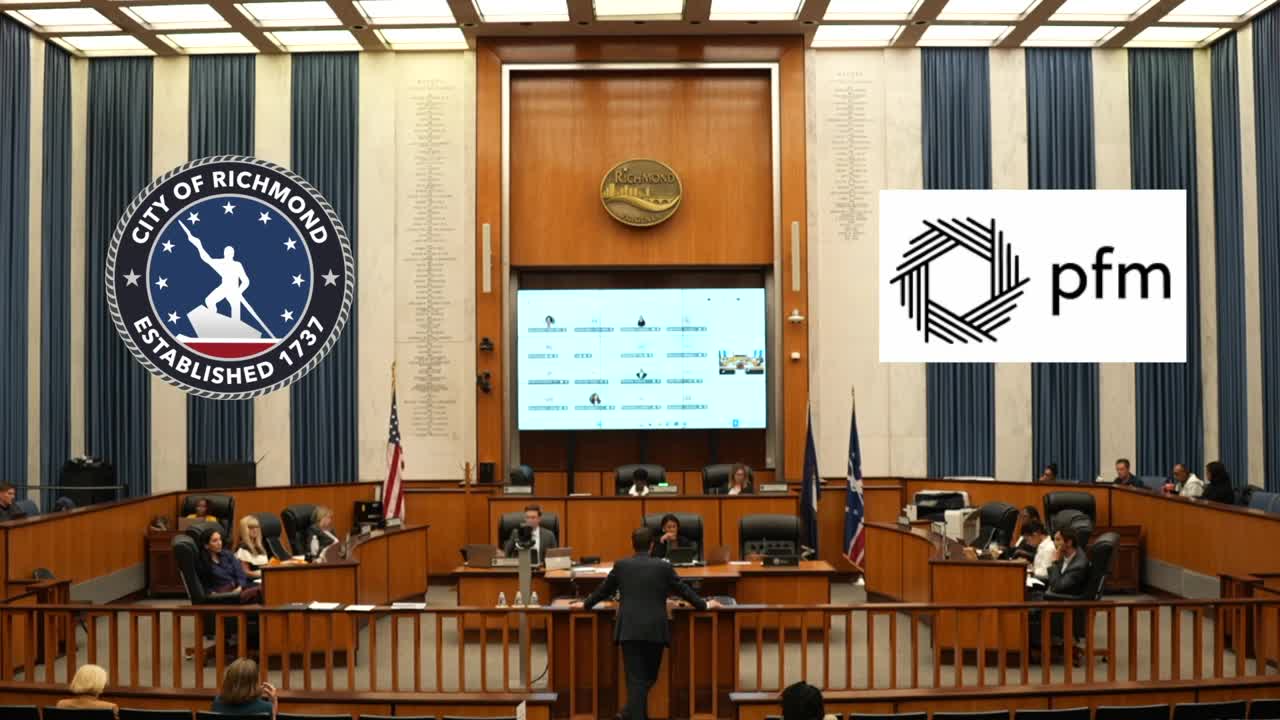
During a presentation Monday afternoon, council members heard an analysis from PFM, a national consulting firm that provides financial services to local governments.
“What we’ve heard today is that we’re entering a very different fiscal environment,” Avula told City Council members Monday.
According to PFM Director Danielle Scott Parker, revenue growth has slowed compared with the growth in the city’s expenditures, creating financial conditions that make a substantial reduction in the real estate tax rate more challenging.
“What we know is that revenue growth has trended toward 3% to 4% annually compared to 7% to 9% on the expenditure side,” Parker said.
Avula echoed the findings, pointing to pending financial obligations related to collective bargaining agreements, the Affordable Housing Trust Fund, pensions and capital investments as obstacles to reducing the tax rate.
According to PFM and Avula, the outcomes of collective bargaining agreements will be the single largest driver of the city’s future financial outlook as labor costs continue to rise. The General Fund commitment to the Affordable Housing Trust Fund will increase to $13.7 million and will grow with real estate tax growth. The recent issuance of pension obligation bonds will also increase debt service spending by $10 million annually.
“As a city, we face real operational realities like debt service obligations, personnel and benefit costs, the need to prioritize our workforce as we continue to compete with surrounding local and state governments as well as the private sector,” Avula said. “All of this is happening in the backdrop of a federal government that’s creating more uncertainty, more volatility and leaving more and more for us, as local governments, to solve on our own.”
Several City Council members have proposed reducing the real estate tax rate by 4 cents, including Councilwoman Reva Trammell.
“We need to reduce the real estate tax because our homeowners are suffering,” Trammell said. “Every day I hear from them that they can’t pay these high assessments.”
Avula has proposed a 1-cent reduction, saying a larger cut could result in multimillion-dollar reductions in city and school funding.
PFM analyzed the potential impact of both proposed reductions against the current real estate tax rate of $1.20 per $100 of assessed value.
Under the current $1.20 rate, the city is projected to face budget deficits in fiscal years 2028, 2029 and 2030, followed by projected surpluses in fiscal years 2031 and 2032.
A 1-cent reduction, to $1.19 per $100 of assessed value, would result in deeper projected deficits in fiscal years 2028 through 2030 and smaller projected surpluses in 2031 and 2032.
A 4-cent reduction would produce projected budget deficits in every year from fiscal year 2028 through fiscal year 2032, according to the PFM analysis.
Presentation: Financial Condition Overview, PFM Consulting Group
In response, council members questioned investments in the Diamond District and voiced concerns that less competitive tax rates would drive residents and businesses to surrounding counties.
Second District Councilwoman and Vice President Katherine Jordan also raised concerns about the city’s Business, Professional and Occupational License, or BPOL, tax.
“I know that it’s hard to talk about lowering yet another category of taxes and revenue, but the threat is that we’re going to lose that tenant, that business, that employee base to the counties,” Jordan said. “I think it’s a discussion we have to have.”
Avula is urging Richmond residents to approve a 1% retail sales tax referendum on the Nov. 3 ballot. Avula said revenue from the measure would help fund school construction and major renovations, which he said could strengthen the city’s economic future.
Avula reiterated that his priorities include investing in the workforce, keeping families safe and thriving, improving service delivery and pursuing economic development.
“If we’re not going to raise taxes, which none of us want to do, then we have got to make sure that we are growing, that we are developing, that we’re focusing on economic development so that we develop other revenue streams as a city,” Avula said.
CBS 6 is committed to sharing community voices on this important topic. Email your thoughts to the CBS 6 Newsroom.
-
-
Eat It, Virginia! with Scott and RobeyUntold with Catie Beck
-
-
-
This story was initially reported by a journalist and has been converted to this platform with the assistance of AI. Our editorial team verifies all reporting on all platforms for fairness and accuracy. To learn more about how we use AI in our newsroom, click here.
 Facebook
  TikTok
  YouTube
 Blue Sky
 Instagram
 Threads
 X
X
