



RICHMOND, Va. — Dominion Energy CEO Bob Blue is guaranteeing Virginia customers would pay less for electricity if the utility's proposed $67 billion merger with NextEra Energy is approved, but exactly how much customers could save in the long run remains unclear.
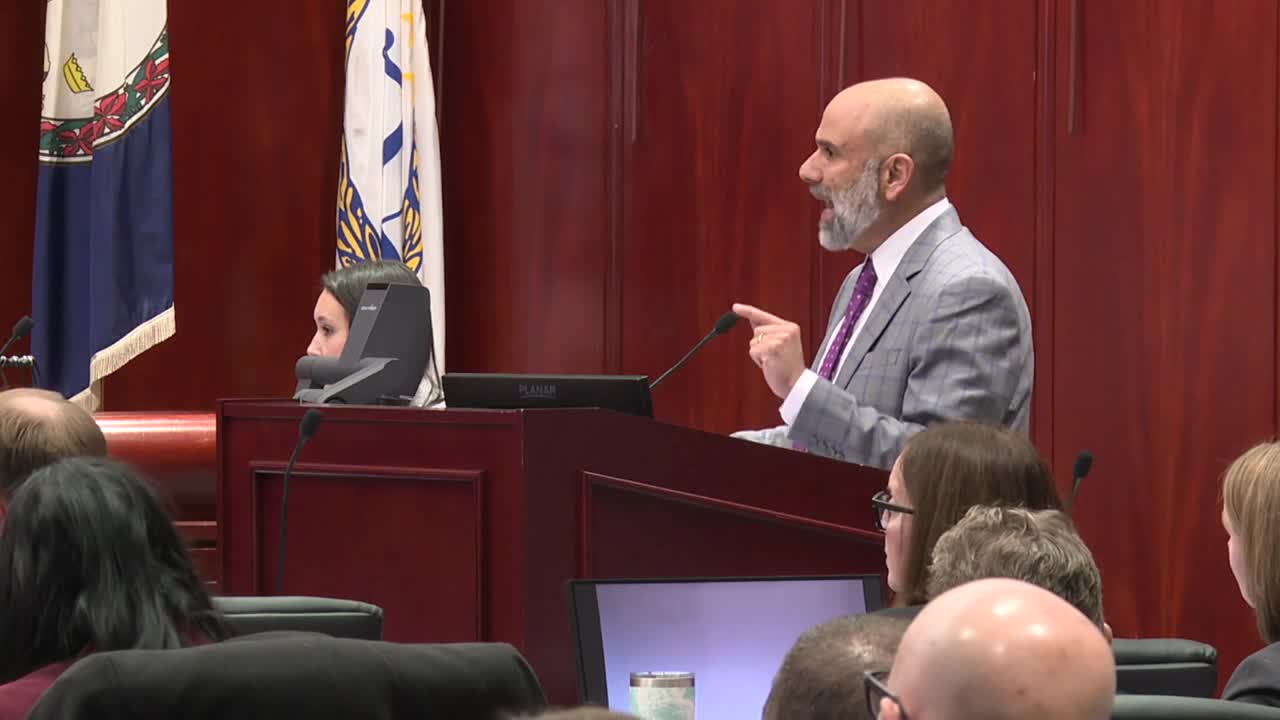
Blue faced hours of questioning during the second day of evidentiary hearings before the Virginia State Corporation Commission, where attorneys repeatedly pressed the Dominion CEO about the financial benefits of the proposed deal.
At the center of the questioning was a key distinction for customers: Paying less because of the merger does not necessarily mean monthly electric bills will go down.
Watch: Critical week ahead for Dominion Energy-NextEra merger in Virginia
"I'm willing to guarantee that the company, our customers, are going to be paying less for electricity as a result of this combination than they otherwise would," Blue testified. "At a minimum, they will receive the four years of rate credits."
The companies have proposed $10 monthly bill credits for Dominion residential customers for four years. The harder question for regulators is what happens after those credits expire.
Blue said he expects the combined company would be able to operate more efficiently because of the scale, talent and experience of Dominion and NextEra.
"Beyond that, this company will have the opportunity, and I expect it will, and I expect it is logical for you all to conclude that we're going to be able to operate better on behalf of our customers, given the scale, talent, experience, and sophistication of these companies," Blue said.
But attorneys questioned how regulators can determine whether those longer-term benefits will actually materialize when the companies have not provided a specific cost-benefit analysis for Virginia.
Blue said there is a reason the companies have not been able to put a specific number on those potential savings before the merger.
"So the ability to try to do a specific analysis before the two companies have gotten together is very challenging," Blue said. "So it should come as no great surprise that we wouldn't put a specific analysis together for two companies that don't have access to each other's information with any specificity."
The testimony leaves regulators with a significant question as they consider the merger: How can the SCC measure whether promised long-term savings materialize when there is no specific estimate to measure them against?
Blue's testimony also included a heated exchange over whether the proposed acquisition is in the best interest of Virginia ratepayers.
Clean Virginia attorney Greg Habeeb questioned Blue about whether he had previously argued that an acquisition of Dominion by an out-of-state utility would be bad for ratepayers.
Attorney Joe Reid, representing the companies, objected to the line of questioning.
"A lovely speech, but it's not a question, and it's not relevant to this family," Reid said.
Habeeb pushed back.
"It is a question, and how can it not be relevant if today he is telling this commission that it is in ratepayers' best interest for them to be acquired when four years ago he was telling members of the General Assembly and administration that an acquisition by an out-of-state utility was bad for ratepayers?" Habeeb said.
SCC Chair Kelsey Bagot allowed Blue to respond.
"I didn't say that, so my answer is I didn't have those conversations," Blue said.
"That's all the questions," Habeeb responded.
Questions about the merger extended beyond potential savings as NextEra's CEO John Ketchum faced questions about what NextEra ownership could mean for Dominion customers and how the company would address concerns from Virginia ratepayers.
Bagot told Ketchum the commission has heard concerns from the public about a lack of trust in NextEra, including from people who believe they could be "preyed upon" by the company.
"Whether you agree with the merits of the public concern or not, knowing that there are, there seems to be at least among some that we've heard from, a sentiment, a lack of trust in NextEra as a utility," Bagot said.
She asked Ketchum how the company would address what she described as a "very real concern" among the public if the SCC approves the merger.
"We've got to earn the trust, and, you know, talk is cheap," Ketchum said. "You only earn trust by delivering and executing and performing for customers every day."
Ketchum said one of the things that attracted him to the proposed merger was the opportunity to bring together what he described as two "world class organizations," with each company able to learn from the other.
Ketchum also addressed concerns he said he has heard about utility disconnection rates, pointing to a specific commitment the companies have made regarding Dominion customers.
"One of the commitments we've signed up for is we're not bringing our disconnect policy," Ketchum said. "We're going to follow Dominion's disconnect policy."
Ketchum's testimony also touched briefly on the "Robo Memorandum."
Because the document remains marked confidential, members of the media were sent into the hallway while it was discussed.
To be clear, the commission has not yet ruled on if the "Robo Memorandum" will be entered int o evidence in this merger proceeding.
It remains unclear exactly when the evidentiary hearings will conclude, though proceedings could continue for at least a week.
The SCC is weighing whether to approve the multibillion-dollar merger by January.
CBS 6 is committed to sharing community voices on this important topic. Email your thoughts to the CBS 6 Newsroom.
-
-
Eat It, Virginia! with Scott and RobeyUntold with Catie Beck
-
-
-
This story was initially reported by a journalist and has been converted to this platform with the assistance of AI. Our editorial team verifies all reporting on all platforms for fairness and accuracy. To learn more about how we use AI in our newsroom, click here.
 Facebook
 TikTok
 YouTube
 Blue Sky
 Instagram
 Threads
 X

