


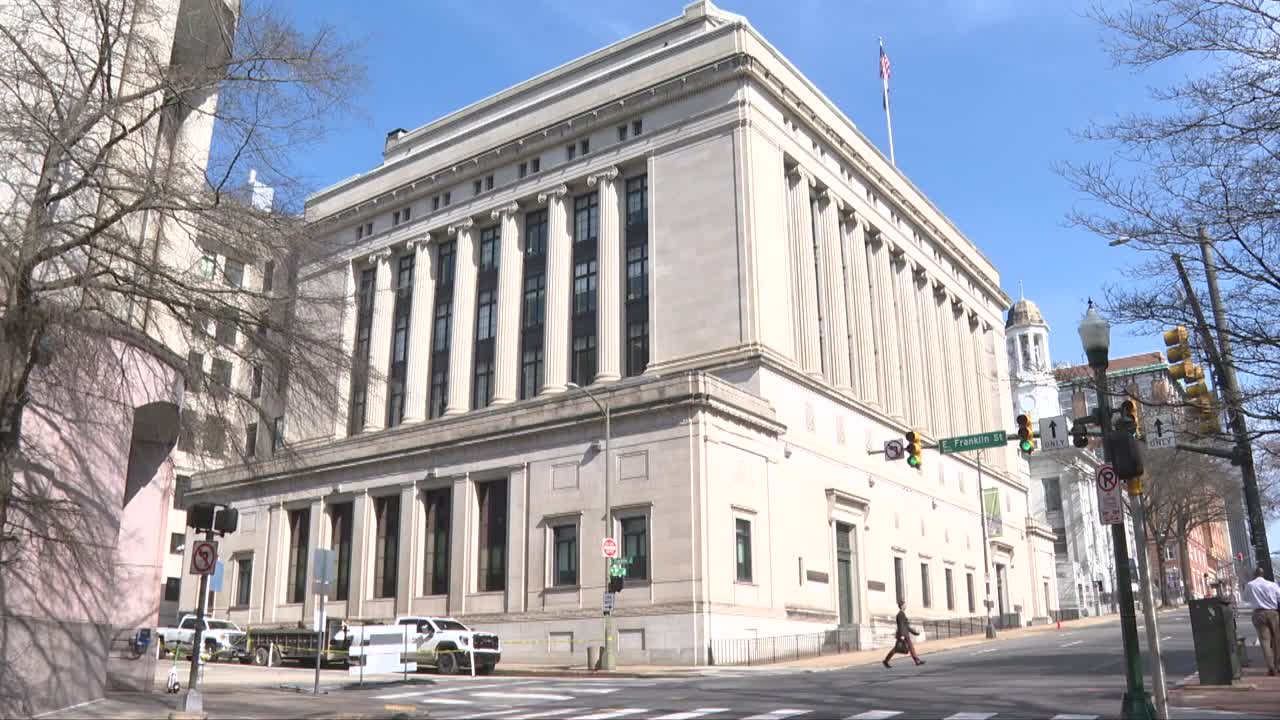


RICHMOND, Va. — The Supreme Court of Virginia will hear oral arguments on the redistricting referendum Monday as it considers the legality of the plan.
Despite narrowly being approved by voters in Tuesday's special election, the Supreme Court will have to decide if Democratic lawmakers violated procedural rules when they referred a constitutional amendment to the ballot to create Virginia's new congressional map.
CBS 6 reporter Cameron Thompson spoke with Cayce Myers, a professor at Virginia Tech, about the next steps in the legal battle. He said he feels it's important to know that the current legal challenges aren't about the fairness of the districts or whether gerrymandering is a good or bad thing, but whether or not the process was legal.
"The issue is a very legalistic definitional issue around what happened and the process by which it happened, and to get to the point that there was a vote," Myers explained.
Myers offered insight into the Republicans' argument against the referendum.
"The Constitution prescribes a way by which a ballot referendum can occur. Generally speaking, the ballot referendum has to pass through the legislature, there has to be an intervening election, and then there's another passing of the vote, and then it goes on the ballot. That process, by just looking at it from a constitutional perspective, looks like a long process. This process was very fast because there was a special session," Myers explained. "If the court were to find that the process was not done correctly, that does overturn an election in which a majority of people voted a particular way," he said. "So there is that implication there that I think is significant. Not sure that the court is really weighing that as part of the legal analysis, but that certainly is part of the kind of the larger political context."
Myers said he wouldn't be surprised to see more lawsuits if the Supreme Court rules in the Democrats' favor.
"I think lawsuits are going to continue," he said. "I think that that's just been the nature of and some of them have traction and will go forward. We've seen this in other states where there's lawsuits around the elections and how votes are counted and how, you know, different processes. And so I wouldn't be surprised to see more lawsuits."
As for a prediction about who the court will favor, Myers said he wasn't sure either way, but that the outcome would be consequential regardless.
"I think that there, there's certainly arguments on both sides, and I think that those arguments may be persuasive," he said. "Again, there is the not that the court really takes this into consideration, but there's this looming issue that it does overturn statewide election result."
If legal challenges by Republicans end up being unsuccessful, the new map will shift the congressional districts from the current layout, which favors Democrats six to five, to one that favors them 10 to one until 2030. After that point, the voter-approved bipartisan redistricting commission will resume its work in the process.
The Associated Press contributed to this report.
CBS 6 is committed to sharing community voices on this important topic. Email your thoughts to the CBS 6 Newsroom.
📲: CONNECT WITH US
Blue Sky | Facebook | Instagram | X | Threads | TikTok | YouTube


