


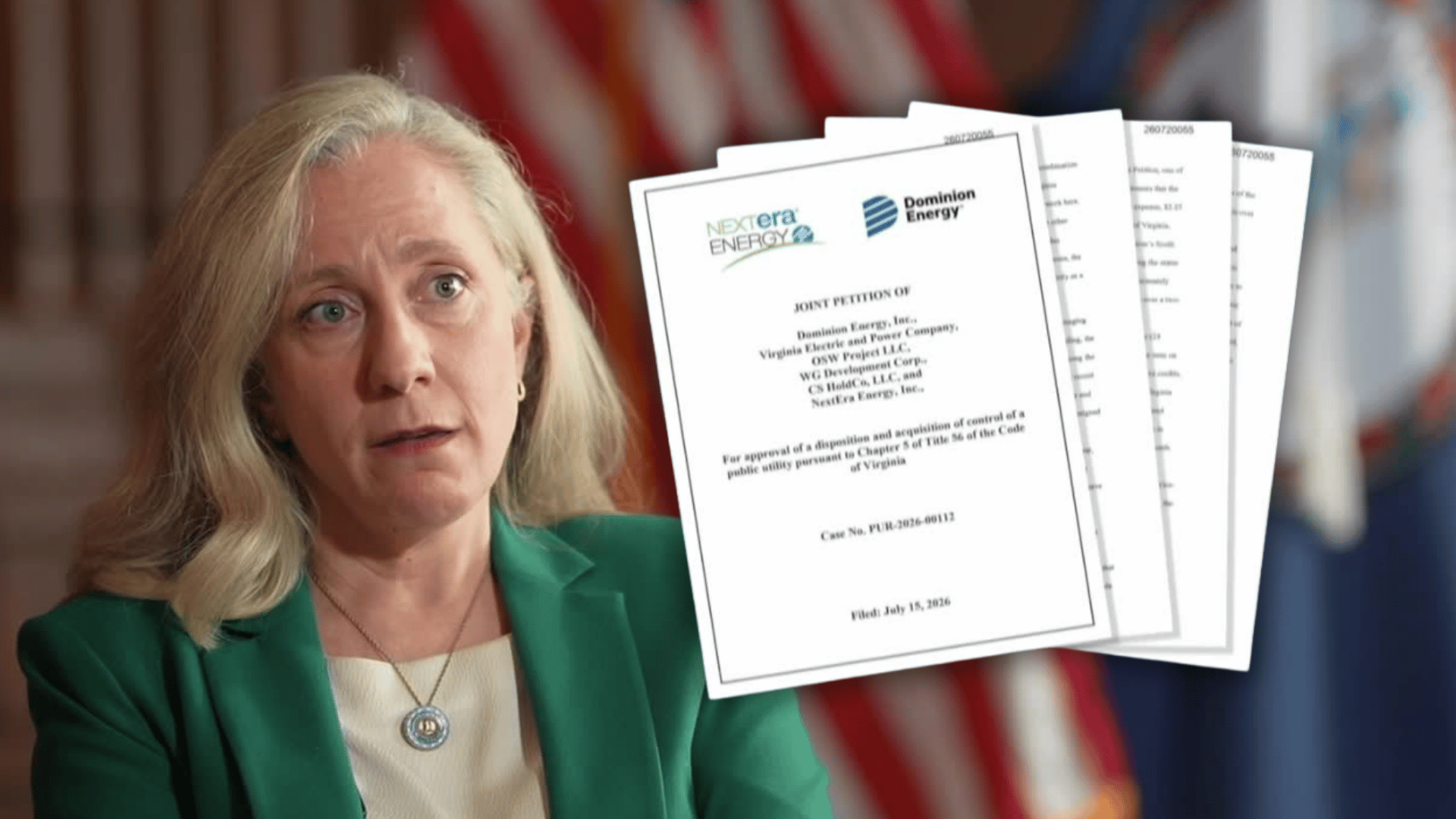


RICHMOND, Va. — Gov. Abigail Spanberger said she is skeptical of NextEra's proposed takeover of Dominion Energy, warning that the deal could have serious consequences for Virginia residents.
"I have deep reservations because I worry about how this is going to impact Virginia," Spanberger said.
In an exclusive interview with CBS 6, Spanberger said she wants to see concrete commitments before any deal moves forward.
"We need to see the numbers and, like, real on paper commitments, and you know, notably, there's been multiple other efforts by NextEra to make large-scale acquisitions similar to the Dominion one, and you know, this would be their fifth attempt, and those four prior cases have all failed," Spanberger said.
Watch Previous Coverage: Virginia SCC chair will not recuse herself in Dominion-NextEra merger amid conflict of interest concerns
Tuesday, the Energy Commission of Virginia met to hear from four experts on utility transfers and consumer protections about the proposed merger.
Every expert — regardless of background — agreed on one point: the state has a choice right now. Virginia can use this window to impose conditions strong enough to deter a merger motivated by the wrong reasons and protect ratepayers going forward. Once the deal is done, that leverage disappears.
"Your prime opportunity to mitigate those is during the transaction. Things just become harder after the fact, even if you have state laws intended to mitigate those harms in practice because of information asymmetry or preemption issues. It's just easier to address them at the time," said expert Kent Chandler.
At the center of the experts' calls is raising the legal standard for merger approval — moving away from a "do no harm" threshold and toward one requiring affirmative, demonstrable benefits to Virginia customers. They are also calling for the review timeline to be extended beyond 180 days, and for every claimed long-term benefit to be stated as a specific, measurable number before approval is granted.
"I would replace the 'do no harm' standard with some sort of showing that service be improved and that there be demonstrable benefits to Virginia customers that protects them from these harms," said Yale Law School Professor Josh Macey.
Macey pointed to NextEra's track record of failed mergers as evidence that strong conditions work.
"In Texas, when NextEra tried to purchase Encore, NextEra ultimately stopped going forward with the acquisition because Texas refused to lighten ring fencing requirements," Macey said.
Watch Previous Coverage: Virginians rally over Dominion Energy and NextEra merger
The experts are also calling for strong ring-fencing conditions that genuinely separate the regulated Virginia utility from NextEra's competitive business operations — and they are insisting that oversight not end when the merger closes. They encourage continuing performance measures tied to measurable commitments over a decade or more.
Expert David Lapp drew on a cautionary example from Maryland, where regulators previously approved mergers, attached conditions, and trusted the process — but the process failed.
"In 2021, they found that our Public Service Commission 'did not have an adequate process to ensure that utility companies complied with certain requirements of merger orders'," Lapp said.
Lapp urged Virginia regulators not to repeat Maryland's mistake. He said regulators need to not only add conditions that protect ratepayers, but also require mandatory auditing for each condition to hold NextEra accountable.
Expert Ben Weintraut raised concerns about merger promises that cannot be measured, verified, or enforced. While the proposed 2-year bill credits are expressed in specific numbers, other claimed benefits — including better efficiency, improved service, and lower financing costs — have no measurable targets attached to them.
"Beyond the two-year credits, the longer-run claim benefits are not stated as quantities. There is no quantitative standard against which they could later be confirmed or refuted," Weintraut said.
Weintraut said regulators need to require that all merger promises be stated in measurable numbers, so that if the merger is approved, there is a basis for the yearly audit to determine whether NextEra held up to its commitments.
The bottom line from every expert was the same: the window to protect Virginia ratepayers is open right now, and once the merger closes, it will not open again.
The experts who testified Tuesday did not say whether the merger is good or bad for Virginia. Their message was that the current review process is regulators' best chance to shape what happens to ratepayers. They also warned against allowing the merger to proceed by default because of deadline pressure.
This is a developing story. Email the CBS 6 Newsroom if you have additional information to share.
📲: CONNECT WITH US
Blue Sky | Facebook | Instagram | X | Threads | TikTok | YouTube

This story was initially reported by a journalist and has been converted to this platform with the assistance of AI. Our editorial team verifies all reporting on all platforms for fairness and accuracy. To learn more about how we use AI in our newsroom, click here.

