


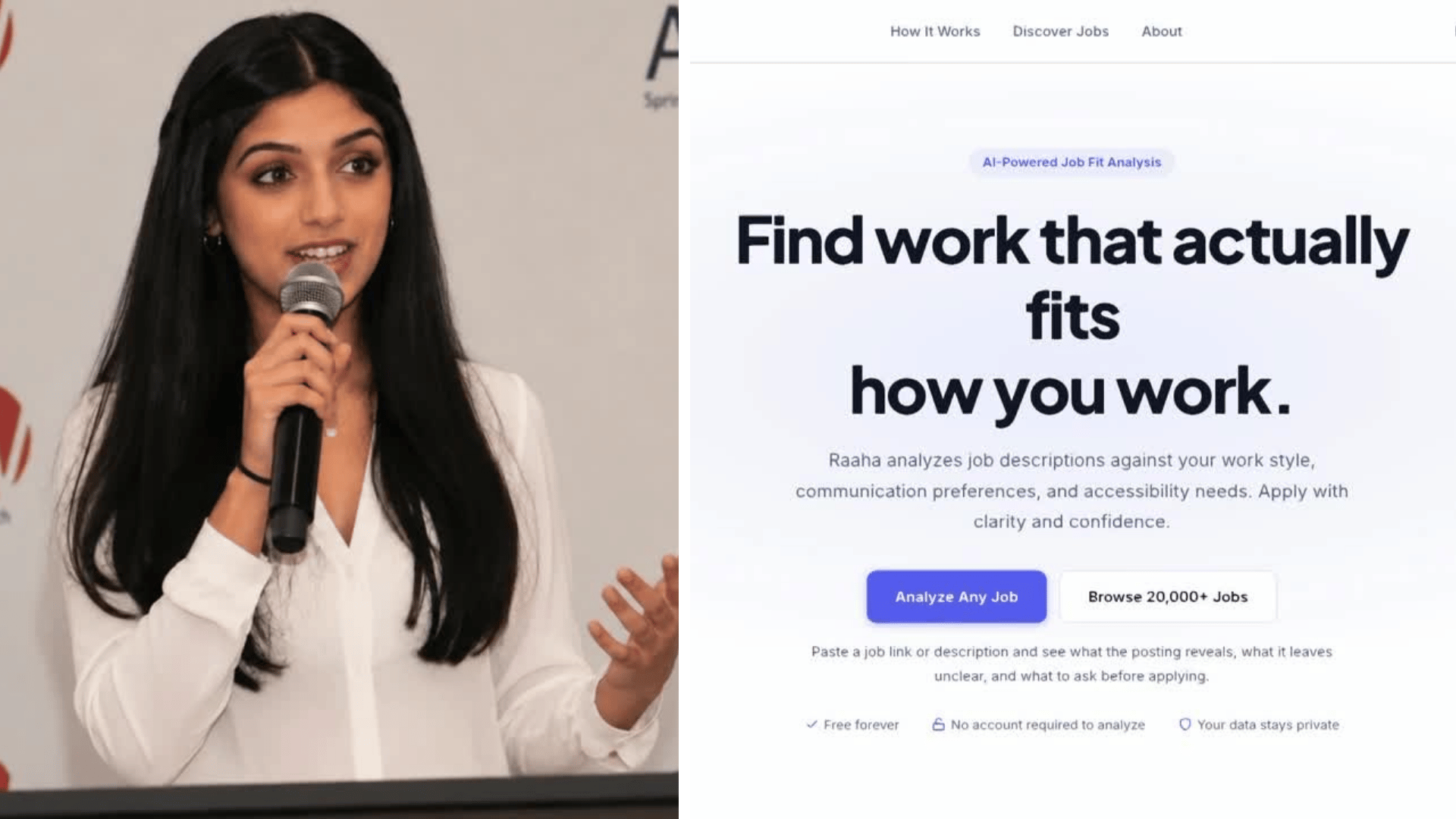


RICHMOND, Va. — A 17-year-old Northern Virginia student launched a free app and website to help neurodivergent job seekers find positions that match how their brains work — inspired by her mother's experience in the workplace.
Navya Tuteja launched Raaha — meaning "path" in Hindi — this past June. The platform is designed to go beyond the standard job listing by helping neurodivergent users find work environments suited to them.
"I think a lot of job platforms, they obviously tell you salary, location, benefits, but for neurodivergent people, they don't tell you whether the work environment will fit how your brain works," Tuteja said.
According to the Cleveland Clinic, the term neurodivergent refers to people whose brains work differently — common examples include autism and ADHD. Tuteja describes these conditions as invisible disabilities.
"Having a disability that people can't see, you have to work so much harder, I think, to get support," Tuteja said.
The idea grew from watching her mother navigate the workplace with a hearing disability.
"My mom is hard of hearing," Tuteja said. "As I got older, I saw in her workplace, her disability just wasn't visible enough to get the accommodation she needed."
Raaha is completely free to use. Users create an account and take a short quiz that asks about sensory preferences, communication styles, preferred environments, and disability disclosures.
"What sensory things you prefer, if you want to say what disability you have, or like if you just how you like to communicate, what environments you like, and we score all those against scoring logic that I made, some algorithms across seven dimensions, and then you get a score. And then we have a list of jobs," Tuteja said.
Tuteja consulted experts and used artificial intelligence to help build and analyze the platform. She says Raaha now has hundreds of users up and down the East Coast.
"I just really wanted to do something to help these people, because I didn't see any concrete solution yet," Tuteja said.
In addition to Raaha, Tuteja also wrote a children's book called The Day the Colors Disappeared to raise awareness around neurodivergence.
She says she is not done yet.
"I think everyone is like, 'Oh my God, you're only 17 and you've done all this,' but in my mind, I'm happy with what I've done, but I just feel like you can always do more to help people, so that's just like my mindset ... I just want to keep doing more," Tuteja said.
Watch for Joi Fultz's reporting on CBS 6 and WTVR.com. Have a story idea or tip for Joi? Email her.
📲: CONNECT WITH US
Blue Sky | Facebook | Instagram | X | Threads | TikTok | YouTube

This story was initially reported by a journalist and has been converted to this platform with the assistance of AI. Our editorial team verifies all reporting on all platforms for fairness and accuracy. To learn more about how we use AI in our newsroom, click here.

