


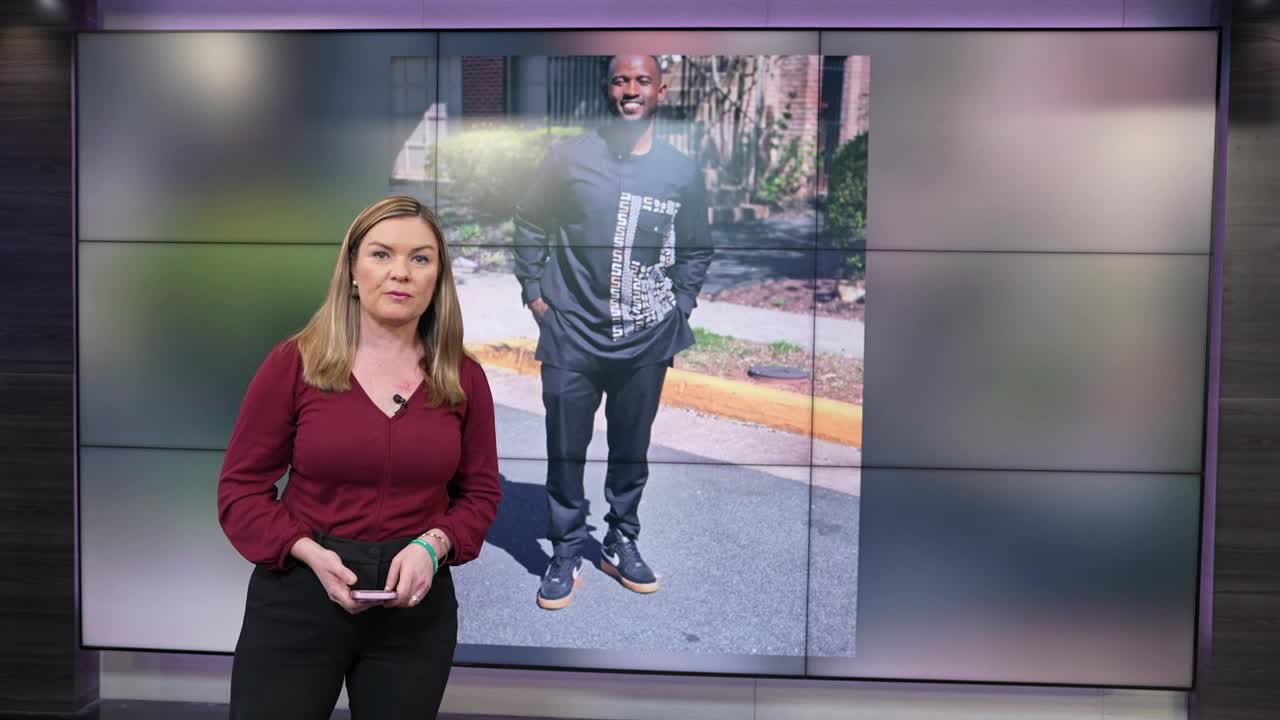


RICHMOND, Va. — A federal judge sentenced Old Dominion University shooter Mohamed Bailor Jalloh to 11 years in prison in 2017 for the crime of attempting to provide material support to a designated foreign terrorist organization.
Prosecutors had recommended Jalloh get a 20-year sentence.
Jalloh was released on Dec. 23, 2024. He had been granted an early release from federal prison after completing a drug treatment program, a person familiar with the matter told The Associated Press.
On Thursday, a little over a year after his release, he shot and killed Army ROTC instructor Lt. Col. Brandon Shah at ODU. The FBI is now investigating the shooting as an act of terrorism.
A review of the transcript from Jalloh's 2017 sentencing hearing sheds light on the thinking of Judge Liam O'Grady when he handed down a sentence well below what federal prosecutors sought.
O'Grady told Jalloh directly during the hearing that his background was a factor in the decision.
"You had a terrible upbringing, and you were able to overcome that and come here and become a naturalized citizen, and go to college and work and join the National Guard. And then you took a 90-degree turn and radicalized very quickly," O'Grady said.
"You have no criminal history and you have been a law-abiding citizen and a member of the National Guard," O'Grady said.
The judge said Jalloh's sentence "should reflect the good things you have done as well as the horrendous things."
O'Grady also described the offense as "really troubling" because Jalloh was "willing to take significant steps to support ISIL even though" he had "spent six years in the National Guard."
The judge said it was "really hard to understand" the offense given Jalloh's background, and that "as a result, it merits a very significant sentence to deter others."
CBS 6 legal analyst Todd Stone said the judge weighed several mitigating factors when arriving at the reduced sentence.
"I think the judge considered the fact that he had no prior criminal history, that he had served in the National Guard for six years, that he had provided information to the FBI upon his arrest," Stone said. "There was a psychological assessment done that said he was a low risk for a future violent act, all these things combined I think made the judge decide this is an appropriate sentence and gave him 11 years."
O'Grady also noted during the sentencing that federal sentencing guidelines actually recommended a term far longer than the 20 years prosecutors sought, but a federal law caps the maximum sentence for attempting to provide material support to a designated foreign terrorist organization at 20 years.
Stone said that cap is a matter for lawmakers, not judges.
"If people disagree with a 20-year maximum for this particular offense, the people they need to take that up with are in Congress, you know, a judge has no control over that whatsoever," Stone said.
Stone said judges are human and no human is able to determine what someone is going to do in the future. He said judges have to make decisions based on the information available at the time — and that can be a very difficult thing to do.
This is a developing story. Email the CBS 6 Newsroom if you have additional information to share.
📲: CONNECT WITH US
Blue Sky | Facebook | Instagram | X | Threads | TikTok | YouTube

This story was initially reported by a journalist and has been converted to this platform with the assistance of AI. Our editorial team verifies all reporting on all platforms for fairness and accuracy. To learn more about how we use AI in our newsroom, click here.

