




CHESTERFIELD COUNTY, Va. — A majority of judges who reviewed allegations and video involving the deadly police shooting of Charles Byers found the use of force was unreasonable. That opinion was published Friday by the U.S. Court of Appeals for the Fourth Circuit, and it upholds what a lower court had already determined.
The judges' ruling opens the door for the Byers family's federal $35 million lawsuit against Chesterfield County and Officer Gordon Painter to proceed. The family has alleged a failure to de-escalate the situation and excessive force.
“I’m relieved. I’m pleased," Byers' mother Peggy Byers said in reaction to the court's opinion. “We believed from the very beginning that it was excessive force. I mean, our son is dead. He was killed. He was shot in the street. That's excessive.”
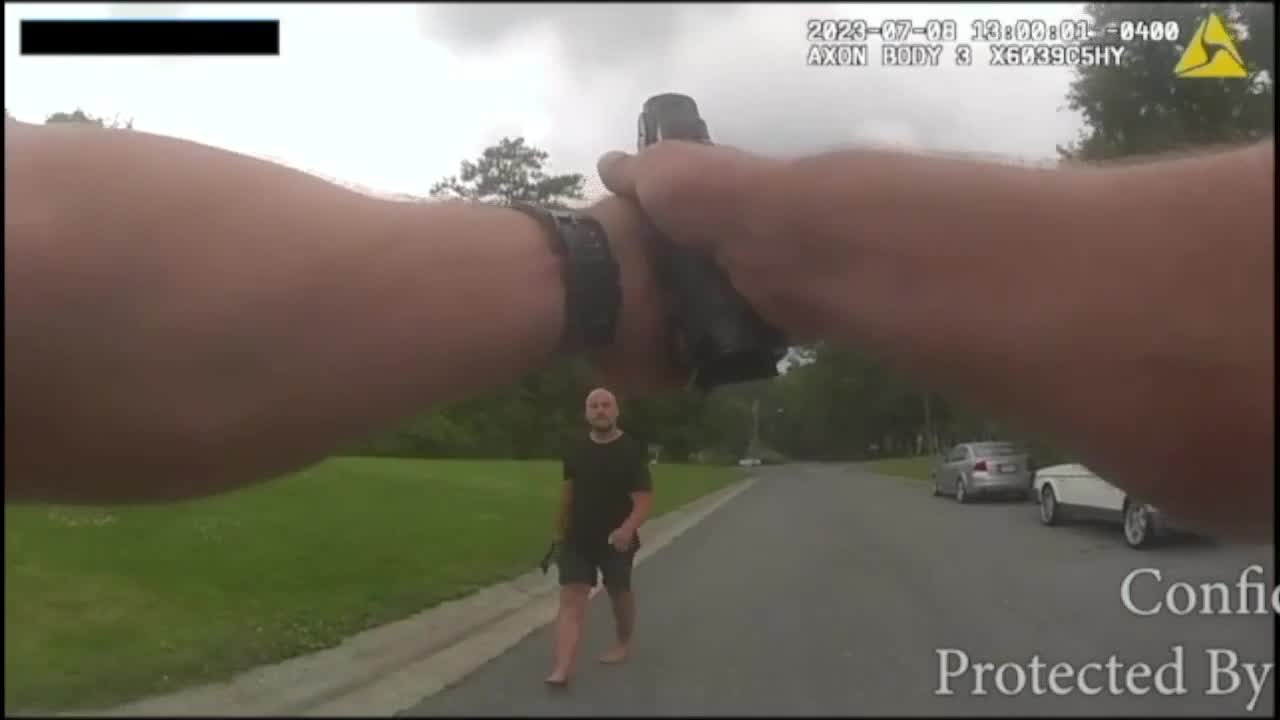
As CBS 6 has previously reported, in July 2023, two officers responded to reports of breaking and entering in a residential neighborhood and arrived at the scene to find Byers holding a hatchet.
At the time, Byers was in a mental health crisis and under an active temporary detention order, which required him to receive treatment in a psychiatric facility. Previous allegations involving the hospital and entities accused of inappropriately removing him from care have been settled.
Within about 45 seconds of officers finding Byers, Painter shot him multiple times, including in the back. Video showed Byers backing away from officers when he was shot. He did not comply with many commands to drop the hatchet.
District Court Judge Roderick Young initially denied qualified immunity to Painter, finding there was "no basis" for the officer to feel threatened. County attorney Julie Seyfarth challenged that, arguing Young failed to consider the totality of the circumstances.
Now, after hearing oral arguments in September, the appeals court has affirmed Young's decision, with two members of the three-judge panel agreeing.
“It was clear the moment I saw the video that it was unconstitutional, and now three years after, the Fourth Circuit has confirmed what we've known the entire time," said Paul Curley, attorney for the Byers family.
In an opinion from Judges Barbara Milano Keenan and Roger Gregory, they wrote that Byers "did not pose an immediate threat to the officers or others" based on the plaintiff's allegations and body camera footage of the incident.
Explaining why, they said he "kept the hatchet lowered at his waist throughout the encounter and never made any movement suggesting that he intended to use" it. They also cited that Byers was allegedly 25 feet away from the officers, walking away from them throughout the encounter, only minimally resisting, and not near any bystanders.
They wrote "no reasonable officer would think that shooting a man in these circumstances, including shooting him in the back after he had begun to turn away from the officers, was proportionate to the minimal resistance Byers gave."
They said Officer Painter should have known his actions were unreasonable based on clearly established law.
“It is not justifiable to use deadly force against a retreating suspect accused of a non-violent crime, who does not present an immediate danger to the officers or to others and already has sustained multiple gunshot wounds at the hands of the police," the judges wrote.
But a third judge, Albert Diaz, disagreed with the majority. In a dissenting opinion, he said Painter's actions did not violate clearly established law.
Diaz emphasized the moments during the encounter when Byers was heard telling the officers to "come get" the hatchet and when he was observed briefly raising the hatchet "so that the blade faced the officers."
"Respectfully, my colleagues are splitting the thinnest of evidentiary hairs. Worse, they’re quick to ascribe benign intent to an axe-wielding man on a public street who ignores over a dozen commands to drop his weapon, and instead challenges officers to take it. That magnanimous view is easy for judges to draw in the calm and comfort of chambers. But 'officers on the beat are not often afforded the luxury of armchair reflection,'" Diaz wrote.
Diaz said that because the court has not held that officers cannot use deadly force under these circumstances, Painter should be entitled to qualified immunity.
When reached by CBS 6, county attorney Julie Seyfarth declined to comment on the court's opinion, citing pending litigation. Prior to the lawsuit, the Chesterfield Police Department firmly stood by the officer's actions and cleared him internally of any wrongdoing.
Curley said moving forward, he will attempt to prove that systemic failures are at play in the case.
“We've alleged that Chesterfield County's training policies, its disciplinary policies contributed or led to the shooting of Charlie Byers," Curley said.
“There were lots and lots of ways to have defused the situation peacefully, and our son would be alive today," said Byers' father Michael Byers. “Our family has suffered greatly, and we will get justice.”
CBS 6 is committed to sharing community voices on this important topic. Email your thoughts to the CBS 6 Newsroom.
📲: CONNECT WITH US
Blue Sky | Facebook | Instagram | X | Threads | TikTok | YouTube


