


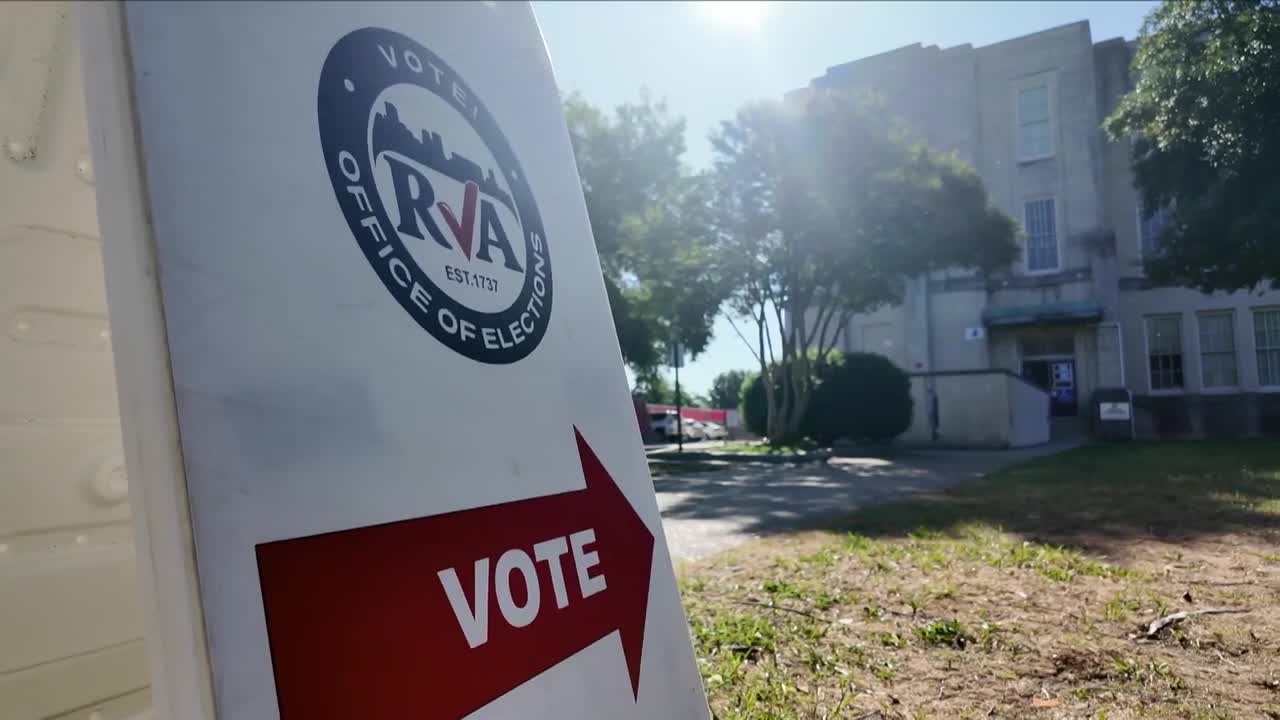


RICHMOND, Va. — When early voting begins September 18th, residents in 47 cities and counties across Virginia will be asked whether their locality should enact a new one-percent sales tax to fund new school construction and renovation.
That was the update state lawmakers on the Commission on School Construction and Modernization were briefed on during a meeting Tuesday.
"Which is a remarkable response in the first year of a statewide authority, and I think it shows the significant demand among local governments for additional statewide or additional construction tools," said Jeremy Bennett, Director of Intergovernmental Affairs with the Virginia Association of Counties. "It's interesting that we are moving from just a handful of localities to potentially dozens at once, being able to do this and implementing it."
Language included in the state budget that took effect on July 1, all localities were given the ability to ask its residents if the tax should be implemented. Previously, only nine localities had been granted permission by the state to do so (Virginia is a Dillon Rule state where localities need only have powers that have been expressly granted by the state).
If approved, the tax would apply to most goods, with exceptions for groceries, medicine and personal hygiene products. The money could be used for new school construction projects and renovations (it could also be used for transportation projects in Northern Virginia).
Presenters told lawmakers that if voters in all 47 localities approved the tax, it would raise an estimated nearly $1.3-billion over the next three years.
"For some localities, we're talking about several hundred thousand dollars annually and others we're looking at several million dollars annually," said Josette Bulova, Policy and Communications Coordinator for the Virginia Municipal League."Although this is a wide range, even $1- or $2-million in recurring revenue can make a meaningful difference for local governments when determining the ability to pay for a project, finance it, manage future debts, or begin major renovations."
They also provided a breakdown of how much each locality is anticipated to collect if the tax is implemented.
"The estimated revenues range from roughly $1.1-million annually in Allegheny to $1.6-million in Floyd to approximately $50-million right here in Richmond, and nearly $60-million in Chesterfield," said Bulova.


Richmond is among the localities asking voters to support the tax. City officials say the burden wouldn't fall entirely on residents — out-of-town shoppers would also contribute.
CBS 6 spoke to Henrico County reisdents Hannah and Alex Bullens who were shopping in Carytown on Wednesday.
Henrico County is not asking voters to approve the tax and the Bullens said if Richmond were to approve the tax, it would not deter them from continuing to shop in the city.
"We love coming down here to Richmond to to shop and do stuff, and I think that if the voters approve something like that, I think it's you know something we would support," said Alex Bullebs. "Especially if it's going to be used for a good thing like education."
"As long as it's used how it's being specified, that it would go towards the schools, we wouldn't have any problem paying more, so that it goes to a good cause," added Hannah Bullens. "Seems like a win-win, truthfully,"
Another shopper, Kiana, echoed those sentiments and said she supported her city, Newport News, seeking to implement the tax as well.
"We have expenses for everything, and if it's anything that's going to promote our educational system with better construction for the kids. I'm a big advocate for education," Kiana said.
If approved in any locality, the tax is set to end 20 years after it is implemented.
Lawmakers at Tuesday's meeting also discussed the possibility of allowing the revenue to be used to pay down school construction projects already underway.
Early voting on the referendum begins next Friday, Sept. 18.
CBS 6 is committed to sharing community voices on this important topic. Email your thoughts to the CBS 6 Newsroom.
-
-
Eat It, Virginia! with Scott and RobeyUntold with Catie Beck
-
-
-
This story was initially reported by a journalist and has been converted to this platform with the assistance of AI. Our editorial team verifies all reporting on all platforms for fairness and accuracy. To learn more about how we use AI in our newsroom, click here.
 Facebook
  TikTok
  YouTube
 Blue Sky
 Instagram
 Threads
 X
X
