


RICHMOND, Va.— A CBS 6 investigation is prompting some state lawmakers to call for more scrutiny after audits of a prominent nursing home chain's financial reports flagged millions in questionable costs.
But as CBS 6 previously reported, the audits' findings will have no impact on how much taxpayer money the facilities receive in reimbursements.
Two state legislators, Delegate Wren Williams (R-Galax) and Senator Glen Sturtevant (R-Colonial Heights) have sent letters to Virginia's Medicaid agency, the Department of Medical Assistance Services (DMAS), questioning its oversight of nursing home finances.
“I really sort of picked it up from your reporting. I saw that this was sort of an eyebrow raiser, and I had concern," Del Williams said, when asked why he sent the letter.
“We have these loopholes and gaps in Virginia's laws and regulations right now as it pertains to nursing homes," Sturtevant said.
Both Republicans cited our reporting on the Innovative Healthcare Management, also referred to as Lifeworks Rehab, chain.
Federal regulators give the chain a below average performance rating. Some of its facilities in Central Virginia, including Colonial Heights Rehab, Westport, and Henrico Health and Rehab, were among the lowest rated, though those three facilities recently changed ownership.
CBS 6 first reported that the state was declining to consider for reimbursement about $65 million in expenses from the chain's 37 nursing facilities' 2024 cost reports following audits by DMAS contractors.
The chain initially appealed many of those adjustments but later withdrew that action, according to DMAS.
Williams said his questions didn't surround the audit findings themselves, but rather, what DMAS did or didn't do with them.
“It certainly looks like it is the intention of DMAS and the state not to hold anybody accountable for the $65 million that were disallowed," Williams said.
PAST COVERAGE: After years of doing 'nothing,' VDH moves to use its powers against troubled nursing homes
Taxpayer dollars, through the Medicaid and Medicare programs, fund most nursing home care and operations.
Medicaid, the primary payer, is managed by DMAS at the state level and reimburses nursing homes at set rates.
Those rates are determined based on costs reports submitted by the providers and are audited by DMAS to ensure reported expenses are reasonable, properly documented, and allowable for reimbursement purposes. Any reported costs that do not meet those standards are "disallowed," meaning those costs would not be factored into rate-setting processes.
DMAS said its audits of the 2024 cost reports were focused on related-party transactions, which occur when a nursing home does business with another company that shares common ownership or control.
Related-party transactions are common in the nursing home industry but have come under scrutiny by some researchers and consumer advocates who say they carry a greater risk of increasing costs above fair market values.
Across the Innovative chain, auditors cited similar issues on nearly every facility's cost report including related-party management fees above the allowed limit, undocumented related-party consulting fees, and what they called "excessive bulk purchases."
Auditors said some purchases appeared to have been made at the end of the fiscal year "solely to inflate costs" during a year that would set reimbursement rates for the next three-year cycle. Auditors warned that any "artificial inflation" of costs could lead to overpayments.
In a previous statement, a spokesperson for the 37 facilities said all costs were to enhance care and were believed to have been properly documented.
In appeal filings, the facilities argued auditors identified related parties that were not actually related parties. However, DMAS maintained that the facilities did not provide sufficient proof that the entities in question were unrelated.
Beyond disallowing the costs, DMAS told CBS 6 it saw no need to further investigate the cost report "discrepancies" or the providers' lack of supporting documentation any further.
On the question of potentially "inflated" costs at Colonial Heights Rehab, DMAS said it did not refer those findings to the Medicaid Fraud Control Unit, citing a lack of documentation which prevented a clear assessment of the costs.
“I thought that was almost the strangest piece of this. Why would you say that? Why would you address it like that? Because it was like, 'Oh, they don't have their paperwork together, and so we're not going to take any action,'" Williams said.
MORE: Majority of nursing homes under some of Virginia's biggest chains rated below average
In their letters to DMAS, Williams and Sturtevant argued the lack of documentation should lead to more scrutiny, not less.
“I think everything that DMAS has found is the exact evidence as to why they need to do more investigation," Sturtevant said.
Meanwhile, Senator Barbara Favola (D-Arlington), who chairs a powerful healthcare committee in the General Assembly, disagreed with those opinions.
“I feel [DMAS is] being very deliberate, and they're taking the steps they need to take," Favola said.
When asked whether she shared concerns over the decision not to make a referral based on the findings, Favola said, “I would like the department to first try to get as much documentation as possible. I think they are trying to do their due diligence."
Favola added, "I mean, passing the buck to another unit because you don't have enough information— I don't know what that solves either.”
Democratic Delegate Delores McQuinn (D-Henrico) sponsored 2026 legislation directing, in part, a state study of nursing home financial structures.
She said while DMAS was right to disallow the costs, she wonders if more should have been done.
“Why is it the only process that we have is to disallow those things to be taken care of?" McQuinn said. "Is it enough to just say, well, we disallow a pay, we disallow for this company or these entities to be paid. I think that we probably need to look at something else in terms of process.”
But even in this case, disallowing the costs will have no real impact on how much the nursing homes get paid by Medicaid.
The 2024 cost reports were supposed to be used to set new rates to take effect in 2027, and all disallowed costs would have been prevented from affecting those calculations.
But the General Assembly voted to delay rate calculations to 2030, a move the nursing home industry lobbied for. Industry representatives said the delay would allow for an examination of the Medicaid reimbursement system, which they said does not pay nursing facilities enough to cover costs of care.
Delegate Rodney Willett (D-Henrico) brought forward the measure and said it was unrelated to any audit findings.
The reason he gave for the rebasing delay is that the 2024 cost data was impacted by COVID-19.
Sturtevant said that explanation raises even more questions.
The current rates, which will now be used through 2030, were based on cost reports from 2021, a peak year for Covid-19.
“Why are they still using these Covid-era cost estimates to do the reimbursements?” Sturtevant said.
Sturtevant said he was further concerned that DMAS' audits excluded an examination of the facilities' related-party rent transactions as he believed the reported related-party rent for Colonial Heights Rehab to be significantly high. A spokesperson for that facility previously said the rent reflected fair-market value.
DMAS said capital accounts were not audited as those expenses do not affect reimbursement rates. Capital-related reimbursement rates are set through a different process.
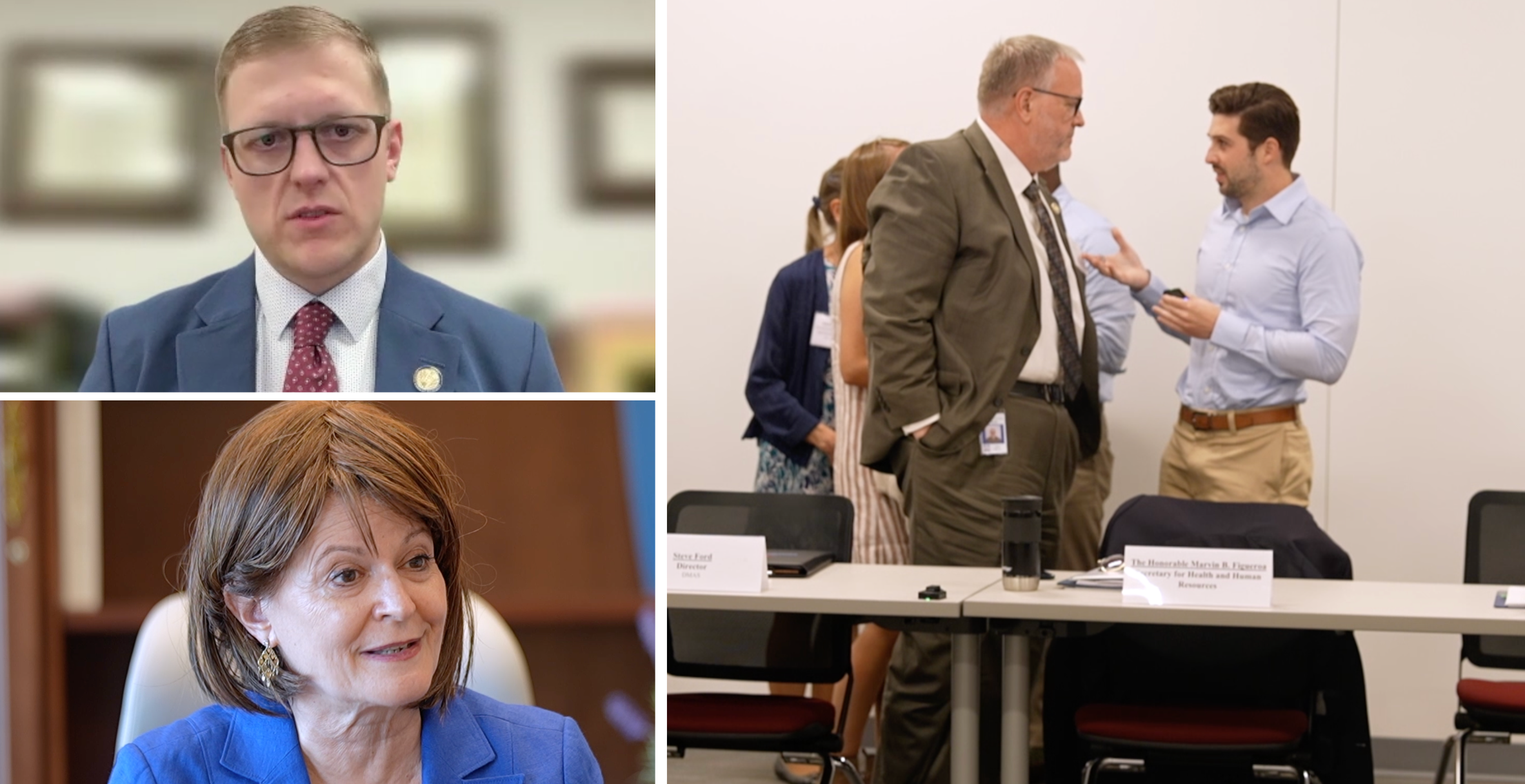
The agency has never agreed to an interview with CBS 6 on this topic, so we attempted to ask Director Steve Ford about it at a public nursing home oversight panel meeting in July.
Ford was formerly employed with the nursing home industry's prominent trade association before he was tapped by Governor Abigail Spanberger earlier this year to lead DMAS.
PAST COVERAGE: Spanberger admin to resume nursing home oversight board: 'The stories we're hearing concern me'
When asked if we could pull him aside to ask about the cost report audits, Ford said at the time he could not speak about the cases because there was ongoing activity related to the appeals. A spokesperson previously indicated that the appeals were in the midst of a settlement phase.
CBS 6 asked whether we could interview Ford once the settlement process was complete.
Ford said, "Sure."
However, in September, DMAS said the provider withdrew the appeals, rendering the cases closed.
CBS 6 followed up requesting an interview with Ford, and a spokesperson declined our request.
“I just think we have to stay on this. I think that they would like it to go away, right? They don't want to be continued to be held in the spotlight of, 'Hey, where'd this money go?'" Williams said.
Despite differing viewpoints, legislators on both sides of the aisle said they wanted to continue evaluating the best ways to protect taxpayer dollars and promote quality of care for the vulnerable.
“The fact that you're able to investigate and provide this kind of information to us, I think absolutely it forces us to pay attention to what's going on and to make sure again that the quality of services are being delivered, but also that we pay close attention to the dollars," McQuinn said.
CBS 6 reached out to a spokesperson for the Innovative chain to request comment on why it dropped the appeals. We also requested comment on Williams' and Sturtevant's letters. We have not heard back.
CBS 6 is committed to sharing community voices on this important topic. Email your thoughts to the CBS 6 Newsroom.
Watch Tyler Layne's reporting on CBS 6 and WTVR.com. Have something for Tyler to investigate? Email him.