




CHESTERFIELD COUNTY, Va. — Freezing rain on top of snow has created dangerous conditions across the region, with officials urging drivers to stay off roads.

Local News
Winter storm causes 300 crashes across Virginia: 'Stay off roads'
"Drivers should wait for conditions to improve before resuming travel until at least mid-morning on Monday," VDOT officials said. "Drivers should stay off the roads unless absolutely necessary due to hazardous driving conditions and to assist with the safety of VDOT crews and emergency responders working along the roadways."
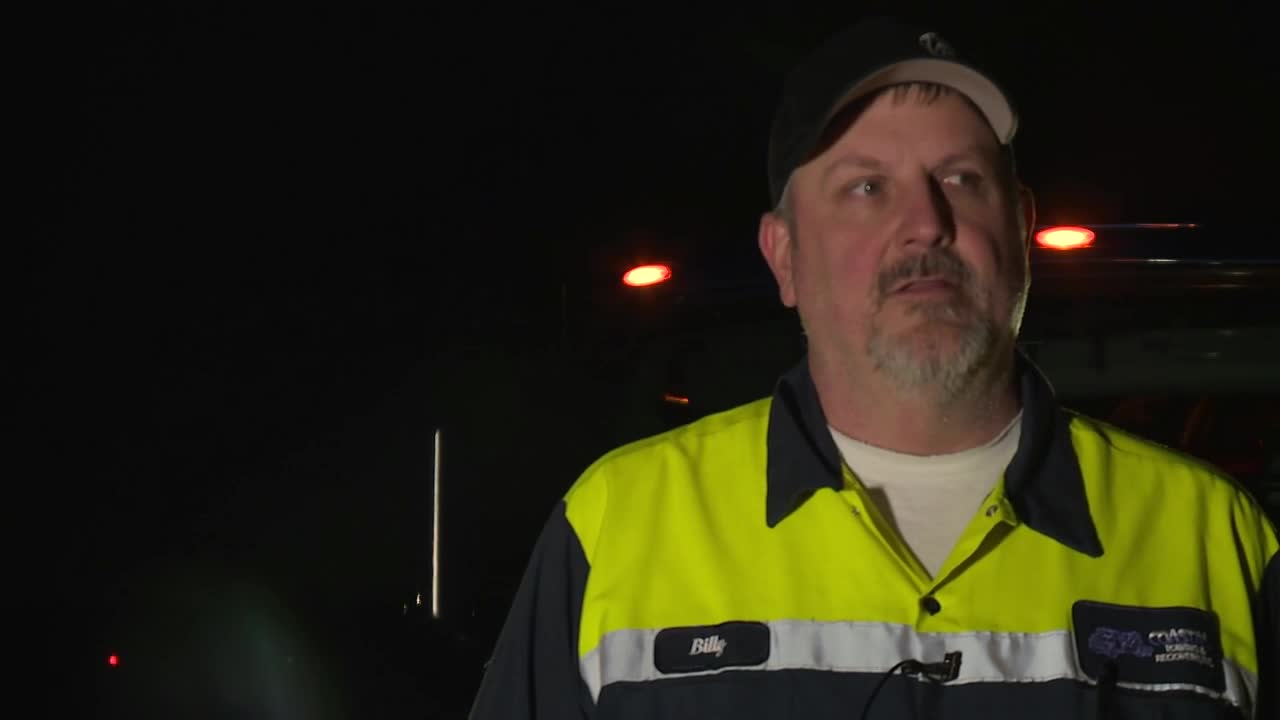
But if you have no choice but to drive, tow truck driver Billy Spivey shared crucial safety advice for anyone who finds themselves stuck or in a ditch during these conditions.
"If you can just stay in the car, wait for help, call the police, and we'll try to get there as fast as we can," Spivey said. "When you got these slick conditions you can't hear anything. When it's sliding, you don't hear no tire, you don't hear nothing, so you gotta keep your head on a swivel and hope you make it home safe."

Local News
Virginia Ice Storm Live Updates: Final wave has moved through
AAA shared the following tips for drivers who must be on the road, emphasizing the need to clear your vehicle of snow and ice before driving.
- Slow down: Accelerate, turn and brake gradually. Adjust your speed to the road conditions and leave ample room to stop.
- Do not tailgate: Normal following distances of three to four seconds on dry pavement should be extended to a minimum of eight to ten seconds when driving on slippery surfaces. Allow at least three times more space than usual between you and the car in front of you. The extra time will provide additional braking room should a sudden stop become necessary.
- Watch the traffic ahead: Slow down immediately at the sight of brake lights, fishtailing cars, sideways skids or emergency flashers ahead.
- Minimize the need to brake on ice: If you’re approaching a stop sign, traffic light or other area where ice often forms, brake early on clear pavement to reduce speed. Maintaining control of your vehicle is much more difficult when braking on ice-covered roadways.
- Control the skid: Slamming on the brakes can make the skid even worse. In the event of a skid, ease off the accelerator and steer in the direction you want the front of the car to go.
- Never use cruise control on slippery roads: Patches of ice can cause unexpected wheel spin and use of cruise control can slow driver response.
- Avoid unnecessarily changing lanes: This increases the chances of hitting a patch of ice between lanes that could cause loss of vehicle control.
- Use extreme caution on bridges and overpasses: Black ice typically forms first in shaded areas of the roadway and on bridges and overpasses that freeze first and melt last. Although the road leading up to a bridge may be fine, the bridge itself could be a sheet of ice.
- Do not brake and turn at the same time. Asking your vehicle to do two things at a time makes it more likely that your tires will lose traction. Brake first, then turn, then accelerate.
- Drive-distraction free. Do not text or engage in activities that will distract you while driving. If driving with a passenger, ask them to carry out activities that would otherwise distract you from driving safely.
- Move over for first responders: Move over one lane for law enforcement and emergency roadside personnel assisting motorists. If you are unable to move over, slow down. It is the law.
- Carry a winter emergency kit in your car: AAA recommends that a winter emergency kit include:
- Abrasive material (sand, snow melt products, cat litter) or traction mats
- Snow shovel (folding shovels are available)
- Flashlight with extra batteries
- De-icer
- Ice scraper with brush
- Jumper cables
- Extra warm clothing (gloves, hats, scarves), and blankets
- Reflective vest
- Warning devices (flares or reflective triangles)
- Drinking water and non-perishable snacks for both human and pet passengers
- If traveling with an infant, be sure to pack extra food and supplies
- First-aid kit
- Basic toolkit (screwdrivers, pliers, adjustable wrench)
- Mobile phone (and charger) pre-programmed with rescue apps and important phone numbers including family and emergency services
- Snacks/drinking water for passengers and any pets
- Cloth/paper towels
This is a developing story. Email the CBS 6 Newsroom if you have additional information to share.
📲: CONNECT WITH US
Blue Sky | Facebook | Instagram | X | Threads | TikTok | YouTube

This story was initially reported by a journalist and has been converted to this platform with the assistance of AI. Our editorial team verifies all reporting on all platforms for fairness and accuracy. To learn more about how we use AI in our newsroom, click here.

