


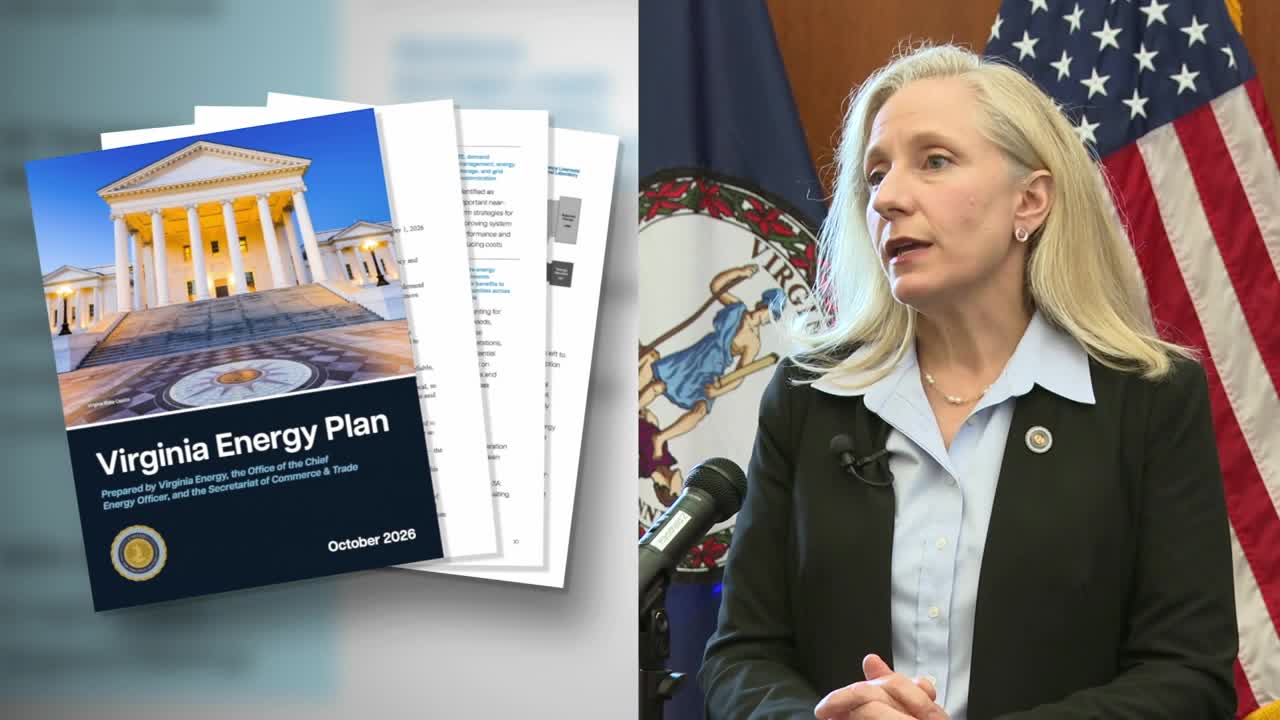


RICHMOND, Va. — Governor Abigail Spanberger released a new roadmap for Virginia's energy future Thursday, one she said has several options to meet project demands while reaching the net-zero emissions goal of the Virginia Clean Economy Act.
Called the Virginia Energy Plan, Virginia law requires its governor to release one every four years. Spanberger said this one was created through months of stakeholder meetings, input sessions, and surveys.
"This plan in particular arrives at a moment unlike any in our recent past. Electricity demands are rising, and our energy system will need to grow at a pace that we have not seen in more than 80 years," said Spanberger.
The nearly 200-page document lays out how the state's energy costs and demands have increased in recent years, driven heavily by data centers, and that Virginia imports 30% to 40% of its electricity annually, which is the highest percentage in the nation.
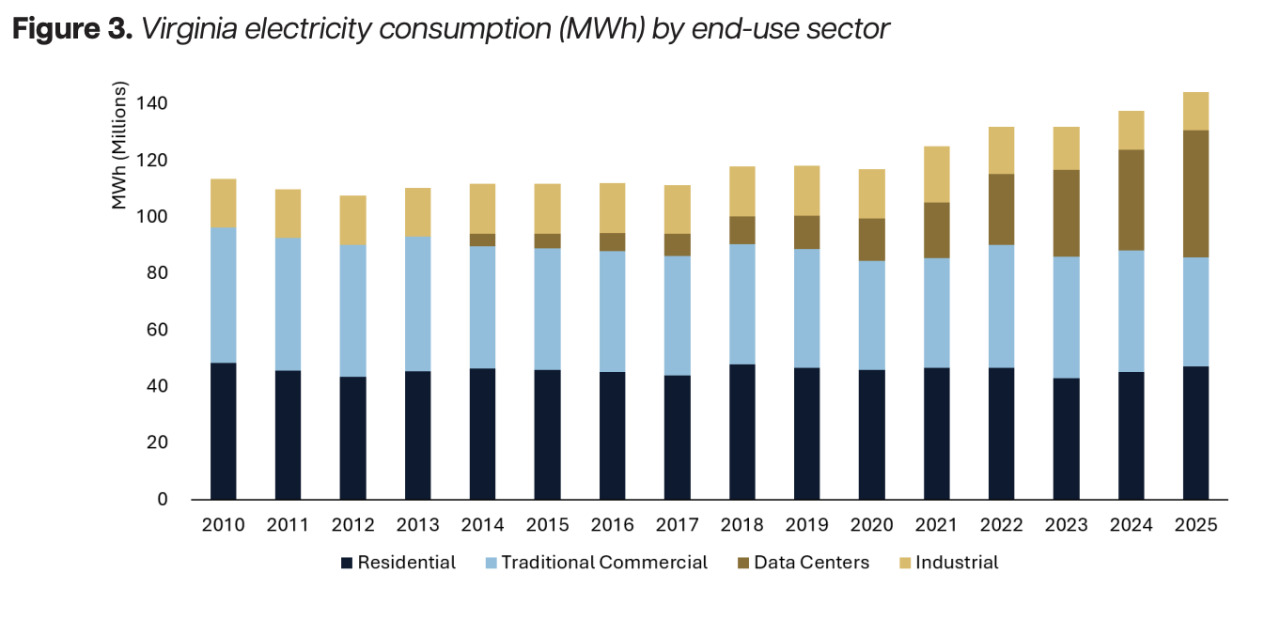
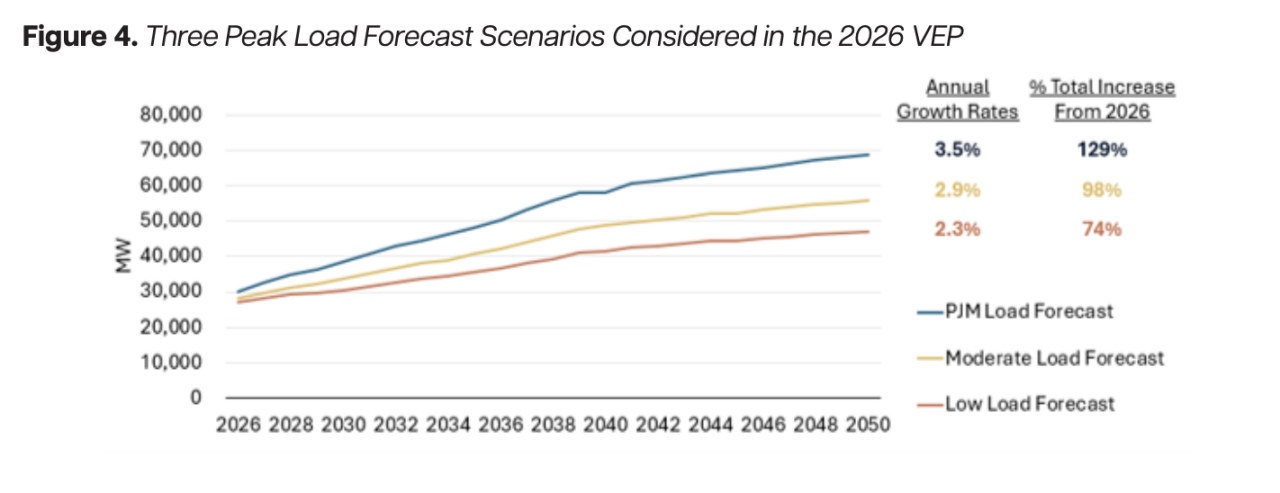
It added that even based on a moderate projection (and which Spanberger's administration said they based the plan off of), energy demand is expected to increase by 98% by 2050.
"Our job now is to make sure that Virginia is prepared to be nimble, responsive, and importantly innovative, because we need to deliver an affordable, reliable, clean energy future across our Commonwealth," said Spanberger.
The plan charts five options to deal with this expected demand, including four options that officials said would meet the demands and the VCEA requirements. One option is maintaining the status quo, while Spanberger said she supports the three other pathways dubbed the "Distributed Flexibility Scenarios".
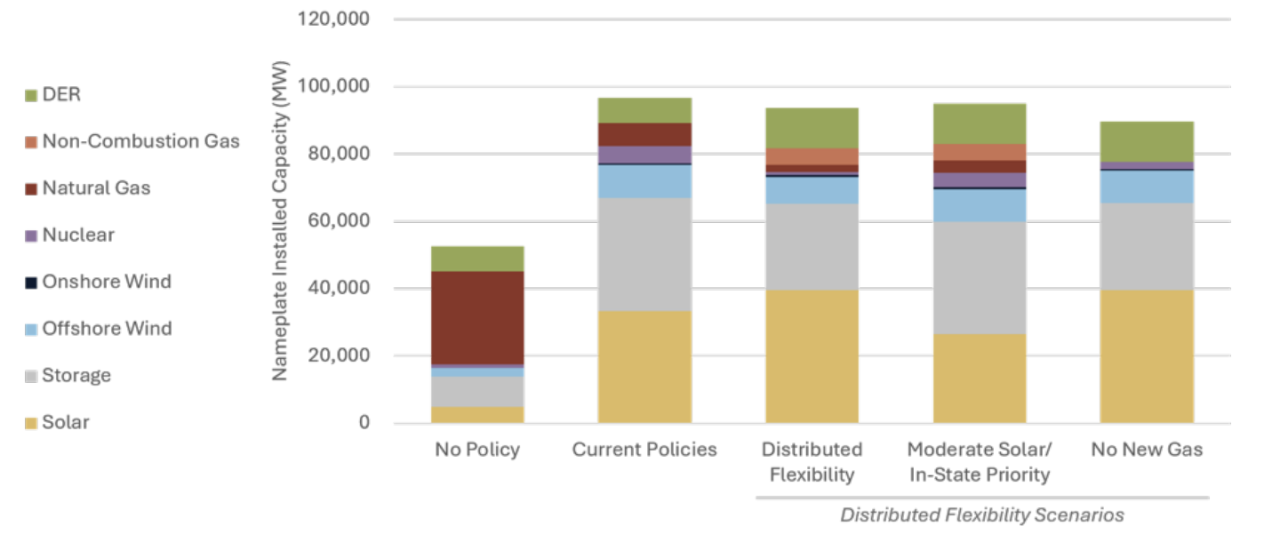
"These pathways explore the impact of a greater focus on distributed energy resources, demand flexibility from data centers, and the use of non-combustion resources like fuel cells and linear generators," said Virginia's Chief Energy Officer Josephus Allmond. "We also look at what would happen if solar deployment was limited, where we limit Virginia's reliance on external energy imports, or if we didn't build any new gas. These different scenarios showed us that there are multiple pathways that can deliver better outcomes for Virginia."
"The reason that we present them as a suite is because they do demonstrate the needed flexibility," added Spanberger. "That if there are innovative changes in types of technology…if there might be supply chain challenges into the future, what does that mix and that push and pull look like?"
The plan also includes a fifth pathway that would see Virginia repeal the VCEA and leave the Regional Greenhouse Gas Initiative (RGGI). But it claims that pathway will lead to less new energy capacity and cost more when factoring in the social costs of carbon and its health impacts.
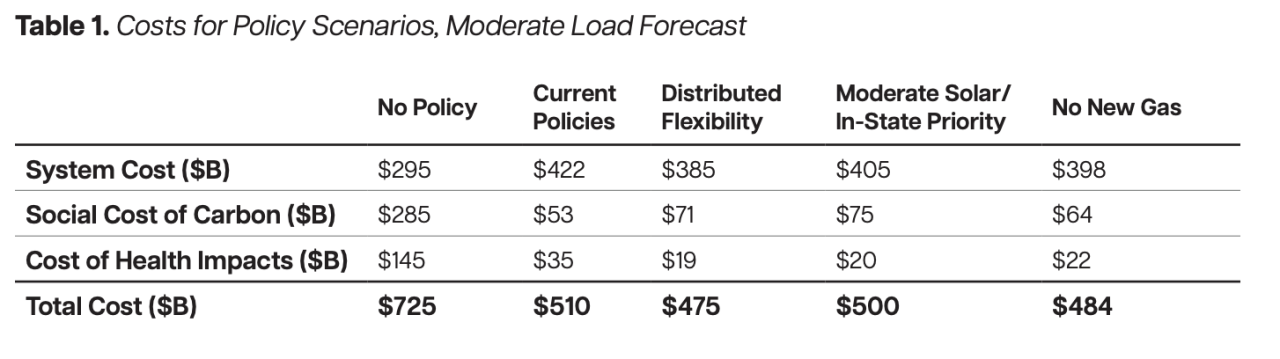
But Republican lawmakers are critical of the plan, with House Minority Leader Terry Kilgore (R-Scott) saying the plan "is the strongest argument we've seen yet for repealing the Virginia Clean Economy Act and getting Virginia out of RGGI. By their own math, meeting Virginia's power needs will be more than $100 billion cheaper if we took that common sense step."
"This is not really an energy plan. It is, I think, more accurately, a data center solar panel industry plan," said State Senator Glen Sturtevant (R-Chesterfield), who added the plan highlights ongoing impacts data centers will have on Virginia's energy grid and why he wants a moratorium on them.
"It is very simple how we can lower Virginians' electric bills very easily and that is first and foremost with a data center moratorium and legislation that will require data centers to pay the full cost of their impact on our grid. Secondly, it's to get Virginia out of RGGI," he added. "Then to repeal and replace the Virginia Clean Economy Act, so that we can get back to in all-of-the-above energy approach where we can utilize small modular reactors and we can utilize oil and gas and traditional forms of energy and it's not forcing Virginians to pay the higher costs needed for solar farms and these wind farms."
Full implementation of the plan will require actions from regulators, power companies, and lawmakers.
Spanberger said she briefed the latter group Wednesday and is working on legislative proposals for them to consider in the next General Assembly session in January.
In a statement, a spokesperson for Dominion Energy said the governor's focus on "affordability, reliability, and increasingly clean energy reflects priorities we share as we work to meet Virginia’s growing energy needs."
"Meeting the demand will require an all-of-the-above approach that expands power generation in Virginia and ensures reliability. The proposed combination of Dominion Energy and NextEra Energy would further strengthen our ability to deliver reliable and increasingly clean energy while keeping costs affordable for customers," they added.
CBS 6 is committed to sharing community voices on this important topic. Email your thoughts to the CBS 6 Newsroom.
Watch Cameron Thompson's reporting on CBS 6 and WTVR.com. Have something for Cam to investigate? Email him.

-
-
Eat It, Virginia! with Scott and RobeyUntold with Catie Beck
-
-
-
This story was initially reported by a journalist and has been converted to this platform with the assistance of AI. Our editorial team verifies all reporting on all platforms for fairness and accuracy. To learn more about how we use AI in our newsroom, click here.
 Facebook
  TikTok
  YouTube
 Blue Sky
 Instagram
 Threads
 X
X
