


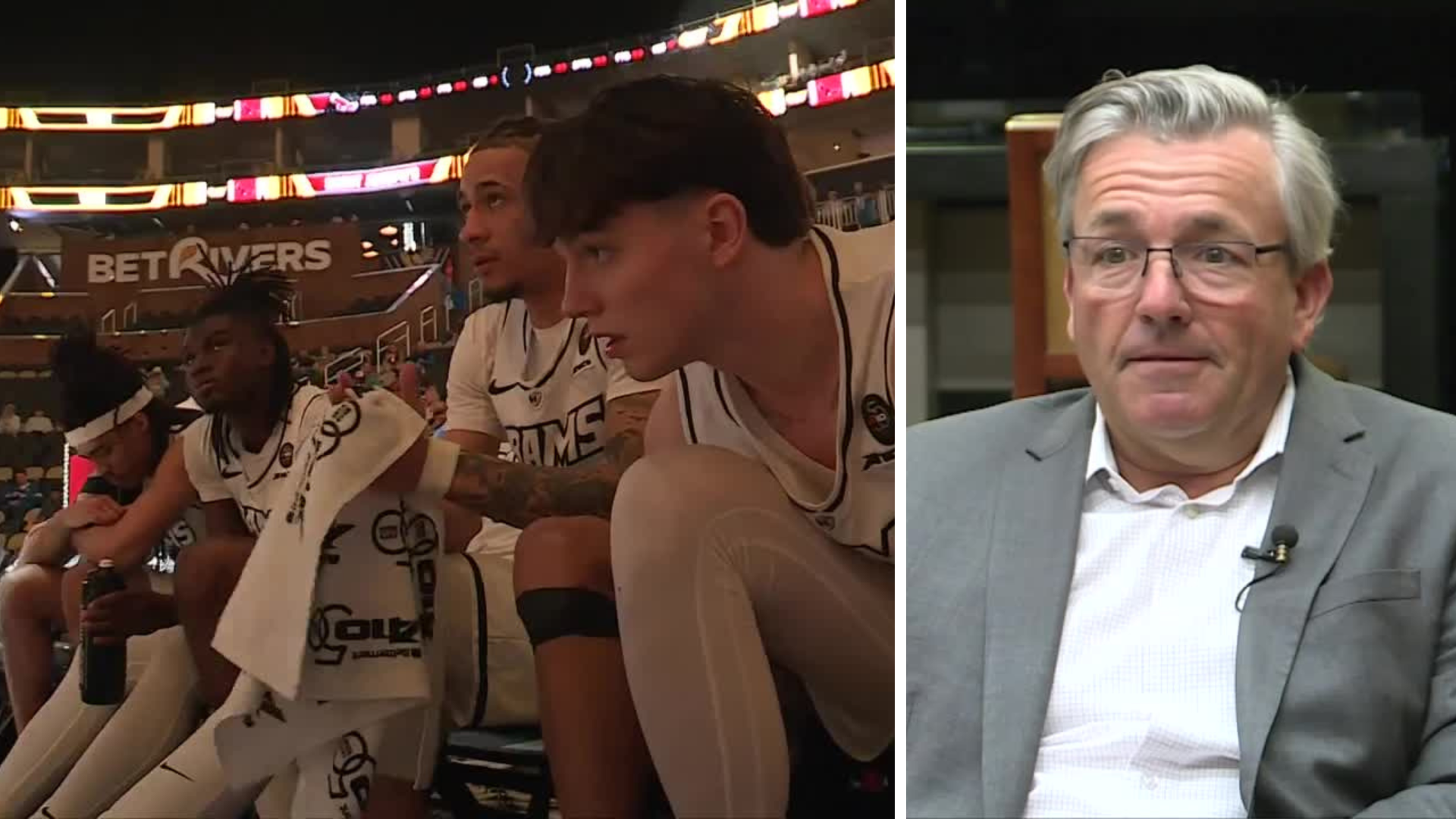


RICHMOND, Va. — By almost any measure, year one of the Phil Martelli Jr. era of VCU basketball was a resounding success — another Atlantic 10 tournament title and the program's first NCAA tournament victory in over a decade.
It was also the first year VCU entered into the NCAA's House Settlement, allowing the program to pay players through revenue sharing with the NCAA and outside sources.
Athletic Director Ed McLaughlin had previously said he thought VCU's budget to remain successful in men's basketball would be around $5 million per year. He recently reflected on the first season of name, image and likeness compensation.
"It was really hard. I mean, it was really hard. It wasn't hard to spend it. I can tell you that. I mean, but you put the resources together, and it's hard to do. And when we did it, it was when we announced that we would spend somewhere in that neighborhood, the national gasp was palpable," McLaughlin said.
Much like many of their mid-major brethren programs across the country, this was VCU's first foray into raising extra funds toward publicly and legally paying players. Some supporters of VCU athletics still could not get on board with what has now become the norm in college athletics.
"We've had some folks who have said, this isn't for me anymore, and I understand it, and if that's the case, those folks probably weren't as dedicated to the student athlete experience as they would have been towards, you know, towards the entertainment of it," McLaughlin said.
"I've sort of gone away from not talking about NIL to talking about it in terms of being very intentional. We are doing this, but I've said, you know, do you want a good team or not? And that's a hard one to argue," McLaughlin said.
McLaughlin and his team have worked to develop new revenue streams without overly taxing fans who support the program. They have studied everything from ticket and concession pricing to licensing and merchandising — even renting out the Siegel Center more than they previously would have considered.
VCU does not have the same revenue streams that Power Four schools do, especially football money, which allows bigger programs to spend far more. That puts the obligation on McLaughlin and Martelli to be as prudent with their resources as possible.
"We can't be wasteful, right? I mean, that's the other side of it. Just because you throw money at a problem doesn't mean it solves a problem. And you can look at a bunch of teams that threw money at problems and spent more money than we did, and they weren't playing in the round of 32 and they weren't cutting down net. So you still got to be smart about it. You still got to have the right people," McLaughlin said.
North Carolina committed nearly triple what VCU spent on its men's team last season, yet the Rams pulled off the upset of the Tar Heels in the first round of the NCAA Tournament.
That win also brought financial rewards. Just for making the tournament, VCU earned an NCAA "unit" — an amount of money shared by the NCAA. The win over UNC earned them a second unit, which will pay the Atlantic 10 more than $4 million over the next six years. VCU receives about 70 percent of that through revenue sharing with the league, meaning approximately an extra $470,000 each year.
The national exposure from the upset carries its own value as well.
"You can't put a financial value on being the lead story the next day after the Carolina game, not only across ESPN and all those, but on morning shows," McLaughlin said.
"That's why it's so critical that our conference gets back to being a three or four bid league and winning games in the tournament. It helps the bottom line for everything. It really, truly does," McLaughlin said.
As successful as the past year was, McLaughlin admits he underestimated a significant part of the process — one that will affect the program moving forward.
"If you had asked me in April of 2025, what I thought our roster number would look like for September of 2026, I would have given you a number that would have been way off," McLaughlin said.
"The market has grown rapidly and the value for good players, not great players, not exceptional players, but the value of even good players has gone up more so the value of really exceptional players on the open market is astounding," McLaughlin said.
"We want to be in the Sweet 16. Those rosters cost between 10 and 12 million this year. And if we want to swim in that pool, we get to know how deep it is," McLaughlin said.
The University of Richmond declined an on-camera interview but provided a statement on its first year under the House Settlement.
"Richmond Athletics has embraced NIL as a way to recruit and retain the type of talented individuals who can meet the athletic and academic standards required of Spider student-athletes. NIL is just one way that Richmond offers an unparalleled student-athlete experience," the statement said.
Watch for Lane Casadonte's features on CBS 6 News and WTVR.com. If you know someone Lane should profile, email him beyondtheroster@wtvr.com.

Find unique, award-winning stories every day on CBS 6 News.
📲: CONNECT WITH US
Blue Sky | Facebook | Instagram | X | Threads | TikTok | YouTube

This story was initially reported by a journalist and has been converted to this platform with the assistance of AI. Our editorial team verifies all reporting on all platforms for fairness and accuracy. To learn more about how we use AI in our newsroom, click here.


