




RICHMOND, Va. — Many Virginia residents have been shocked by their December and January energy bills, which have been three to four times higher than usual following the recent deep freeze. Local HVAC experts say the extreme cold weather is the primary culprit behind these unprecedented utility costs.
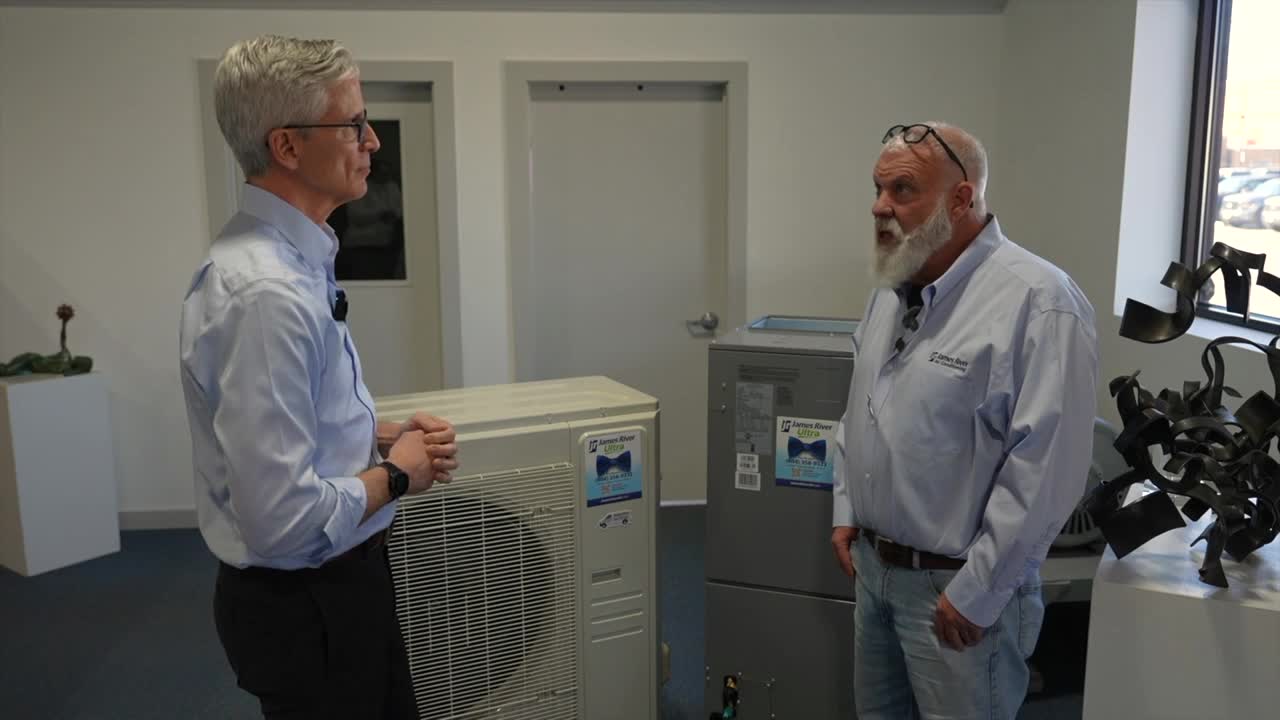
Thomas Pugh, service manager at James River Air Conditioning, has been fielding calls daily from concerned customers who are convinced their heating systems must be malfunctioning. With decades in the HVAC business, Pugh says he's never seen anything like the past few weeks.
"It's my everyday life during this period of time. Everybody's getting their December and January's bills, which has been three times, a lot of times, four times, what the price was," Pugh said.
The surge in bills isn't limited to electric heating. Customers using fossil fuels to heat their homes have all seen dramatic increases in their energy costs.
"It's the people with propane and natural gas, all these bills are doubled and tripled. So this is something that is common," said Pugh. "Everybody's upset."
While Dominion Energy imposed a rate hike in January, all home energy sources have experienced steep price increases, particularly heating oil. The extreme cold forces the auxiliary backup in most heating systems to work continuously, consuming far more fuel than normal.
"If you've got a standard home, if that furnace runs continuously and it's got one gallon an hour, that's one gallon of fuel gone in one hour's time. Think about it, how many hours are in a month, and when it's going to have to run and how much it's going to have to consume," Pugh said.
He explained that a 10 to 15 degree temperature difference can mean hundreds of dollars in additional fuel costs, regardless of the energy source.
Heat pumps, typically the most efficient way to heat Virginia homes, become limited in extreme cold. When temperatures drop significantly, that auxiliary heat system kicks in, which is dramatically less efficient. If that supplementary system is electric, it operates like a constantly running hair dryer.
"It's like an incandescent light bulb with the filament in it. So it just gets hot. That's how it consumes its electricity. And that's what gobbles up the usage in order to accommodate the loss of the heat pump at the colder temperatures," Pugh said.
To help reduce future bills during extreme weather, Pugh recommends several practical steps. He suggests lowering your thermostat and piling on the extra layers. Adding humidity to the home can also make a significant difference.
"I don't mean to be primitive, but grab that extra blanket, turn your thermostat down a couple of degrees. Also, a humidifier is a great asset because you don't get the evaporation effect," Pugh said.
For those without humidifiers, he offers a simple solution: "Cook your pot of spaghetti once a night and let it cook. It's all the difference in the world."
Pugh points out that this winter has been unusually harsh. In more than three decades with James River Air, he's never seen such consistently extreme conditions, which have led to more frozen drains, condensate lines, and other cold-weather equipment issues.
"I know it's been one whopper of a winter. I have not seen it like this in my 32 years working here as far as the constant calls," Pugh said.
CBS 6 is committed to sharing community voices on this important topic. Email your thoughts to the CBS 6 Newsroom.
📲: CONNECT WITH US
Blue Sky | Facebook | Instagram | X | Threads | TikTok | YouTube

This story was initially reported by a journalist and has been converted to this platform with the assistance of AI. Our editorial team verifies all reporting on all platforms for fairness and accuracy. To learn more about how we use AI in our newsroom, click here.

