


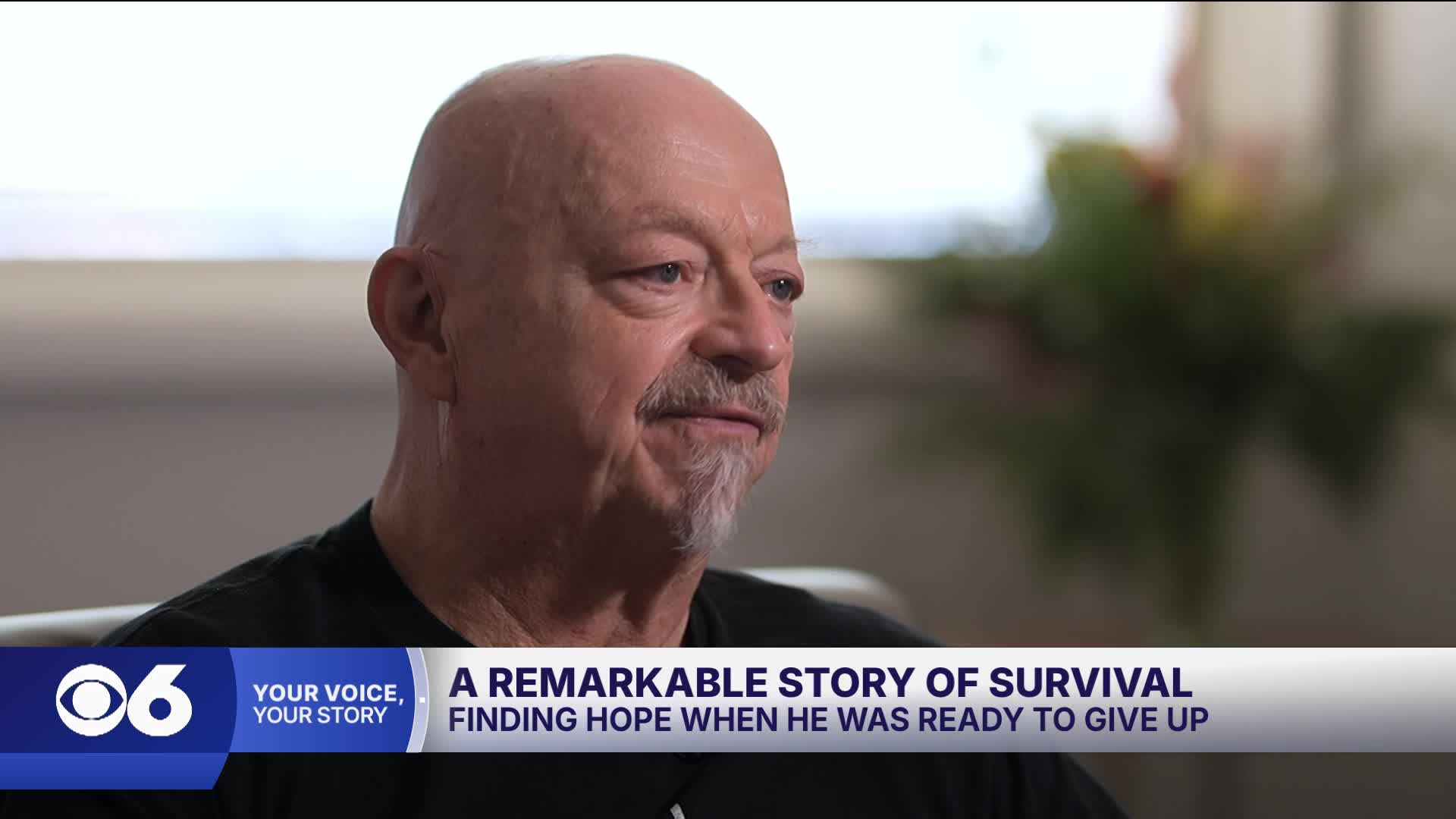


HENRICO COUNTY, Va. — Thomas Faragher spent years rebuilding his life. After decades of alcohol abuse, a diabetes diagnosis pushed him to quit drinking, hire a personal trainer and lose 50 pounds. For more than a decade, the gym became central to his identity — and his work as a therapist helping clients through addiction, trauma and life's hardest moments.
Then, one workout changed everything.
While on the treadmill, Faragher noticed he was running out of breath faster than usual.
"I was on the treadmill and I was running out of breath quicker. I thought, 'Something's wrong with me,'" he said.
As the shortness of breath worsened, he went to the emergency room in January 2023 at 61 years old.
Doctors at Henrico Doctors' Hospital determined he wasn't dealing with pneumonia as he had suspected. His heart was failing.
Cardiac and thoracic surgeon Dr. Graham Bundy told him he needed emergency quadruple bypass surgery.
"He said, 'If you don't do this, you're dead. You're not going to live another month,'" Faragher said.
Faragher's left ventricle — the heart's primary pumping chamber — was functioning at only 20 to 25% of its normal capacity.
"The severity of his heart disease was significant," Bundy said.
What made the diagnosis especially surprising was Faragher's lifestyle. When asked whether it is common for someone who exercises regularly and appears healthy to discover advanced heart disease, Bundy offered a direct answer.
"Frankly, usually not," Bundy said.
As he waited for surgery, Faragher faced some of the darkest moments of his life.
"I thought I was gonna die," he said. "In fact, at one point on that night, I wanted to die."
He says a nurse came into his room that night and offered him comfort he has never forgotten.
"I remember this nurse came in, this older African American woman, and she hugged me and said, 'You're not gonna die,'" he said.
Faragher says he never saw the nurse again and has often wondered whether she was, as he describes it, "a guardian angel."
The quadruple bypass surgery lasted seven and a half hours. When he woke up, he was connected to tubes, hallucinating and unable to move.
"I was totally immobile," he said.
After nearly three weeks in the hospital, Faragher returned home. The physical challenges were constant: swollen ankles, an inability to put on shoes, and climbing the stairs inside his home as part of his daily rehabilitation. But he says the loneliness was harder.
"The lowest point was when I was at home," Faragher said. "I just felt very lonely and kind of forgotten, wishing somebody would call me, contact me."
One goal kept him moving forward: getting back to the gym.
"I was determined to get back in that gym and just determined to feel like I was a member of the human race again... I want my life back. I want my friends back. I want my family back," he said.
Just weeks after returning home, Faragher walked back into Gold's Gym Westchester and told his trainer it was "day number one."
Master trainer Kimberly Denton says she was struck by the change in him.
"He went from someone with big arms, a good chest and strong legs to a shadow of who he was. He literally probably lost 30 pounds of muscle. He was so light and so thin," Denton said.
She also says what she witnessed in the weeks and months that followed left an impression on her.
"The way he came back to this environment to regain himself is just so impressive," Denton said. "He never, ever gave up. That's why he lived."
More than three years later, Faragher works out five days a week. He continues his work as a therapist at Discovery Counseling Center and serves as an advocate with the American Heart Association, using his own experience to help others through addiction, recovery, trauma and loneliness.
"I feel like when you go through something like that, it's incumbent on you to help other people through that journey, to help them know what to expect, to not give up, to not focus on longevity or death, but focus on quality of life, on living well," he said.
He says he continues sharing his story for one reason.
"I share my story not because I want to tell war stories, but because I want someone to benefit from that — to show you can recover from this, and you will recover from this, and you can live well. But you've got to make that decision," Faragher said.
CBS 6 is committed to sharing community voices on this important topic. Email your thoughts to the CBS 6 Newsroom.
📲: CONNECT WITH US
Blue Sky | Facebook | Instagram | X | Threads | TikTok | YouTube

This story was initially reported by a journalist and has been converted to this platform with the assistance of AI. Our editorial team verifies all reporting on all platforms for fairness and accuracy. To learn more about how we use AI in our newsroom, click here.

