


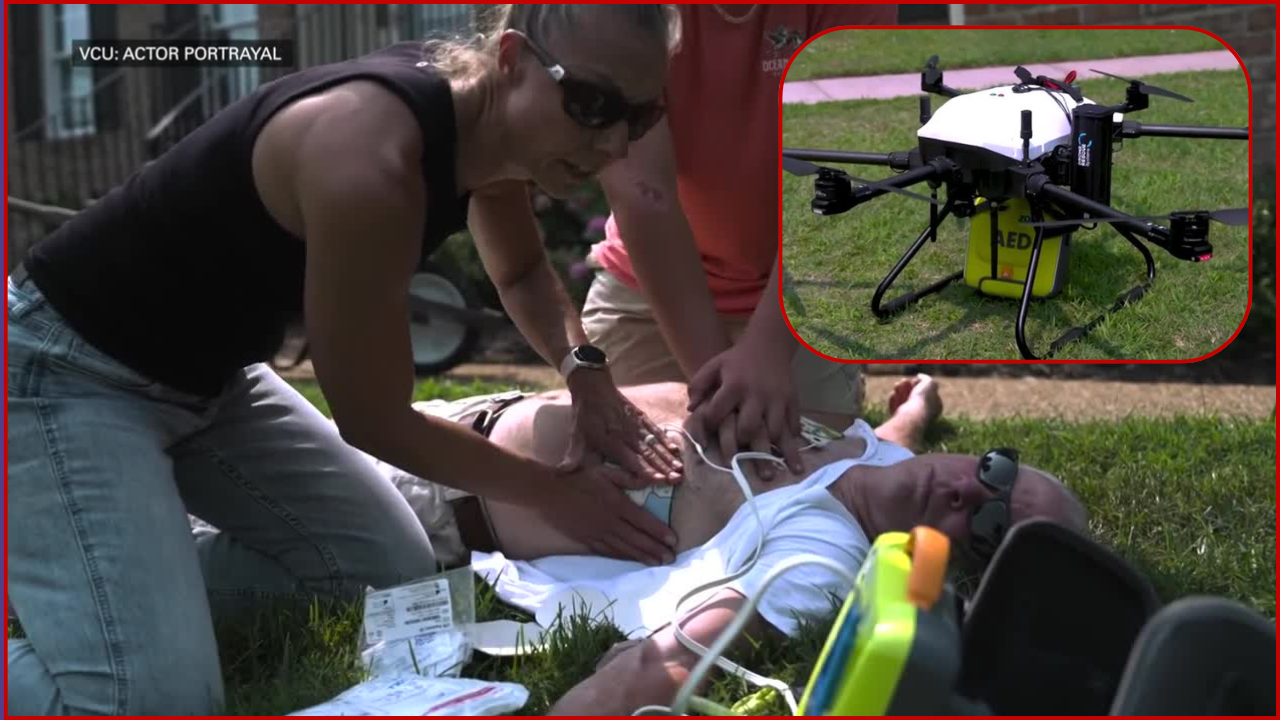


RICHMOND, Va. — Every minute matters when the heart stops beating — and a new study launched by VCU Health could cut the time it takes to get a defibrillator to a cardiac emergency in half.
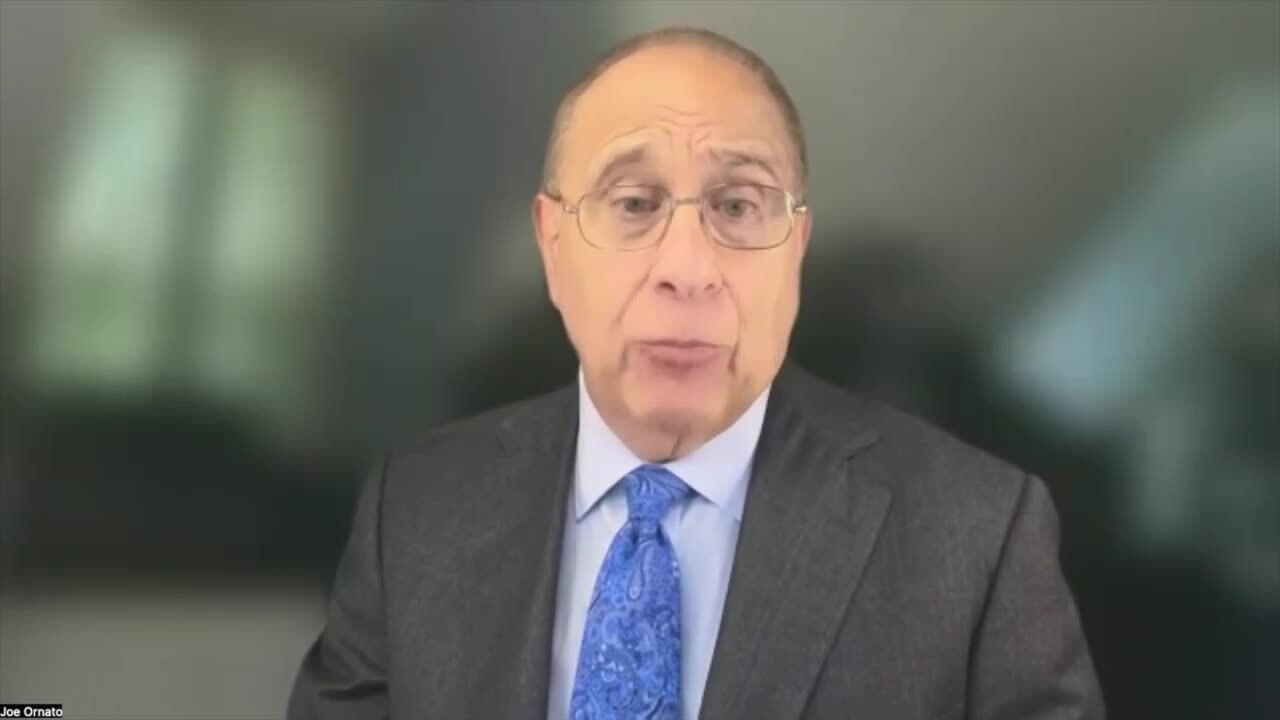
VCU Health physician and cardiologist Dr. Joe Ornato said time is the enemy when it comes to cardiac arrest.
"When the heart stops beating, every minute that goes by until we can restart the heart, we lose 10% of the chance to restart that heart and have an intact brain afterwards," Ornato said.
Automated external defibrillators, or AEDs, coupled with CPR can give cardiac arrest victims a fighting chance before first responders arrive. But Ornato said even with the life-saving technology, distance — particularly in rural areas — remains the biggest obstacle.
"Typically we'll get a response unit to the curb in about 8 minutes and that's about as good as it gets because it physically takes time to get to the scene," Ornato said.
VCU Health was awarded a grant from the American Heart Association to study whether drones can close that gap. A drone can deliver an AED within a five nautical mile area in as little as two to five minutes, traveling at speeds up to 50 mph. The drone's camera would give the pilot full visuals of the emergency location, and the pilot would be connected directly with dispatchers.
"A drone can deliver within about a five nautical mile area an automated external defibrillator in anywhere from two to four, to five minutes tops," Ornato said.
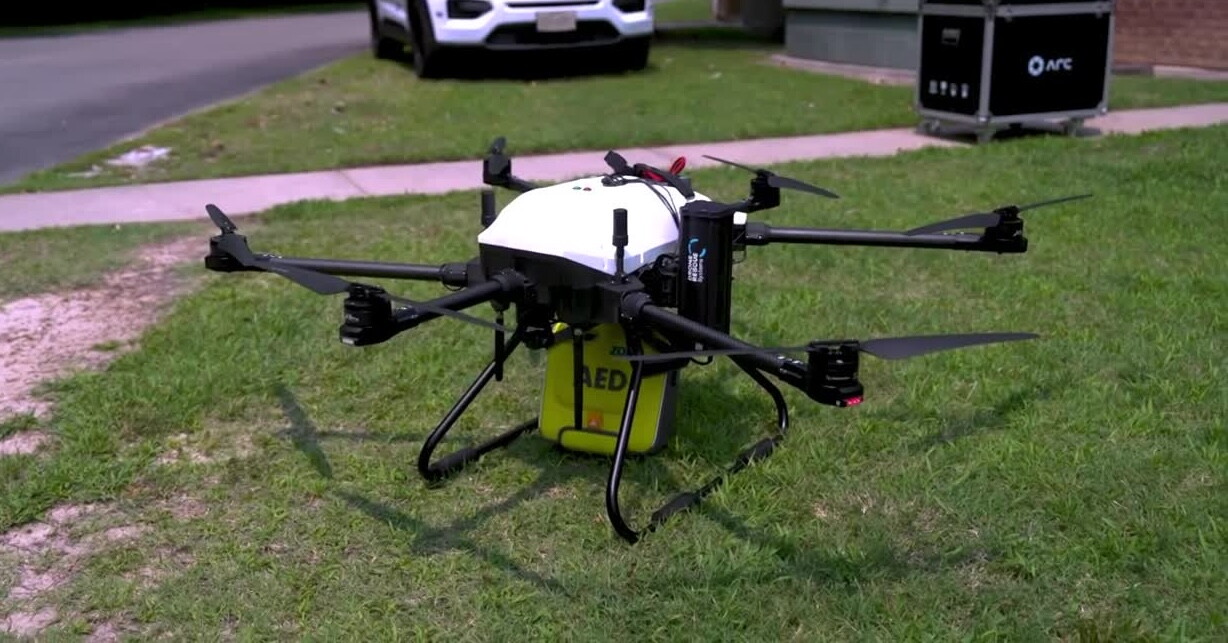
The drone can even place the AED on the ground for bystanders to retrieve and attach to the victim.
The study is in its early stages, with VCU currently partnering with James City County. Ornato said the next several months will establish proof of concept — and then the real work begins.
"This will open the door to what really needs to happen as the next step, which is a large multi-center, randomized clinical research study to actually be able to see how much this costs versus how many more lives can we save. How many drones do we need, how many pilots do we need to train," Ornato said.
According to the American Heart Association, more than 350,000 people suffer cardiac arrest outside of a hospital every year, with fewer than 10% surviving. Ornato said the potential impact of faster AED delivery is significant.
"By saving time to get the heart restarted we could save perhaps thousands of more lives potentially," Ornato said. "The greatest joy in anyone's life and certainly my life is saving a life."
Watch for A.J. Nwoko's reporting on CBS 6 and WTVR.com. Have a story idea or tip for A.J.? Email him.

-
Giving You A Voice
-
Your Voice, Your Story
🎙️ WTVR Podcasts
-
Eat It, Virginia! with Scott and Robey
Untold with Catie Beck
This story was initially reported by a journalist and has been converted to this platform with the assistance of AI. Our editorial team verifies all reporting on all platforms for fairness and accuracy. To learn more about how we use AI in our newsroom, click here.
-
 Facebook
  TikTok
  YouTube
 Blue Sky
 Instagram
 Threads
 X
X

