


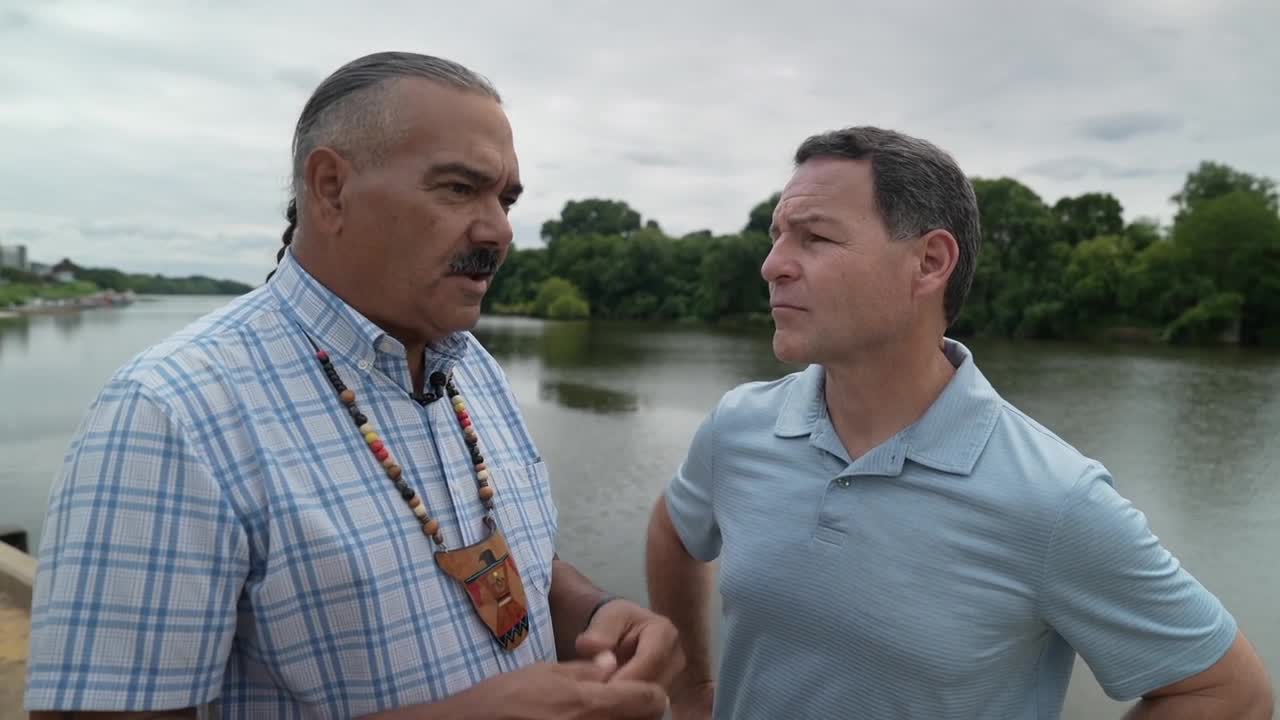


HENRICO COUNTY, Va. — Tree Hill Farm, tucked along Osborne Turnpike overlooking downtown Richmond, sits atop Eastern Henrico County with a rolling landscape of farmland and woods.
For Virginia's Native American tribes, the 523-acre property is the scenic birthplace of Chief Powhatan and a living connection to more than 13,000 years of Indigenous history.
Now, the farm is at the center of a fight over its future.
Brookfield Residential, a subsidiary of global developer BGRE, is moving ahead with plans to build 2,300 homes and more than 1.1 million square feet of commercial space on the site, including the area's first grocery store.
The Henrico Board of Supervisors approved the plan in a public process in 2007.
The 2,300 homes is less than the 2,770 homes Tree Hill is zoned for.
Tribal leaders say the development would permanently erase a sacred and irreplaceable piece of Indigenous heritage.
"This place must be sheltered from development. Once it is destroyed, it is gone forever," Pamunkey Tribal Chief Kevin Brown said. "It would be like building a mall at the bottom of the Grand Canyon."
A birthplace of Indigenous history
Native American leaders say Chief Powhatan, known by his full name Wahunsenacawh, was born on the spot where Tree Hill Farm stands in the mid-1500s.
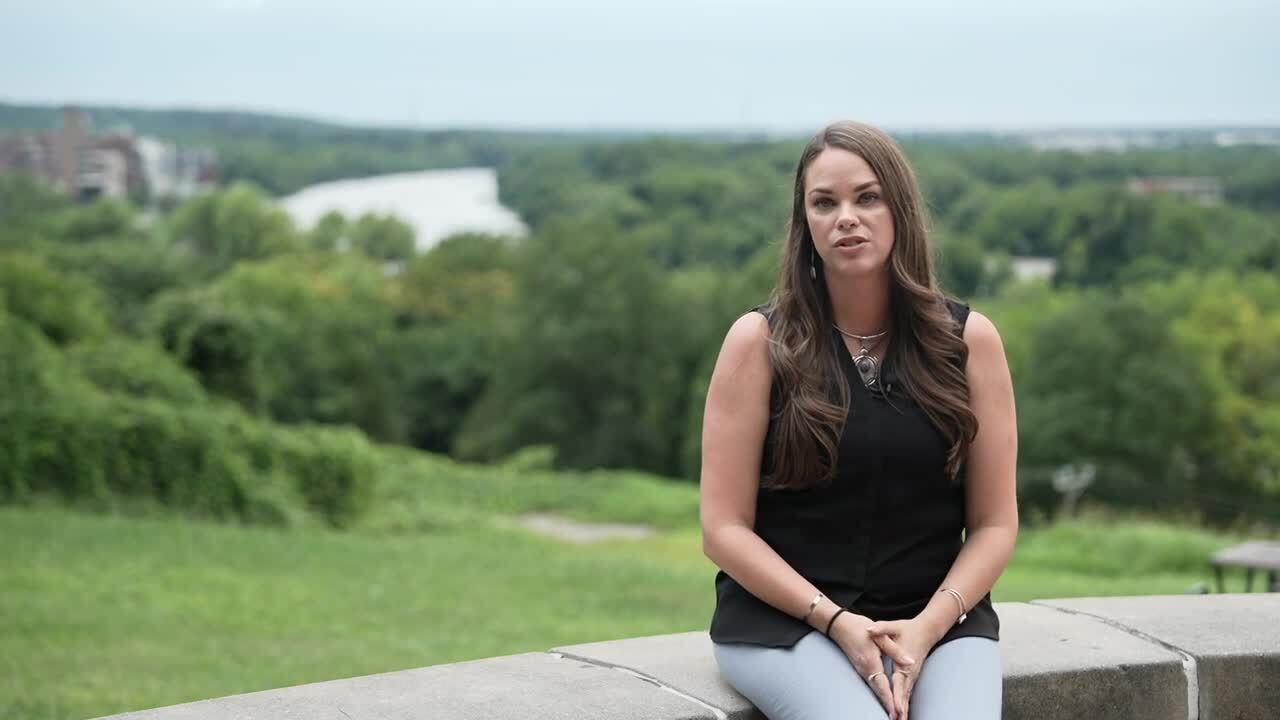
Dr. Ashley Spivey, a citizen of the Pamunkey Tribe, says the land is central to Indigenous identity.
"It helps to define our identity and who we are," Spivey said. "We have evidence of our ancestors on this land for more than 13,000 years."
Spivey says Powhatan's village was a thriving place before Indigenous people were forced out shortly after the English arrived in 1607.
"Wahunsenacawh is one of the most important indigenous leaders I would argue in the history of the United States," Spivey said. "(Powhatan's) role in early engagement with the English colonists was paramount for the survival of those colonists. The United States would not exist without Wahunsenacawh. This is a shared resource amongst multiple tribes."
Layers of history along the Capital Trail
Tree Hill Farm, situated along the Capital Trail, carries history well beyond its Indigenous roots. Revolutionary War Patriot Lafayette visited the farm in the early 1800s. The site is also where Richmond's mayor surrendered the city to Union forces at the end of the Civil War in 1865.
Preservation Virginia recently listed Tree Hill Farm as one of the most endangered historic sites in the Commonwealth.
"The problem is when these developments happen there is not going back. It is changed forever," Preservation Virginia CEO Will Glasco said. "It certainly is prime real estate. It is a beautiful piece of property where you can see downtown Richmond. But gosh, you have to think long term. In 400 years are the folks going to lament the fact that we let this happen? Are they going to be upset that we let this go on? How are we going to be judged in the future if we don't stop something like this?"

Developer says plan includes open space and a commemorative site
Scott Gookin, Senior Land Development Director with Brookfield Residential, says the project is designed to be a community asset.
"What Tree Hill is at its heart is a vibrant mixed-use community," Gookin said. "We think this is going to be a special place."
Gookin says the plan includes public access to the James River, 325 acres set aside for open space, 10 acres for a school, and 6.5 acres dedicated to a Native American commemorative site.
"We do know that Native American involvement and collaboration on the site is gonna be very important," Gookin said.
Gookin says Brookfield's development team met with representatives of Native American tribes 14 separate times since February 2025 to work on a vision for the commemorative site along the James River. He says the tribes have since declined further meetings.
"We do recognize the site and the overall region for that matter is very significant to many of Virginia's tribes," Gookin said. "As of last month, we requested that the line of communication remain open between the tribe and Brookfield. They responded that they are no longer interested in meeting with us. But even with this adversarial stance to the project, Brookfield is committed to building the commemorative site. We are hopeful that we can get some collaboration and welcome participation and helping us create this site. Whether that's now or years in the future."
Brookfield has already begun preserving historic structures at Tree Hill Farm, including the 19th-century manor house and dairy barn.
Tribes say they have the standing — and the will — to save the land
Spivey takes issue with the developer contending that the tribal representatives refuse to meet to discuss the future of Tree Hill.
In a statement to CBS 6, Spivey writes:
“Mr. Gookin’s claim that the Tribes have declined further meetings is patently false. The Tribes repeatedly reached out to Brookfield to request additional meetings at the start of the new year.”
Brookfield Residential disputes Dr. Spivey’s assertion.
In a statement sent to CBS 6 on Friday afternoon, a spokesperson for Brookfield Residential write:
“As recently as July 2026, Brookfield reached out to Ashley Spivey and the six Chiefs that were a part of the working group and suggested a meeting of a smaller group in the hope that a smaller meeting will allow for a more productive conversation about whether there is a mutually agreeable framework for future constructive engagement and dialogue. That offer was declined the same day.”
Read Brookfield Residential's full statement.

“So, I say to the current owners if they’re willing to have a conversation, we want to be at the table with them because we want this development to stop and we want it to be saved,” says Spivey. “You have George Washington. You have Thomas Jefferson. You have places they lived their lives that are saved in perpetuity. Why can’t this place be saved too?”
Since Tree Hill was rezoned 19 years ago, many of Virginia's tribes have gained federal recognition. Spivey says that gives them more leverage.
"The tribes are in the position financially and with our partners to purchase this place and save it in perpetuity," Spivey said.
Chief Frank Adams of the Upper Mattaponi Tribe says the planned development would desecrate a vital part of Indigenous history.
"This is all about our history and ancestors," Adams said. "Historic sites like that mean so much to us. It is a beautiful property. I can see why they want to build. It is very beautiful, strategic property. I just don't think they care that they would take a historic property and destroy it."
Chief Brown says the time for a new conversation is now.
"It is a new day, and they need to sit down with us, and we need to stop this development right now and rethink the whole idea of it," Brown said. "If the development goes through as planned, it will just break our hearts."
Construction could begin next summer
The Tree Hill development is planned to be built in four phases over the course of a decade. Brookfield hopes to begin construction on phase one next summer.
"As soon as we get to build it, I think everyone is really going to appreciate the amount of effort that we're putting into this," Gookin said. "I think it is going to be a special place and I can't wait to share it with everybody."
For Virginia's Indigenous people and their allies, the effort to protect Tree Hill Farm is far from over.
"We know now that we have the ability and capacity and the legal standing to save more. And that is what we're going to do," Spivey said. "All we can do is bring awareness to what is happening to this sacred place and hope enough people understand what is at loss here."
Click here to learn more about the Tree Hill development.
📲: CONNECT WITH US
Blue Sky | Facebook | Instagram | X | Threads | TikTok | YouTube

This story was initially reported by a journalist and has been converted to this platform with the assistance of AI. Our editorial team verifies all reporting on all platforms for fairness and accuracy. To learn more about how we use AI in our newsroom, click here.
