




RICHMOND, VA —
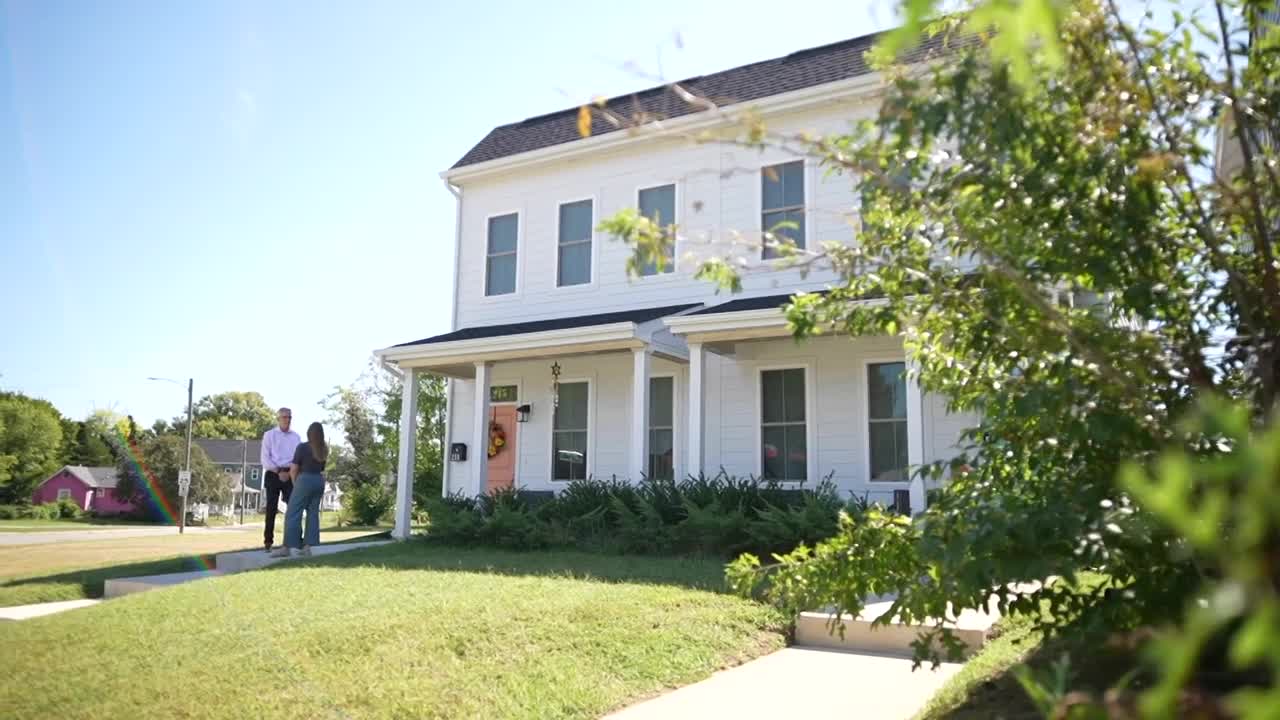
RICHMOND, Va. — Cesar Carvalhaes says he's paying attention as Richmond city leaders grapple with forging a new building code that is equitable and helps alleviate a critical housing shortage.
"Not only are housing prices astronomical, and they continue to go up at least in Richmond, but now you have crazy interest rates on top of it," said Cesar Carvalhaes, a homeowner who lives on Richmond's Southside. "There's no way that that somebody in my exact same financial situation as I was would be able to buy a house in this neighborhood in the way that I did in 2016."
Richmond is in the midst of a housing crisis and one young homeowner is forever grateful that he got in when he did ten years ago.
"Had I not been in a stable relationship at that point, we wouldn't have bought this house, and then we would have missed that perfect window of time in which to buy a house for for folks in my generation," said Carvalhaes. "And then, boom! Not five years later, you see people housing prices have almost doubled."
One of the most contentious issues is what to allow on a single family lot.
Housing advocates say granting a homeowner the automatic right to build a duplex would almost by definition add significant housing to a city that desperately needs it.
"Legalizing attached housing, legalizing duplexes, legalizing townhomes, and smaller lots are really key to making sure that yes, we have enough housing, but also that we have a sufficient diversity of housing," said Annika Schunn, with Housing Opportunities Made Equal. "So that people really have options depending on their preferences and their needs."
Schunn says having the possibility of building two units by right would actually return some neighborhoods to their origins which ironically the current, 50-year-old code actually prohibits.
"Many of the neighborhoods that we hold most dear and consider to be the most historic and esthetically relevant and important are our neighborhoods with attached housing, and yet our zoning, which was passed in the 1970's largely outlawed attached housing," Schunn said. "Which includes duplexes or row homes or small apartment buildings throughout much of the city."
But what about neighborhoods conssting of mostly single-family homes? A former city council member is advocating for his Near West End neighbors, saying the right to a duplex that earlier drafts allowed would change the character of their streets.
"A lot of the neighbors got together, and a lot of people worked very hard to let their voices be heard," said Bruce Tyler, who represented the First District. "And I'm pleased to say with the 3rd draft that this neighborhood, which is a detached neighborhood, no longer will be a duplex neighborhood but will be a single-family neighborhood with an ADU. And for that, I'm very thankful. So I appreciate the mayor and the staff listening to us on this one particular issue.
Tyler says he supports the current draft of Code Refresh but knows not everyone will be happy.
"With any zoning ordinance that's rewritten, it will never be perfect, but this one goes a long way to solving a lot of the problems that we've been dealing with through special use permits for years and years and years," Tyler said. "And so when I look at this thing in the whole, it really does make a lot of sense."
Carvalhaes says people have a reasonable expectation that their neighborhood won't change radically but doesn't believe the right to a duplex would do that, pointing to his own street as an example.
"You can walk down 27th Street, and unless you walk right up to the door and notice the two separate mailboxes, you'd never know that this was a multifamily duplex or triplex," said Carvalhaes. "You see the possibility for that: we could really help build our city and and allow people to have flexibility because I think that really is what's needed in our housing supply."
With dupexes out of the current draft, Schunn points out putting attached housing on your lot will remain time consuming and costly, which she said would eliminate a large pool of potential buyers. She said a property in Edgewood was a prime example.
"They had to go through a process of filing an application with the city," said Schunn. "It had to be approved by the planning department, and then the planning commission had to make a recommendation, and then ultimately city council had to vote on it. That is at best a months-long process. It can take six months or longer, and on average, it adds tens of thousands of dollars to the cost of building even just one home."
For Carvalhaes one irony in Richmond's current half-century-old zoning map is that one of the city's most vibrant communities was made completely out of compliance.
"If you think about the Fan neighborhood, that entire neighborhood is illegal under our current zoning code," he said. "But it's so much fun. Everybody wants to live there. The houses are gorgeous. It has really short setbacks to the sidewalk. But there are so many connection points. There are corner stores and restaurants, so many things.
Richmond Mayor Danny Avula had hope to put the latest draft of Code Refresh before the Richmond City Council at their October 13 meeting, but after some pushback, it is not clear when the council might take a vote on it.
CBS 6 is committed to sharing community voices on this important topic. Email your thoughts to the CBS 6 Newsroom.
-
-
Eat It, Virginia! with Scott and RobeyUntold with Catie Beck
-
-
-
This story was initially reported by a journalist and has been converted to this platform with the assistance of AI. Our editorial team verifies all reporting on all platforms for fairness and accuracy. To learn more about how we use AI in our newsroom, click here.
 Facebook
  TikTok
  YouTube
 Blue Sky
 Instagram
 Threads
 X
X