


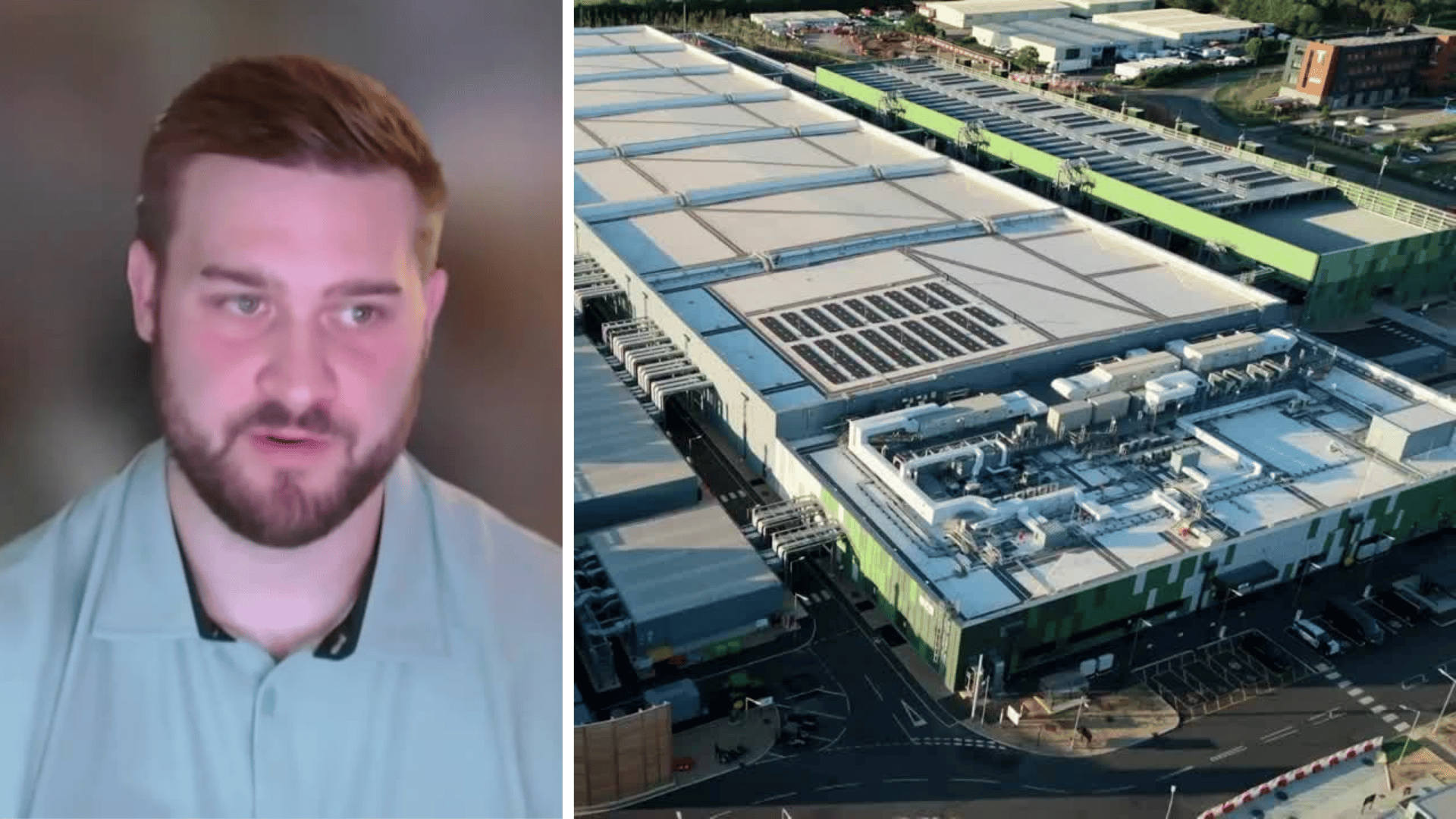


RICHMOND, Va. — Data centers have been the subject of much discussion and debate in Virginia and around the United States due to the impacts on the communities where they are located.
While Northern Virginia, with roughly 150 data centers, is considered the world's data center headquarters, more and more data center operators are looking to Central Virginia to build.
So, what exactly is a data center?
"It's effectively a warehouse that is full of lots of racks of computers," said Virginia Tech researcher Eric Sjostedt.
Varying in size, resource use, and location, data centers' overall impact can be a complex idea to comprehend.
"Data centers are like the bodies of the cloud," Sjostedt said, referencing the cloud that stores the information you save on your phone or computer. "What these support is cloud infrastructure. It supports your Netflix, your Spotify, but it also supports ... more prominently large language models, but also artificial intelligence."
Sjostedt is part of a team studying data center impact.
"We're trying to figure out how, or more broadly, what are utilities experiencing in their infrastructure systems tied to the rapid expansion of data centers and other digital infrastructure," Sjostedt said.
Water usage is one subject he says is often discussed, as water is used to cool the large-scale computers housed within data center.
While research shows data centers use a lot of water, he said it is actually a very small percentage of total water usage in the U.S.
"Public water supply total estimated in 2020, which is the most recent value that we have from the [U.S. Geological Survey], I think it's only like 2.2%," he said. "Irrigated lawns cause more of a problem in terms of water demands than data centers for that county."
It's data centers' use of electricity that Sjostedt said his team finds more concerning.
"You're talking about towns that could be powered with that amount of electricity going to one place," he said.
Sjostedt said that concentration of electricity demand could strain power utilities, both in having enough power and in building the infrastructure to distribute it.
"It's a problem for some of the places, how quickly can we build it, but there's a backlog of the materials and the products needed to set this up," he said.
He describes data centers' use of water and energy as complicated, because using less of one resource requires more of the other to produce the same outcome.
"If we switch from a technology that uses less water and more energy, we're essentially just displacing the water used from the on-site data center to the power plant," he said.
With the amount of technology people continue to use and the speed at which data centers are being built, Sjostedt said more transparency from developers is crucial to building trust and better regulating them.
"They aren't monsters, but a monster that we don't know is scarier than a monster that we know," he said. "What is the water and energy being allocated to these individual things? I don't think we're in a world where we're going to be without [data centers] but I'm hopeful that we can be in a world where we have more information to understand them better, and to put them in places that are better for everyone."
CBS 6 is committed to sharing community voices on the impact of data centers. Email your thoughts to the CBS 6 Newsroom.
📲: CONNECT WITH US
Blue Sky | Facebook | Instagram | X | Threads | TikTok | YouTube

This story was initially reported by a journalist and has been converted to this platform with the assistance of AI. Our editorial team verifies all reporting on all platforms for fairness and accuracy. To learn more about how we use AI in our newsroom, click here.

