


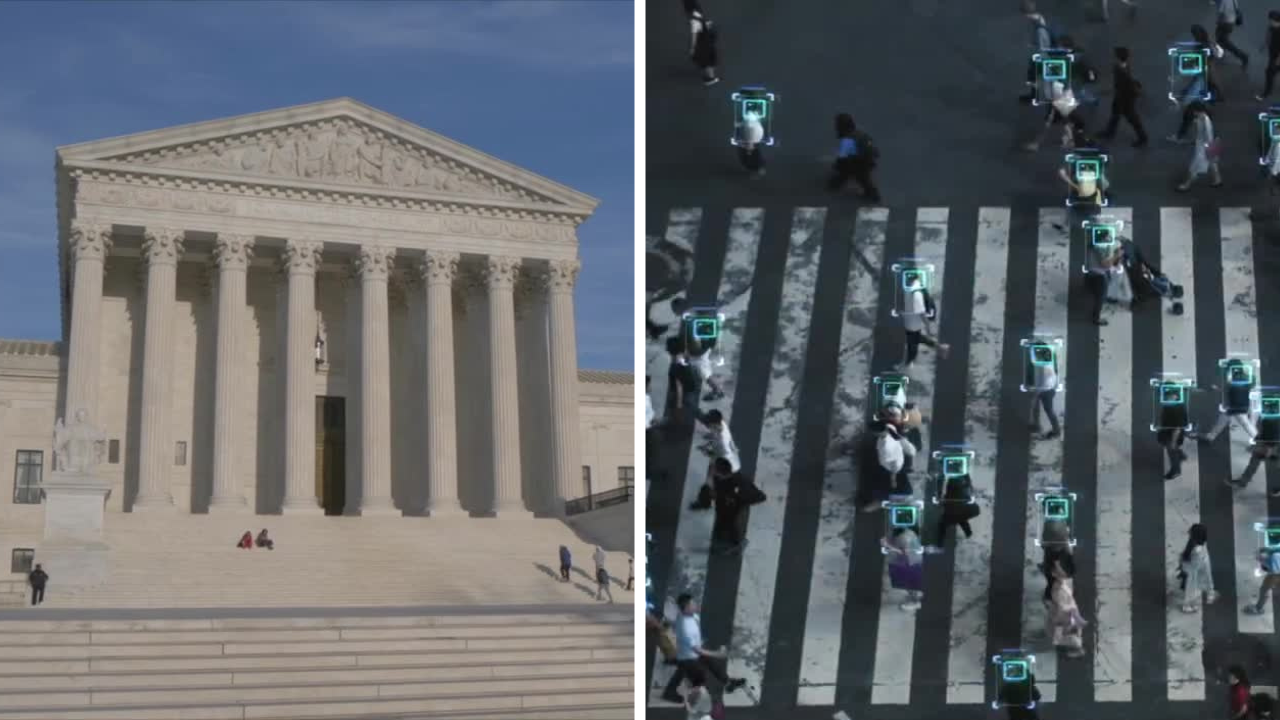


WASHINGTON — The U.S. Supreme Court heard arguments Monday in a case stemming from a 2019 Chesterfield bank robbery that centers on the government's use of geofence warrants.
Virginia Commonwealth University Political Science Professor Dr. John Aughenbaugh said the debate over how the government uses technology to monitor people was at the heart of the case.
"We as a nation need to begin to have a debate about how technology can be used by the government to monitor us, right?" Aughenbaugh said.
The case stems from a 2019 robbery of a bank off Hull Street Road. Police initially had no leads until a detective obtained a geofence warrant from Google for people using their location services.
"As the name suggests, is a fence around a specific geographical area of everybody who has their devices turned on," Aughenbaugh said.
The warrant eventually led police to Okello Chatrie. He pleaded guilty and was sentenced to 12 years.
Aughenbaugh said Chatrie and his legal team argued the geofence warrant lacked probable cause and violated Fourth Amendment protections against unreasonable search.
"It is so indiscriminate that individuals who were not engaged in anything remotely criminal could be identified as being in that particular location at a particular time," Aughenbaugh said.
Aughenbaugh said the government argued they obtained a search warrant.
"Also, the federal government pointed out that if Mr. Chatrie wanted to be anonymous, did not want to be located, well, he should have turned off, okay, Google's access to his location," Aughenbaugh said.
During the arguments, Aughenbaugh said the line of questioning from judges across the ideological spectrum about the implications of this kind of technology stuck out to him.
"They were all kind of sort of awed by the scope of what these potential searches could be like in the future," Aughenbaugh said.
"What's to prevent the government from using this to find out the identities of everybody at a particular church, a particular political organization?" Chief Justice John Roberts said.
"Whether it's a minute that you're searching for or six weeks. It's not the time that's at issue. It's whether or not private information in which you have a reasonable expectation of privacy will be sought," Justice Sonia Sotomayor said.
Aughenbaugh said he senses there are enough justices who will find the Fourth Amendment was not violated in Chatrie's case, but they will not make a precedent-setting opinion on the issue of geofence warrants.
"Because they're going to be more court cases, particularly because I think the Supreme Court is going to issue a very narrow decision and punt for another day the more difficult questions," Aughenbaugh said.
A ruling for Chatrie might not ultimately help him. Even the federal judge who ruled that the search violated Chatrie's rights allowed the evidence to be used because the officer who applied for the warrant reasonably believed he was acting properly.
The Associated Press contributed to this report.
CBS 6 is committed to sharing community voices on this important topic. Email your thoughts to the CBS 6 Newsroom.
📲: CONNECT WITH US
Blue Sky | Facebook | Instagram | X | Threads | TikTok | YouTube

This story was initially reported by a journalist and has been converted to this platform with the assistance of AI. Our editorial team verifies all reporting on all platforms for fairness and accuracy. To learn more about how we use AI in our newsroom, click here.
