

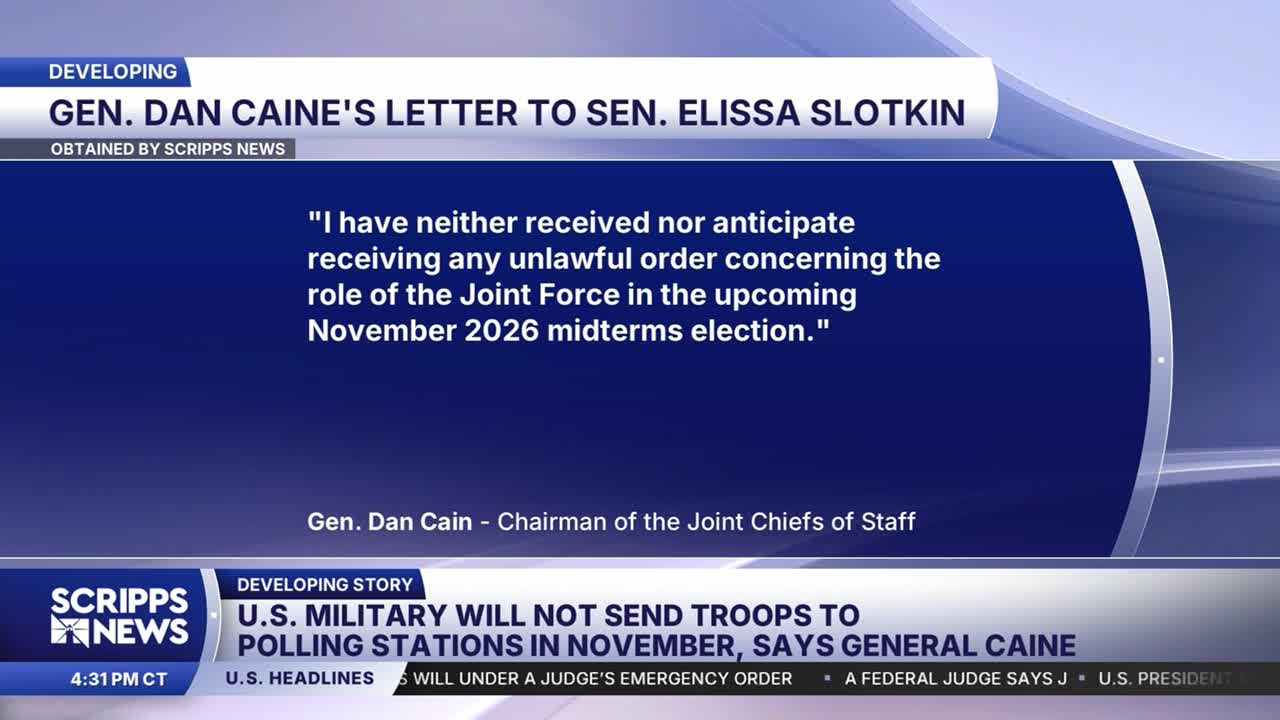


The highest-ranking officer in the U.S. military says there are no plans to send troops to polling places during November’s midterm congressional elections, addressing concerns among Democrats that the Trump administration could use the military to interfere with the vote.
Gen. Dan Caine, chairman of the Joint Chiefs of Staff, made the statement in a letter to Michigan Democratic Sen. Elissa Slotkin, who recently asked Caine and Defense Secretary Pete Hegseth to confirm they won’t send troops to the polls.
“The Joint Force has no plans to send Federal military personnel or Federalized members of the National Guard to polling places during the 2026 elections,” Caine wrote. “Likewise, the Joint Force has no plans to use such personnel to seize ballots, voting machines, or other election-related material.”
RELATED STORY | What's next after Supreme Court clears path for Trump mail-in ballot order ahead of midterms?
This comes as President Trump and his administration put new focus on federal influence of the midterms, including by signing an executive order that would put new restrictions on mail-in voting.
The Supreme Court sided with the Trump administration earlier in August over the order, though it remains unclear how much can be implemented before the fast-approaching midterm elections.
Trump's executive order, signed in March, calls on his administration to create lists of eligible voters and orders the U.S. Postal Service to deliver mail ballots only to people on those lists.
RELATED STORY | 'Too late' for Trump to make major changes to how mail-in voting works, expert says
The court's decision appears to leave room for additional court challenges that could further slow Trump's order, including in another similar case. The U.S. Postal Service laid out how it would implement the order last week, but time is running short to impose major changes with some states beginning to send mail ballots to voters in just a few weeks.
Mail balloting has long been a favorite target for Trump, who has claimed that it breeds fraud despite strong evidence to the contrary and his own use of the voting method.

