

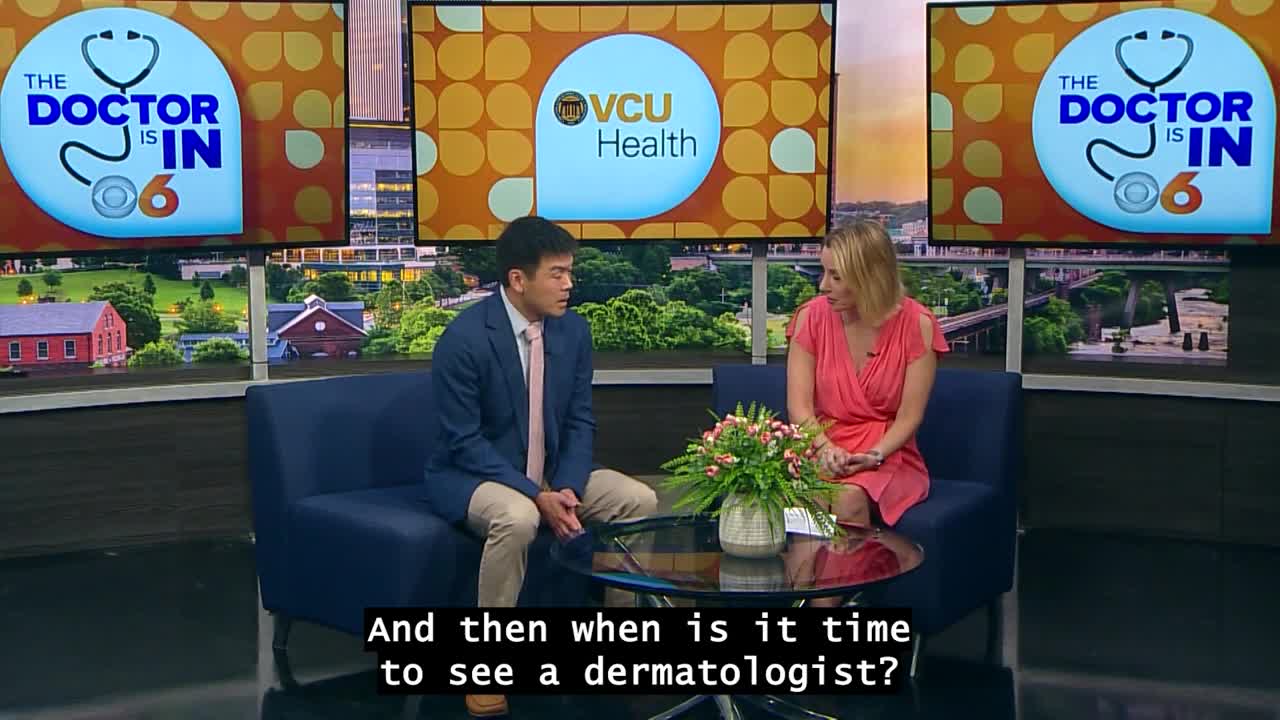

RICHMOND, Va. -- July is UV Safety Awareness Month, a time to raise awareness about the risks of ultraviolet radiation and the steps we can all take to protect our skin and overall health. As an academic medical center and home to one of the first Mohs surgery centers in Central Virginia, VCU Health plays a vital role in improving skin health across our community through research, informed care, education and specialized treatment. In this segment of Virginia This Morning, Dr. Jeff Yu, chair of dermatology at VCU Health, explains why sun safety matters and shares practical tips to help you stay protected year-round.
What are some everyday situations where people may be getting more UV exposure than they realize?
Just going outside, especially in the summer and especially in Virginia, the sun can be pretty unforgiving. One of the worst sunburns I ever had was after going to a concert as a kid. It was a cloudy, overcast day, and I thought, "Oh, I'll be fine. I don't need sunscreen because I can barely see the sunlight.” By the end of the day, my face was red, my back was red and I had a pretty bad sunburn from there. That really taught me a lesson –even on cloudy days, the sun's UV rays are powerful, they can really shine through, and they can definitely cause a sunburn even on those cloudy days. So we recommend using lots of sunscreen even then.
What are some of those prevention steps that can make the biggest difference and protect our skin the most?
Definitely cover up. Covering up can mean a lot of different things. It can mean wearing a broad-brimmed hat that covers your ears and face, as well as long, protective clothing that provides UV protection. And, most importantly, wear sunscreen. Not all sunscreen is created equal.
What should people look for on their sunscreen label, and how often should they really be reapplying?
There are three important things to look for when choosing a sunscreen. First, make sure it is broad spectrum. What does that mean? Broad-spectrum sunscreen protects against the two most common types of UV rays: UVA and UVB.
The second thing to look for is an SPF of at least 30 to 50. I usually recommend that all my patients choose a sunscreen with an SPF of 50 or higher, because it can protect against 98% to 99% of UV rays.
The final thing to look for is water resistance. Water-resistant sunscreens are typically effective for 80 to 120 minutes. Look for one that provides up to 120 minutes of water resistance, and remember that sunscreen should be reapplied after that. In general, I recommend reapplying every two hours.
What are the warning signs of skin cancer people should watch for, and when should someone see a dermatologist?
Anytime you have a concerning spot that is bleeding and not going away, or if it looks different from your other moles, definitely come see a board-certified dermatologist. We are experts in skin health and can examine your skin to determine whether a spot may be skin cancer, a benign mole or something that needs to be biopsied.
Learn more about dermatology services at VCU Health by visiting vcuhealth.org.
{*THIS SEGMENT IS SPONSORED BY VCU HEALTH*}
