

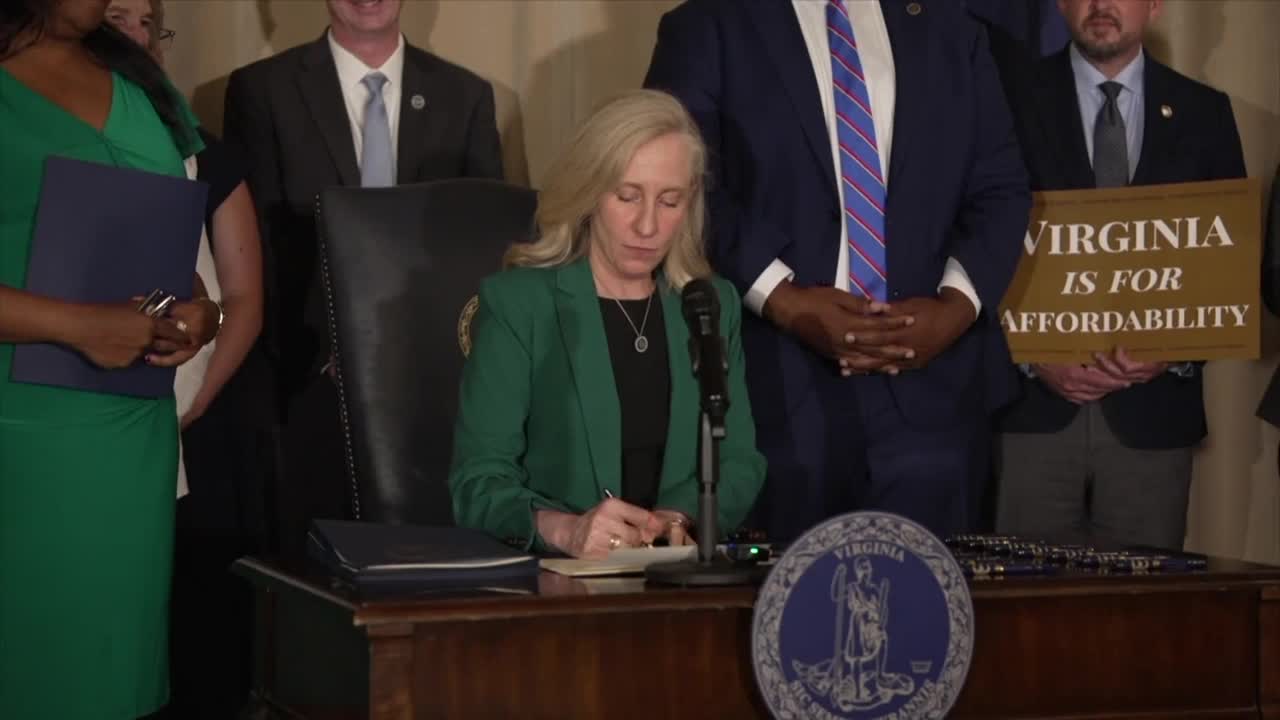


RICHMOND, Va. — Gov. Abigail Spanberger signed 18 new energy bills Tuesday, 15 of which were bipartisan. Spanberger says the bills will address the high cost of energy for families and meet the commonwealth's long-term energy needs.
Among the bills signed is legislation that allows Virginia to rejoin the Regional Greenhouse Gas Initiative, known as RGGI. Virginia will rejoin RGGI on Wednesday.
Spanberger says rejoining RGGI saves customers money by investing in energy efficiency and flood prevention programs. She also announced the creation of an RGGI credit program to direct those dollars back to Virginians.
"We in Virginia have also chosen to create the RGGI credit program to invest those RGGI dollars coming back," Spanberger said.
Dominion projects rejoining RGGI will cost the average ratepayer an added $13 per month on their power bill. Spanberger said the RGGI credit is designed to offset that cost — and potentially save ratepayers more money.
“This is a direct credit to ratepayers, and it is built into the budget we just passed. This program is designed to ensure that the monthly charge on utility bills that comes with rejoining RGGI is offset for Virginia families and small businesses. And I want to be clear: our projections indicate that this Consumer Credit will do just that, and then some. There are even estimates that average monthly bills could drop by as much as $3 per month due to the new RGGI Credit,” Spanberger said.
Senate Republican Leader Ryan McDougle acknowledged the credit back to some customers but said rejoining RGGI still amounts to a tax on Virginians.
"RGGI is just a tax on Virginians. It should not be in place. The Virginia Clean Economy Act puts provisions in place that does not allow us to focus on what is the cheapest most economical and reliable form of energy. That should be our focus. We should not be picking winners or losers. We should go by the science and the math and put Virginians first," McDougle said.
McDougle said the broader package of bills fails to address what he sees as the core problem with Virginia's energy policy.
"A number of bills are relatively benign but they do not get at the core issue. The core issue is that our energy policy in Virginia does not promote building new energy that's sustainable and reliable. Virginia imports more energy than every other state including most times California. That means Virginians pay more. There's certain things we can do to help around the edges but without addressing the core energy challenges through the Virginia Clean Economy Act, Virginians are going to pay more and have less energy," McDougle said.
Beyond RGGI, Spanberger signed bills focused on increasing energy storage targets aimed at lowering peak prices for ratepayers, improving energy efficiency in homes, reducing heating and energy costs for families who need it most and taking steps to ensure data centers do not drive up costs for customers.
"It's a good day for Virginia. Notably the investments we can make in energy efficiency and resiliency and in programs that really mitigate the impact of extreme weather events and flooding in our communities is one worth making," Spanberger said.
All 18 bills go into effect on Wednesday.
CBS 6 is committed to sharing community voices on this important topic. Email your thoughts to the CBS 6 Newsroom.
📲: CONNECT WITH US
Blue Sky | Facebook | Instagram | X | Threads | TikTok | YouTube

This story was initially reported by a journalist and has been converted to this platform with the assistance of AI. Our editorial team verifies all reporting on all platforms for fairness and accuracy. To learn more about how we use AI in our newsroom, click here.