


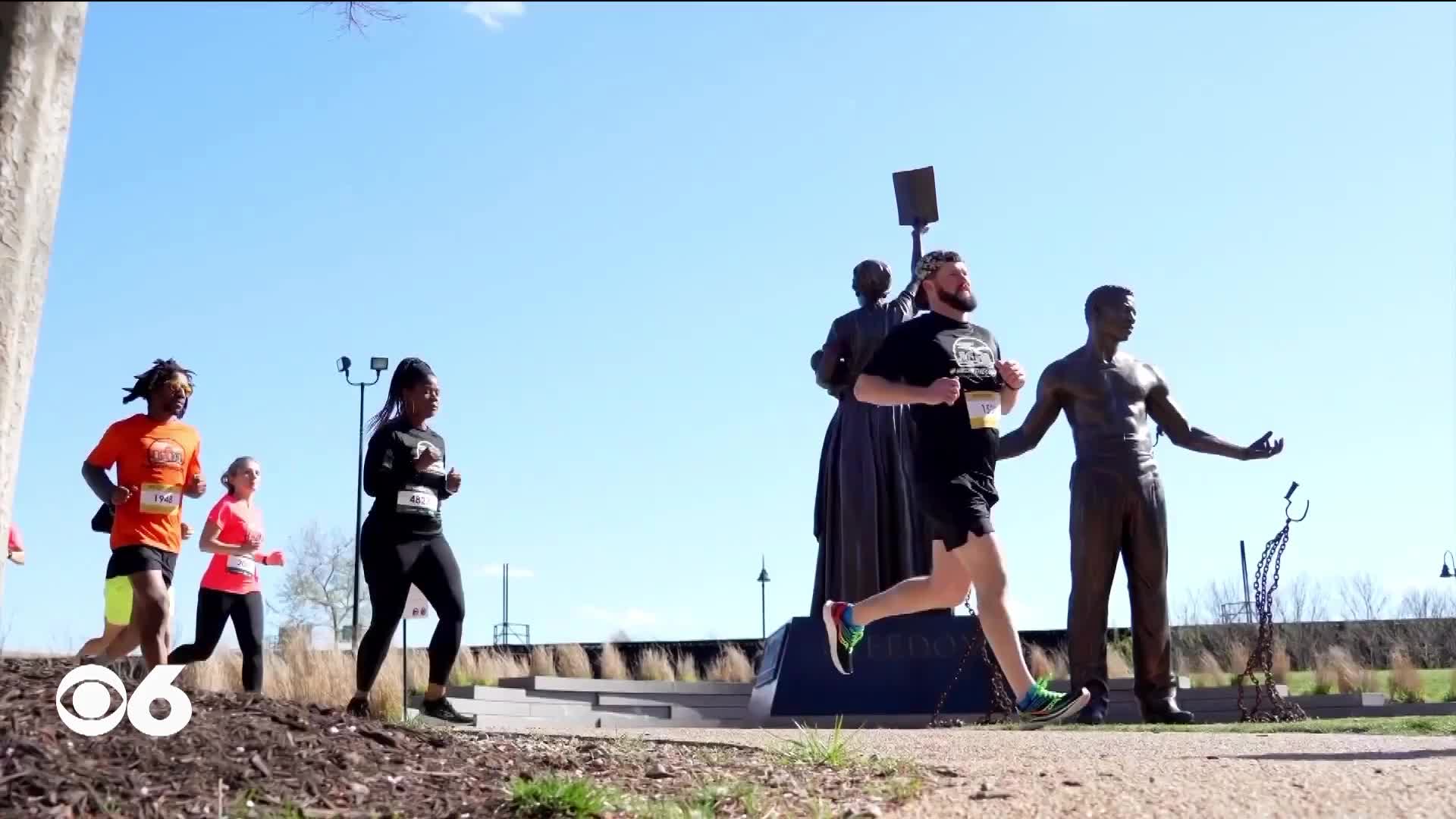


RICHMOND, Va. — Richmond Mayor Danny Avula says it is the city's willingness to reckon with the hardest parts of its history that makes Richmond the right place for Run Richmond 1619 — a 16.19K run returning for its fifth year on Sept. 12.
The 10.1-mile route traces 400 years of Black history, following the arc of the transatlantic slave trade, the Civil War, Jim Crow, the Civil Rights Movement and the enduring legacy of Black culture and community. An interactive app turns participants' phones into an outdoor museum guide, bringing that history to life through audio, video and images as runners and walkers move along the route.
A news conference and fireside chat at the Black History Museum previewed the event Thursday.
Avula said Richmond's history is what compelled him to stay in the city after medical school brought him here in 2000.
"The way that our city grapples with the reality of our past — the past of being the capital of the Confederacy, the past of being the birthplace of our domestic slave trade in this country — that is a result of courage and leadership and intentionality," Avula said.
He said understanding that history is essential to addressing the inequities that persist today.
"If we're going to effectively tear down the systems and the structures that have resulted in persistent racial inequities now in 2026, we've got to know how they got here," Avula said.
WATCH: 'Totally empowering' 16.19 run traces route of enslaved Africans in Richmond for 'healing and reconciliation'
The mayor pointed to several milestones in Richmond's ongoing effort to tell its full story. In April, the Shockoe Institute opened on the first floor of Main Street Station, dedicated to telling the story of Shockoe and Richmond's role in the domestic slave trade. That same month, the Jackson Project opened the Skipwith Roper Cottage, honoring Abraham Peyton Skipwith, the first Black homeowner in Richmond and founding father of Jackson Ward. In July, the city and the Chago Legacy Foundation unveiled plans to build the Lumpkins Slave Jail Pavilion — an excavation and memorialization of one of the most brutal slave jails in the country.
Avula noted that it is believed one in four African Americans can trace their roots back to Richmond.
He said the work has taken on special meaning this year as Virginia and the nation mark their 250th anniversary.
"Throughout our history in Richmond, we have seen remarkable examples of Black excellence and Black resilience. Our country's first woman bank president, Maggie Lena Walker, was a Black woman. Our country's first Black governor, L. Douglas Wilder," Avula said.
He said Run Richmond 1619 invites people into history in a way that is active, accessible and inclusive.
"Understanding it gives us a better chance of building something different together — and that's a huge part of why I love Run Richmond 1619," Avula said. "Walk it, run it, don't finish it. I don't care. Just be there."
Run Richmond 16.19 takes place Sept. 12. To learn more or register, visit runrichmond1619.org.
CBS 6 is committed to sharing community voices on this important topic. Email your thoughts to the CBS 6 Newsroom.
-
-
Eat It, Virginia! with Scott and RobeyUntold with Catie Beck
-
-
-
This story was initially reported by a journalist and has been converted to this platform with the assistance of AI. Our editorial team verifies all reporting on all platforms for fairness and accuracy. To learn more about how we use AI in our newsroom, click here.
 Facebook
  TikTok
  YouTube
 Blue Sky
 Instagram
 Threads
 X
X