




RICHMOND, Va. — In September 2016, 21‑year‑old Keeshae Jacobs vanished after visiting a home on Broad Street in the Church Hill neighborhood of Richmond, Virginia.
Her mother, Toni Jacobs, said she had doubts about the man last seen with her daughter from the very beginning: Otis Lee Tucker.
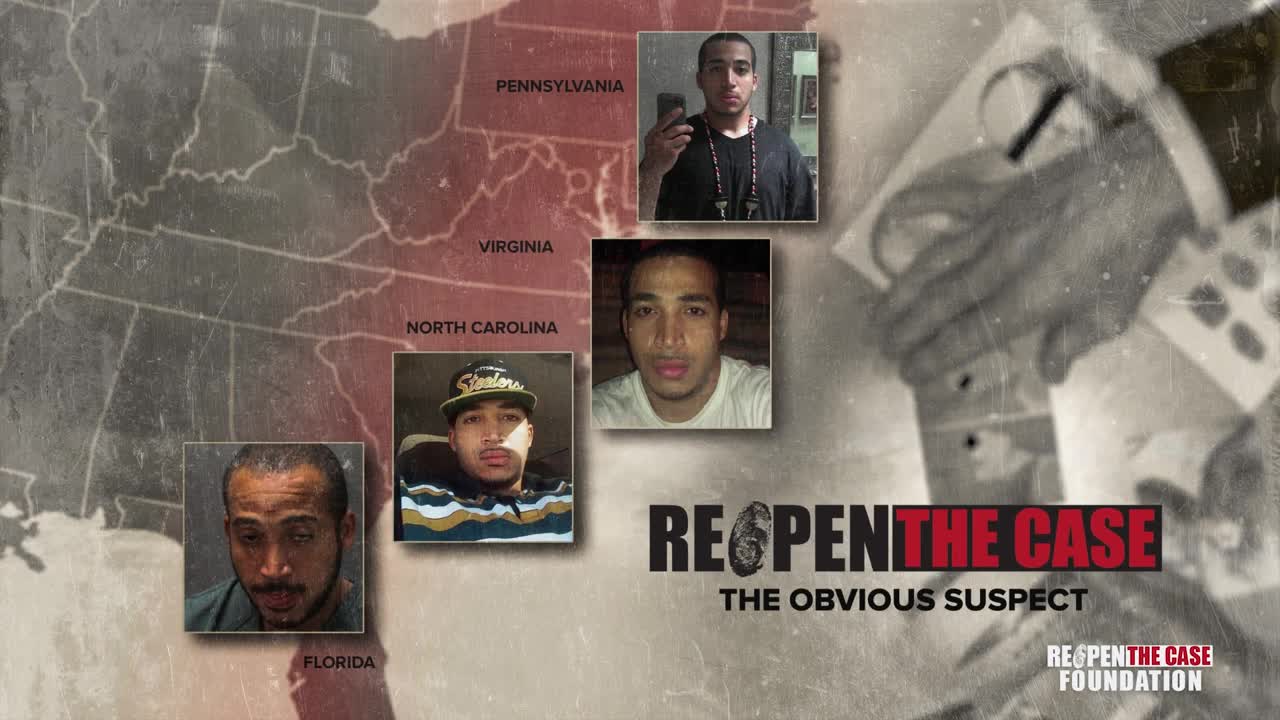
Those doubts launched a years‑long investigation by Crime insider Jon Burkett and Reopen the Case Foundation reaching across four states — Virginia, Pennsylvania, North Carolina, and Florida — uncovering a violent past beginning in Tucker’s childhood and raising questions about whether authorities missed opportunities to stop him.
Last Known Movements
On September 26, 2016, Keeshae was dropped off at a home in Richmond’s Church Hill neighborhood by a friend.
When Keeshae's friends returned, a man identified as “Omar” claimed she wasn’t there.
Toni Jacobs went to the home herself, questioning him.
His answers, she said, didn’t add up.
She called 911, but before officers arrived, Otis Tucker also called detective Kevin Hughes, who had investigated Tucker just a week earlier for an unrelated rape and abduction allegation.
This detective allegedly stopped the officers sent by dispatch from searching the residence and went in himself.
Early Physical Evidence
Forensic teams later searched the property on October 03, 2016.
Investigators said they found a blood-soaked rug, blanket, and cushion stained with blood confirmed to belong to Keeshae.
By that time, Tucker had fled to Maryland.
There, a search of Tucker’s belongings on October 14, 2016 uncovered cell phones, a sims card with family photos of Keeshae, and a missing persons flier distributed by her family.
Retired Richmond detective Billy Thompson called the flier found in Tucker’s bag “a trophy.”
A Violent Record Dating Back Decades
Family members and records show Tucker’s history of violence began early.
At 8 years old, he was sent to juvenile detention for slashing a girl in a park.
By his teens, he was implicated in a Chesapeake, Virginia rape case involving a 14‑year‑old victim.
In Philadelphia, a 22‑year‑old man named Rockhale Glenn was living with Sabrena Tucker.
According to Sabrena and other relatives of Tucker, the two did not get along.
Glenn was later found dismembered and concealed in storage bins by construction workers in June 2009.
The house was previously owned by Tucker's aunt.
Authorities charged a 15‑year‑old cousin of Tucker's in Glenn’s killing, but some family members insist Tucker was involved.
Otis Tucker was never charged.
A Survivor’s Story
Richmond woman Rahmani Shabazz says she met Otis Tucker, who she knew as “Omar,” on a dating website.
His early charm gave way to extreme rage, she said, culminating in an incident where he nearly tore the door off her car during an argument with her child watching from the back seat.
She considers herself “the one that got away.”
Another Richmond woman, a co‑worker of Tucker’s, accused him of rape, strangulation, and abduction just a week before Keeshae disappeared.
Due to a plea deal the charges were downgraded and Tucker was convicted in 2017 of strangulation and bodily harm injury and served five years.
That woman died before speaking with Reopen the Case on camera about her experience.
The Florida Murder
Tucker’s violent trajectory ended in a conviction, but not in Virginia.
In Jacksonville, Florida, on November 1, 2022, 34‑year‑old Ashley Fowler met Tucker through a dating website.
Hours later, she was dead from strangulation with an HDMI cable and blunt force trauma from a hammer.
When a Florida SWAT team arrested Tucker nearby, he was carrying Fowler’s belongings, including the murder weapon.
Jacksonville prosecutors considered the death penalty but settled on a plea deal after consulting Fowler’s family.
Tucker is now serving life in prison.
A Prison Conversation
Richmond, Virginia cold‑case detectives Sgt. George Wade and Clarence Key traveled to Florida hoping Tucker would reveal what happened to Keeshae in exchange for immunity.
With support from Tucker's father, he agreed to talk.
According to Sgt. George Wade, Tucker claimed Keeshae died from a drug overdose at his home, and that, while high, he dismembered her.
He alleged her remains were in bags next to detective Hughes feet when he searched the home on September 28, 2016, and although there was a stench of decomposition in the air, Hughes did not detect them.
Detectives said Tucker's confession left unanswered questions.
Evidence vs. Charges
Retired and current detectives maintain that they had strong circumstantial evidence linking Tucker to Keeshae’s disappearance.
Richmond Commonwealth’s Attorney Colette McEachin says her office never had enough admissible evidence to charge him.
She cited inconclusive forensic results, reported sightings of Keeshae years after she vanished, and the existence of another possible suspect who allegedly claimed to have killed her.
Detective Kevin Hughes was placed on administrative leave in 2022 and terminated a year later due to unrelated matters.
Lingering Anguish
For Toni Jacobs, the lack of charges against Tucker in her daughter’s case remains an open wound.
“In my heart of hearts, I don’t feel like she’s gone,” she told Reopen the Case.
Her message to other families is one of persistence: “If it doesn’t sound right, ask questions. Keep asking until you get the justice you deserve.”
The following are 14 questions CBS 6 posed to Richmond Commonwealth Attorney Colette McEachin:
1. What is the current status of the Keeshae Jacobs case according to the Commonwealth Attorney's office? If the case has been concluded, when and why?
This was an Richmond Police Department (RPD) investigation (my office doesn’t have investigators, nor do we conduct our own investigations).
We follow the RPD investigation and provide input, sometimes assist with interviews, etc.
Our understanding is that RPD considers this to be a “missing person/death investigation” case that was closed following the last interview of Otis Tucker.
If RPD uncovers evidence that Otis Tucker was untruthful, it would be up to RPD to reopen the investigation.
However, our understanding is that RPD believes that Tucker’s statements were consistent with all the physical evidence.
2. According to the Richmond Police Department (RPD), former detectives Billy Thompson, Dave Burt, and current RPD investigator Clarence Key, along with Sgt. George Wade reported evidence including blood-soaked cushions, a rug with blood, sheets with blood, blood found in the house, Keeshae Jacobs' SIM card, and a missing persons flier for Keeshae.
All detectives involved in the case believe there was sufficient probable cause for an arrest but were allegedly prevented from doing so by your office.
Can you explain why you and your team felt the evidence was too insufficient to charge/indict Otis Tucker in connection with Keeshae Jacobs' disappearance?
Once again, this case has been classified as a “exceptionally closed—missing person/death investigation” case by RPD.
Despite years-long investigations by multiple detectives, and review of the evidence by multiple prosecutors, there was never enough admissible evidence to charge anyone with crimes related to Keeshae’s disappearance.
Some examples of this issue follow:
For instance, forensic examination was unable to connect all the blood spots to Keeshae.
In addition, following inquiry from RPD, the Medical Examiner’s Office was unable to say that the amount of blood left at the scene was consistent with a fatal loss of blood by any individual.
The Commonwealth stands by its prior response.
My office first became aware of the existence of a memory card in 2024 when Tucker made his statement while incarcerated in Florida.
There were multiple reported sightings of Keeshae alive in multiple places in Virginia, and in other states, that continued up until 2022 -- more than 6 years after her disappearance.
A second suspect could not be eliminated.
Suspect #2 was calling and texting and speaking with Keeshae right up to the time period she was last seen alive.
He lied to police on several occasions about calling and texting her.
He also claimed he did not know her.
He allegedly told two people that he killed Keeshae and disposed of her body.
He failed a polygraph about being involved in her death.
His cell phone location data did not exclude him and only raised more suspicion about his involvement.
This suspect has a lengthy criminal record, with a history of violence against women, including stabbing a female friend in the neck only days after he had been released from incarceration.
Without further evidence, Suspect #2 could have been just as culpable as Tucker -- or neither one of them could have been culpable.
Also, we also don’t know how many other people (and possible suspects) were in the residence with her and Tucker, or if anyone showed up after her arrival. There are still many outstanding questions from a legal perspective.
3. Are you aware there is an eyewitness who saw Otis on the outside of the second floor window with the blue carpet that had Keeshae's blood on it?
Yes. Seven years after Keeshae’s disappearance, this witness reported this information to Sgt. Wade in 2023. The witness claims to have reported it to police in 2016, but there is no mention of such a statement in the RPD investigative reports.
4. In 2016 Kevin Hughes was a homicide detective for 10 years. Otis confessed that the bags with Keeshae's remains were right by Kevin's feet. Do you find it's a conflict of interest for a suspect to call a detective who is not on the case to intervene and stop him from being investigated?
First, I don’t believe that Kevin Hughes was a homicide detective in 2016.
Second, according to RPD reports, it was RPD officers on scene who contacted Kevin Hughes to come to the location to look inside Tucker’s residence for Keeshae.
Tucker knew Hughes from a recent, unrelated investigation where Hughes was lead investigator and Tucker was a suspect.
We surmise that, because of that prior investigation, Tucker was willing to talk to Hughes when Tucker was unwilling to talk to the initial officers at the scene.
Fortunately, Hughes’ access to Tucker’s residence led to the discovery of certain evidence regarding Keeshae’s disappearance.
Tucker was sentenced to 5 years in prison in the separate, unrelated case investigated by Hughes.
Following Keeshae’s disappearance, that conviction allowed us to argue to the Court that that suspended time should be revoked and that Tucker should be incarcerated.
The Court disagreed with our position and Tucker was released on supervised probation to Florida, if Florida was willing to accept him.
5. When did your office become aware of former officer Kevin Hughes' involvement with Otis Tucker? Was Kevin Hughes ever questioned by your team or detectives regarding his search of the house? If not, will you reach out to Kevin Hughes for answers?
RPD spoke to Hughes at the scene, and again after Det. Coates and Thompson got involved.
Based upon the search, Hughes was able to provide information that would later prove to be important in the investigation of Keeshae’s disappearance.
6. Is it true that your office and the police department did not want the case to go further because of information coming out about detective Kevin Hughes and Otis Tucker's relationship and how bad that would make the city look?
No. I’m not aware of any “relationship” between Off. Hughes and Otis Tucker, other than Hughes’ work in getting Tucker convicted in an unrelated case and sentenced to five years in prison. While Tucker was incarcerated, my office learned that he had beaten a fellow inmate and asked the Court to revoke his suspended time. The Court declined to do that.
7. Do you believe in Otis Tucker's confession? If not, could you explain which parts you disbelieve and why?
The issue is whether his statement can be proven to be untruthful. RPD believes his statement is consistent with the physical evidence in the case.
RPD does not consider the case to be a homicide.
Therefore, after Tucker’s interview with Det. Wade, the case was closed as “missing person/death investigation” case, not as a homicide investigation.
8. If you do not believe his confession, what actions can your office take regarding the immunity agreement?
If RPD believes the statements are untruthful and can prove it, Tucker would not be immune from prosecution.
9. In your view, what would constitute sufficient evidence for police to make an arrest in accordance with the law?
This requires too much speculation to answer – a confession to the murder, a credible eye- witness, cell phone records, evidence that could eliminate the second suspect, admissible proof that Tucker’s statement was untruthful, etc.
10. We interviewed Ms. Toni Jacobs, who is demanding justice due to the perceived lack of action and failure to protect her daughter, Keeshae Jacobs, when her life was in danger. She is calling for the resignation of you, Katy Groover, and Mike Holloman. What is your response to her wishes, and what would you say to the community that may seek your removal from office and feels a lack of faith in Richmond?
Ms. Jacobs is a grieving parent, so I’m not going to argue with her feelings.
I will address the years of work that both my office and RPD put into this “missing person/death investigation” case.
This office did everything Ms. Jacobs asked of us.
At the beginning of the investigation, she was upset that the case was ”being treated like a homicide”; she wanted it treated as a missing person case so that police would continue to look for her daughter.
She provided tips from all over Virginia and other states of alleged sightings of Keeshae alive, as recently as 2022.
Police spent many hours running down those leads for her.
After some years, Ms. Jacobs’ view changed.
The previous CAO administration worked on case for years as a possible “death investigation” and declined to charge.
My administration took a second look at the case and has likely never spent more hours trying to develop enough admissible evidence to charge in a death investigation/missing person case.
My office asked the Circuit Court to revoke Tucker’s suspended time (even though he had not been convicted of a new offense).
Prosecutors and detectives were in constant communication with Ms. Jacobs through the years.
I spoke with her personally to make sure that she understood that any statement that Tucker provided might not completely satisfy her or answer all her questions.
Only then did a prosecutor travel to Florida, honoring Ms. Jacobs’ request to offer immunity to Tucker for statements about Keeshae’s death to give her the closure she deserves.
11. According to court order documents sign February 11, 2022, Otis Tucker was placed on supervised probation. When he was released in March 2022, he was not assigned a probation officer in Virginia and moved to Florida. We were informed by the Virginia Department of Corrections that "we were keeping an eye on him from afar."
Interstate compact was involved in approval for relocation. Meaning Virginia had to initiate the relocation. Do you think that given his criminal background maximum restrictions should have been in place that would have held him in Virginia? Could your office request the Judge to order such restrictions?
Once the court released Tucker to supervised probation, his conditions of probation were governed by the Virginia Department of Corrections. My office does not have any authority over their decisions, nor are we notified about their decisions regarding specific inmates. However, I am surprised that Florida agreed to accept Tucker from Virginia DOC.
12. We also interviewed the mother of Florida murder victim Ashley Fowler, who stated, "My daughter would still be here if it wasn't for Virginia." What would you like to say in response to the Fowler family? Do you have any words of empathy or an apology to offer them?
Of course, we have empathy for the Fowlers, as we do for all victims and their families. It is extremely unfortunate for them that Florida was willing to accept correctional supervision of Tucker.
13. Do you have any regrets about how the Keeshae Jacobs case was handled?
I regret that Ms. Jacobs and her family can’t have the closure that they wantc--cto definitively know what happened to Keeshae.
14. What would you say to the families and individuals affected by Otis Tucker's violent behavior who believe he was being protected?
Belief based upon what evidence? Protected by who? For what reason?
Baseless conspiracy theories may be what grieving families grasp to ease their pain, but ultimately, the law requires evidence.
We did everything within our power to investigate Tucker for the disappearance of Keeshae Jacobs, and everything within our power to keep him behind bars in Virginia.
There was never sufficient evidence of probable cause to arrest Otis Tucker for crimes related to the disappearance of Keeshae Jacobs, let alone evidence beyond a reasonable doubt of his guilt.
We are sorry for the pain Otis Tucker caused two families.
CBS 6 is committed to sharing community voices on this important topic. Email your thoughts to the CBS 6 Newsroom.
📲: CONNECT WITH US
Blue Sky | Facebook | Instagram | X | Threads | TikTok | YouTube

This story was initially reported by a journalist and has been converted to this platform with the assistance of AI. Our editorial team verifies all reporting on all platforms for fairness and accuracy. To learn more about how we use AI in our newsroom, click here.

