


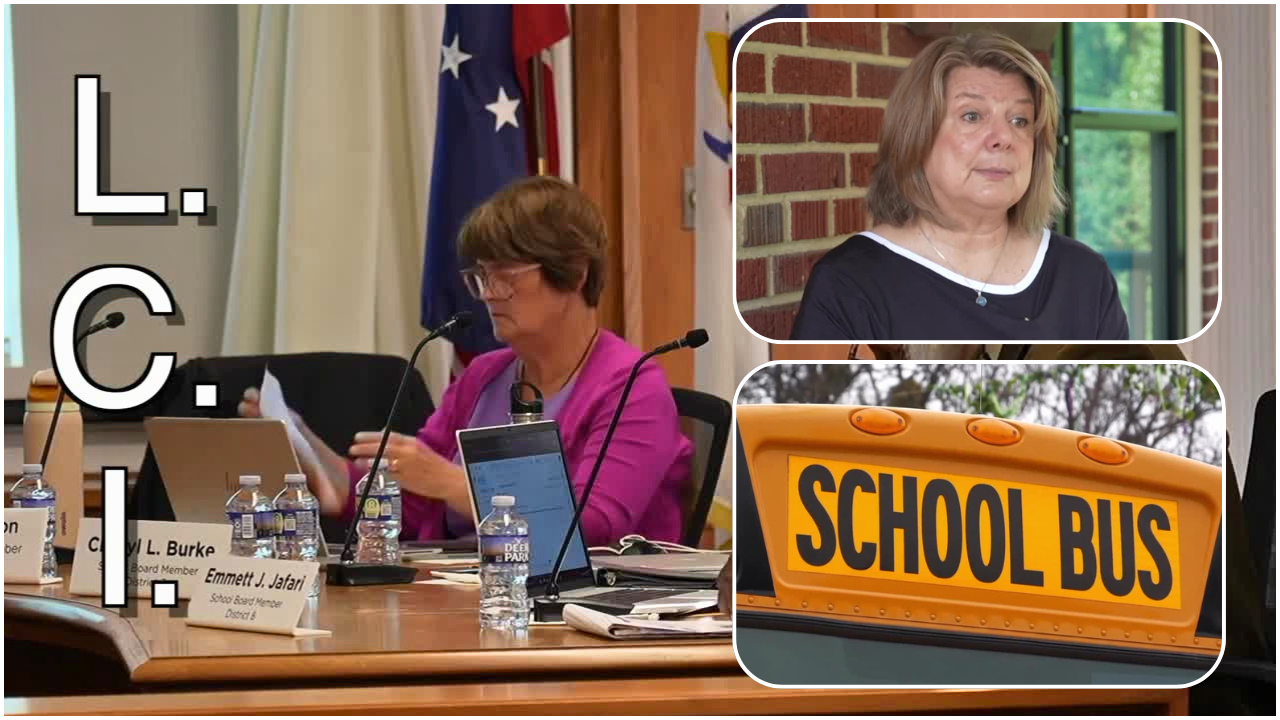


RICHMOND, Va. — If you have ever sat through a Richmond Public Schools budget meeting or school board discussion, you have almost certainly heard the acronym LCI. It comes up dozens of times each year — and more recently, as RPS asked Richmond City Council to help fill an $8.9 million state funding gap.
"We're so disadvantaged by the LCI calculation, and that has real tangible effects," a city council member said.
But what does it actually mean — and how does it impact students and teachers?
LCI stands for Local Composite Index. Dr. Kim Bridges, a former Richmond school board member who now teaches graduate students about LCI at VCU, said the formula is both complicated and old.
"It's been around since the 70s and it hasn't changed," Bridges said.
The process begins with another acronym: SOQ, or Standards of Quality. State leaders first determine how much money a school division needs to meet its Standards of Quality — things like how many teachers or principals are required. The LCI formula then determines who pays what share of that cost.
"It really helps the state determine how much should the state kick in and how much should the locality kick in," Bridges explained.
The formula is simple in concept: the lower a locality's LCI percentage, the more the state pays.
Calculated every two years, the LCI formula is based on three factors: property value, which accounts for 50% of the calculation; gross income, which accounts for 40%; and taxable retail sales, which account for 10%.
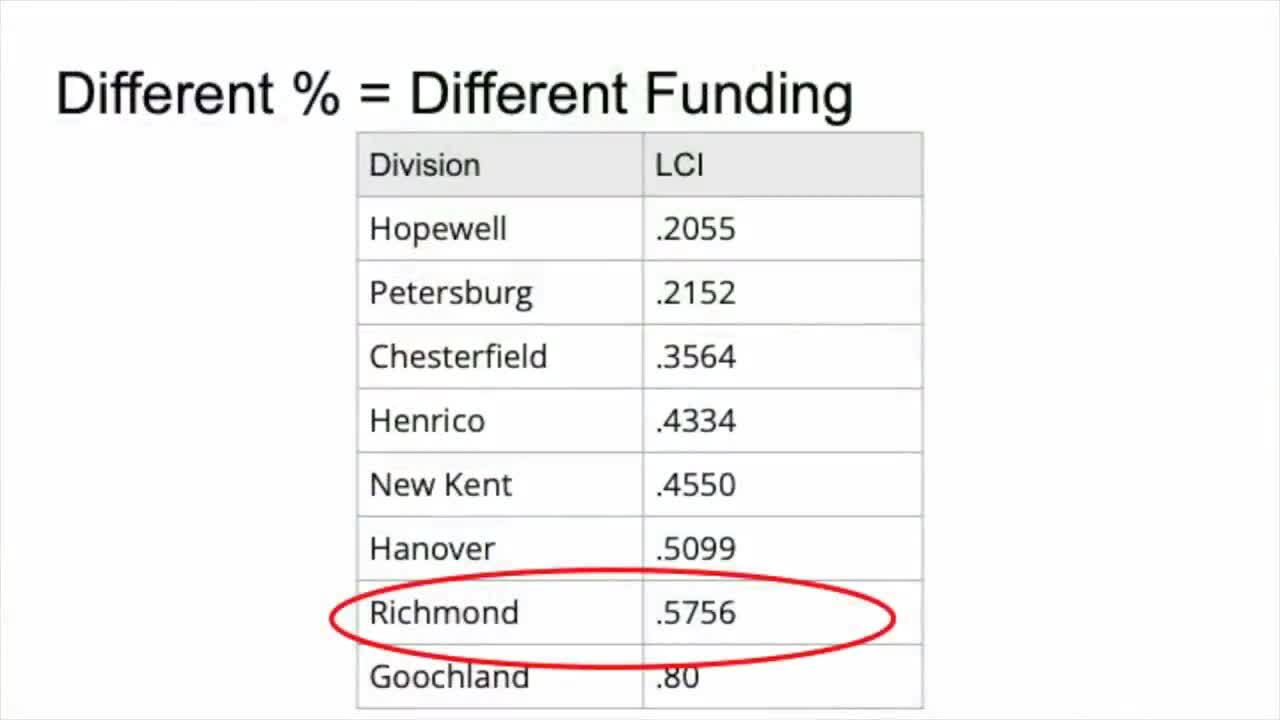
Richmond's LCI currently sits at .5756 — among the highest in the region.
"Richmond's LCI is vastly different. The most recent one is 0.57. That puts it above Henrico, Hanover, Chesterfield," Bridges said.
A higher LCI means Richmond is expected to contribute more of its own money to school funding. But Bridges said the formula does not fully account for Richmond's unique challenges, including a large number of tax-exempt properties within city limits.
"The biggest dynamic that I think Richmond shares with other places where the LCI is something that they wish were different is that it doesn't necessarily reflect the needs of the student population," Bridges said.
Because the LCI directly affects a school district's ability to hire and retain staff, there have long been calls to change the formula. But Bridges said reform has consistently faced resistance.
"It's hard to move the needle on equity with this formula because there's a perception that some localities will be disadvantaged if other localities end up getting more money from some kind of formula adjustment," Bridges said.
There is ongoing discussion at the state level about overhauling how Virginia provides funding assistance to local school divisions, including a potential rethinking of the LCI formula.
CBS 6 is committed to sharing community voices on this important topic. Email your thoughts to the CBS 6 Newsroom.
Watch for Joi Fultz's reporting on CBS 6 and WTVR.com. Have a story idea or tip for Joi? Email her.

-
-
Eat It, Virginia! with Scott and RobeyUntold with Catie Beck
-
-
-
This story was initially reported by a journalist and has been converted to this platform with the assistance of AI. Our editorial team verifies all reporting on all platforms for fairness and accuracy. To learn more about how we use AI in our newsroom, click here.
 Facebook
  TikTok
  YouTube
 Blue Sky
 Instagram
 Threads
 X
X