


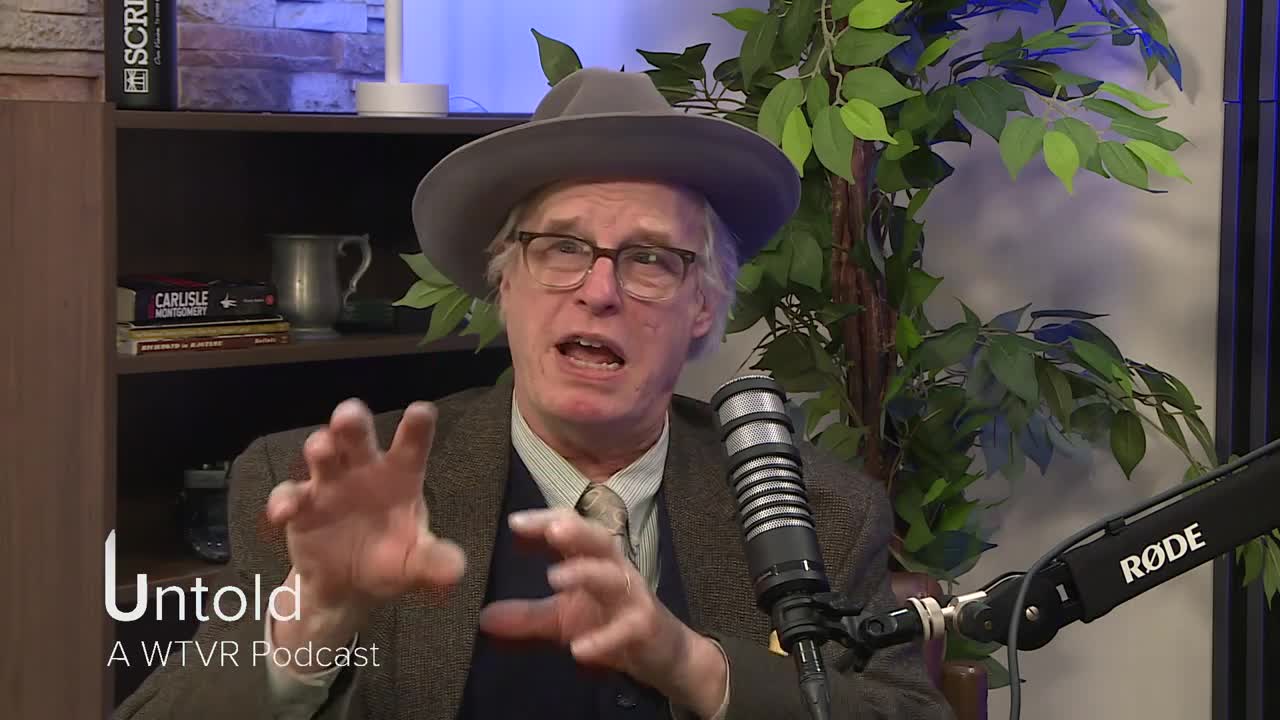

RICHMOND, Va. — Few people know more about Richmond’s nooks and crannies than Harry Kollatz Jr. The Central Virginia native has spent the last three plus decades at Richmond Magazine, exploring the city’s bygone eras and its culture, in addition to spotlighting the ever-expanding local arts scene.
“Everything comes from somewhere, and that's what I enjoy doing, as far as I can, delving into the origin story of people and places,” said Kollatz.
The writer/historian, wearing one of his trademark hats, sat down with Catie Beck for the most recent episode of ‘Untold – A WTVR Podcast.’ They took a deep dive into the River City’s past, present, and future, including the magnetism Richmond seems to have in both attracting new residents, and getting those who have left to one day return.
“So much of Richmond was built before the automobile, and/or grew as a result of streetcars, which, you know, traveled at a breakneck speed of 20 miles an hour,” said Kollatz. “So, Richmond is a place to appreciate, to observe. I walked to work for 20 years, zigzagging through the alleys of the Fan… and I always saw something different.”
Beck and Kollatz discussed everything from the rise of Scott’s Addition to the removal of the Confederate statues from Monument Avenue to the opportunities that might emerge if the city were to develop more of its waterfront.
Along those lines, Kollatz spoke about his latest project, the West by Water exhibit currently on display at The Valentine.
"You learn a little bit about the history of the James River and Kanawha Canal and its importance to the city and perhaps how it could be again in the future," said Kollatz.
Beck also asked Kollatz about how city leaders can make Richmond a more sophisticated and advanced city while also preserving its historic nature. He said embracing and supporting arts and culture is important, while also being more cognizant of the environment in future development.
“Let's be smart about it, let's make technology, you know, our friend in terms of what we can do with it in terms to make our lives better, not just for a few people, but for everybody,” said Kollatz. “There are people on social media that have not been to downtown Richmond since 1972 and they're really proud of that, but they don't live here really, and so, you know, let's make Richmond for the Richmonders that are here now and let's not turn into a turnstile city either.”
“We’re getting there. We’re getting somewhere.”
Read Harry in Richmond Magazine here, order Harry’s books here.
Subscribe to “Untold – A WTVR Podcast” on YouTube, Spotify, and Apple.
CBS 6 is committed to sharing community voices on this important topic. Email your thoughts to the CBS 6 Newsroom.
📲: CONNECT WITH US
Blue Sky | Facebook | Instagram | X | Threads | TikTok | YouTube

This story was initially reported by a journalist and has been converted to this platform with the assistance of AI. Our editorial team verifies all reporting on all platforms for fairness and accuracy. To learn more about how we use AI in our newsroom, click here.

