



Senators are calling for new legislation after millions of dollars in bets were placed on prediction market sites tied to U.S. air strikes on Iran and the death of the country's supreme leader.
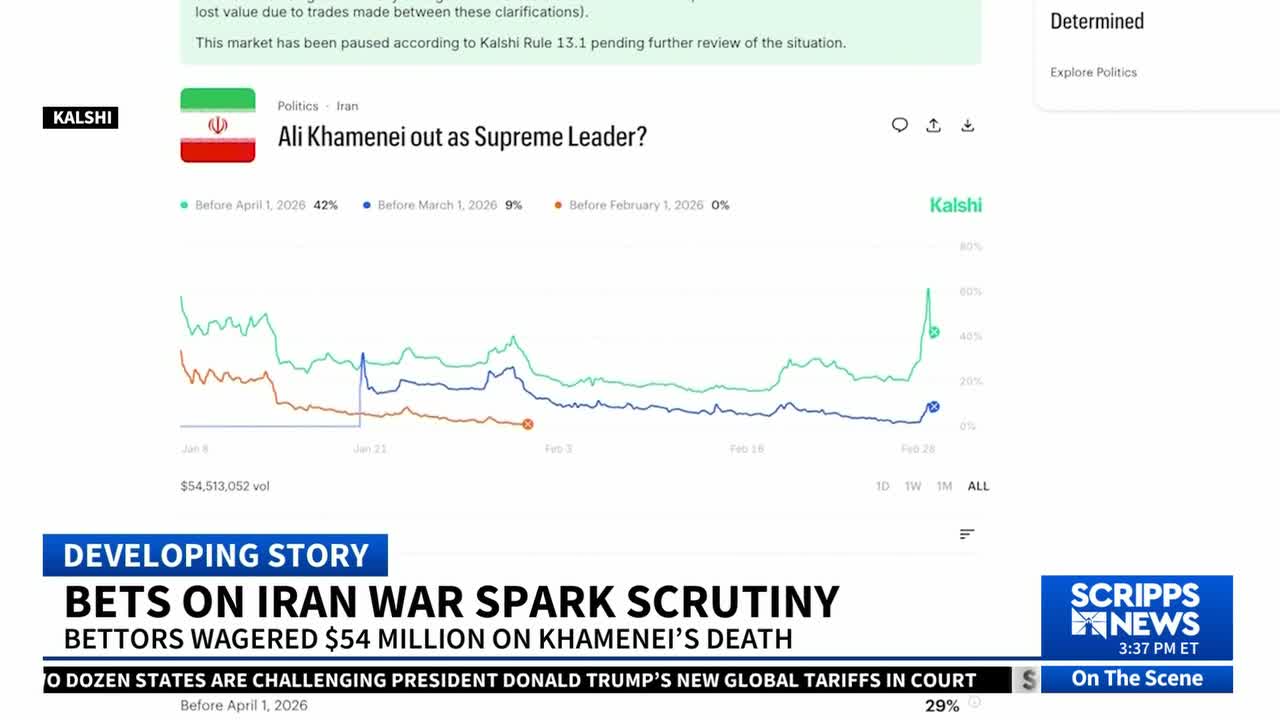
Users on a prediction market site called Kalshi placed bets predicting that Iran's Supreme Leader Ayatollah Ali Khamenei would be "out" by March or April 1. Those bets reached about $54 million, and when Khamenei was killed on Feb. 28, many users expected to collect their winnings.
But Kalshi froze the trades saying it does not allow transactions "directly tied to death." The company said the phrasing of "Khamenei is out as Supreme Leader" does not include him dying.
RELATED STORY | Are video games contributing to gambling problems?
The controversy is unfolding amid a broader rise in prediction markets, which allow people to bet on outcomes ranging from elections and weather to Taylor Swift's wedding date.
Economics Professor Alex Tabarrok at George Mason University said prediction markets are more accurate because they draw information from a wide group of people across the world and “in a prediction market you're putting your money where your mouth is.”
“In general, for prediction markets to work well, you want to aggregate a whole bunch of information from a wide variety of people, not just in the United States, but people abroad. And that's what makes these predictions accurate,” Tabarrok told Scripps News.
“Sure, people get a little bit worried when they think, ‘Oh, there was a prediction market on the death of Khomeini’ or something of that nature,” he added. “But let's remember, life insurance is a prediction. It's a bet on whether you're going to die or not. A car insurance is prediction on whether you're going to get into an accident or not, and there's always been ways in which people could potentially profit from causing a disaster and betting on it.”
Around the time of Khamenei's death, an intelligence firm found that six suspected insiders made $1.2 million betting on a U.S. strike on Iran. Most of those bets were placed within a day of the strikes, with some placed just hours before. One account won over half a million dollars.
The findings have raised concerns about insider trading on prediction markets. The central question is what stops someone in the U.S. military, for example, from betting on a future air strike they know is coming.
“It's good for the prediction market that insiders are making bets because that makes the information more accurate. If there's a problem – if the government doesn't want people in the military making bets, well, that's their problem. They need to solve that,” Tabarrok said.
IN CASE YOU MISSED IT | The Danny Moses Show: The truth about short selling, AI hype and meme stocks
On Thursday, Senators Jeff Merkley and Amy Klobuchar introduced a bill to block government officials at the highest levels from engaging in prediction markets.
"Perfectly timed bets on prediction markets have the unmistakable stench of corruption,” Merkley said in a statement.
The senators called on Congress to pass the End Prediction Market Corruption Act to "crack down on this bad bet for democracy."
