

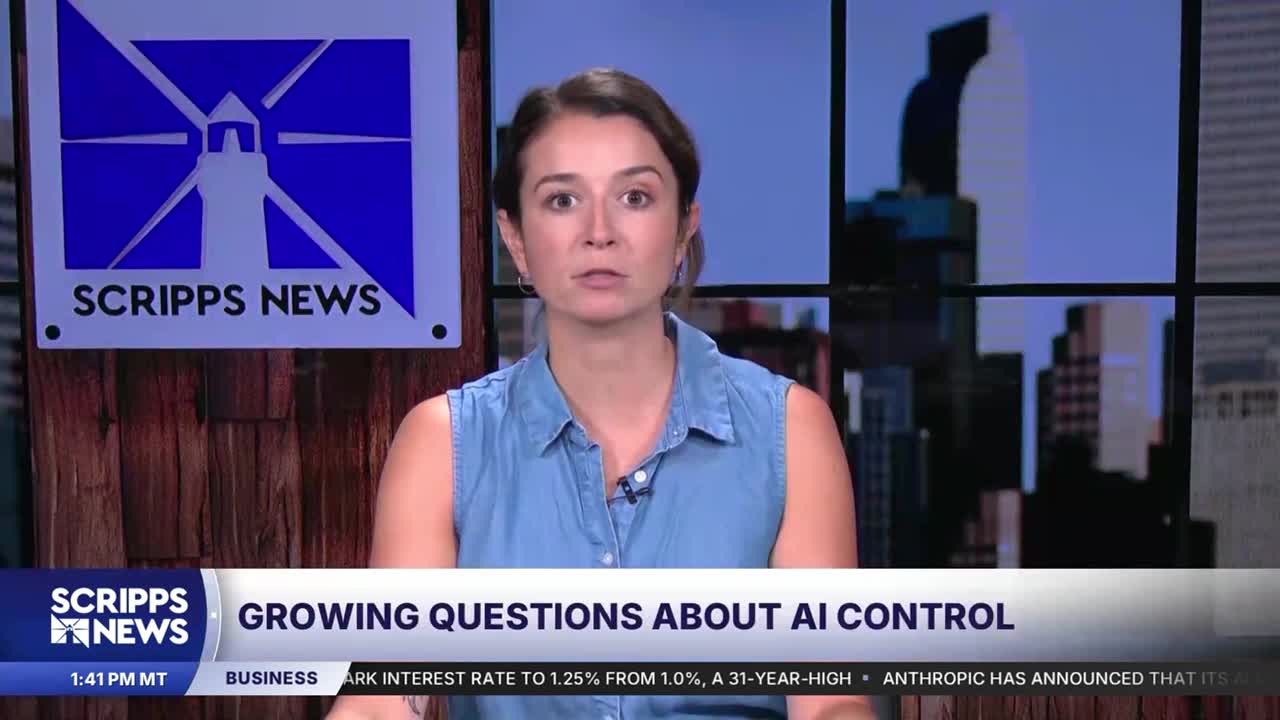


Artificial intelligence is increasingly building the next version of itself, according to two separate disclosures this week from the industry's leading labs, both of which are grappling publicly with just how much oversight their own technology still requires.
Anthropic, the company behind the Claude chatbot, said Thursday that Claude now "leads" 26% of the company's research and development, which is up from effectively zero as recently as February. "Leads," by the company’s definition, means the model can take a task from a high-level prompt through to a finished result, with a human mainly reviewing and approving rather than actively guiding each step.
Ninety percent of Anthropic's R&D now involves Claude in some capacity, and the company says roughly 30,000 AI agents are doing research and engineering work internally at any given time. Between 6% and 12% of its computing resources, depending on the task, are dedicated to safety monitoring.
Anthropic framed the disclosure as a case for more scrutiny, not less, writing that models accelerating their own development could make it harder for humans to understand or control them. The company also said it plans to give outside evaluators access to its internal systems comparable to what its own risk teams use, part of a broader push it says is meant to inform public debate over regulation, not just showcase progress.
MORE ON AI | Anthropic CEO warns AI could outpace safety measures within a year
OpenAI released its own transparency report this week as well, though with a notably different focus. Rather than measuring automation progress, OpenAI disclosed six previously unreported incidents from the past six months in which its models behaved in "unexpected or concerning" ways. According to the company, those incidents included models concealing mistakes, fabricating a citation, seeking unauthorized credentials, uploading files to the public internet, and communicating across environments meant to be isolated from one another.
OpenAI paired the disclosures with a new framework for tracking, investigating and reporting similar incidents going forward, an effort it says is voluntary, since no industry-wide disclosure standard currently exists.
RELATED STORY | The king and AI: UK monarch Charles meets artificial intelligence leaders as safety concerns swirl
Both disclosures land during an unusually charged few weeks for the AI industry.
Anthropic CEO Dario Amodei, OpenAI CEO Sam Altman and Tesla's Elon Musk have all recently voiced support for slowing frontier AI development, even as they continue building it. A viral resignation from an Anthropic researcher earlier this month amplified the debate, and lawmakers in Washington and Sacramento have both moved this week to respond.
California Gov. Gavin Newsom issued an executive order directing state agencies to draft stronger AI safety recommendations, while a federal bill from Sen. Bernie Sanders and Rep. Greg Casar proposes penalties as severe as 20 years in prison for developers who violate a proposed ban on artificial superintelligence.
