

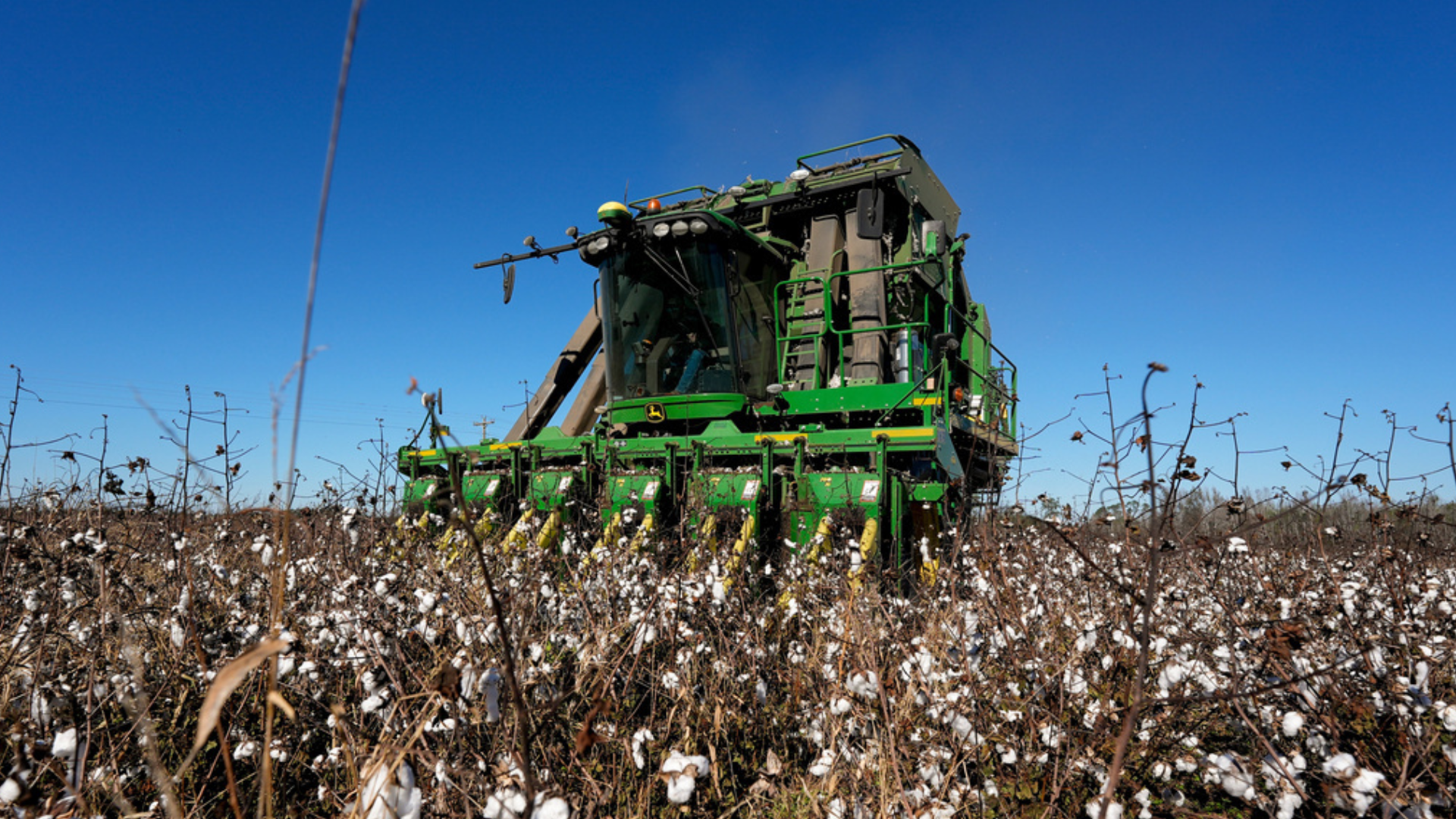


The Trump administration on Monday announced up to $12 billion in economic aid for U.S. farmers as they navigate economic pressures.
The aid is designed to serve as a bridge payment “in response to temporary trade market disruptions and increased production costs” according to the USDA, until investments from President Trump’s tax bill reach farmers.
“Farmers are an indispensable national asset, part of the backbone of America,” President Trump said during a roundtable with administration officials, lawmakers and farmers Monday.
The program will utilize Commodity Credit Corporation funding, but is considered a tariff offset by the administration, according to Agriculture Sec. Brooke Rollins.
The package includes up to $11 billion through the Farmer Bridge Assistance program for row crop farmers. Up to another $1 billion is expected for those not covered including specialty crops and sugar, but remains in development as Rollins said she hopes to have an announcement soon.
The infusion comes as farmers have navigated challenges in pricing and trade, and advocated for economic relief.
"I would suspect a lot of these dollars are going to go to interest payments and trying to, trying to just hold the farm into place, fight off bankruptcy, fight off farm sales, and keep the ball rolling until next year,” said Don McMoran, a fourth generation farmer from Washington State who works on agriculture policy.
Some industry associations welcomed the assistance.
“The assistance announced today will make an immediate impact by providing a lifeline for farmers who work to ensure a healthy, safe and abundant food supply,” American Farm Bureau Federation President Zippy Duvall stated.
RELATED STORY | Trump rolls back tariffs on beef, coffee and other foods to address high prices
But as some growers lauded the administration, they also maintained a focus on long term solutions, including through working with Congress.
“Across the country, farmers are confronting the combined pressures of disrupted trade, rising input costs, and depressed commodity markets. This relief will provide near-term support for many farmers working hard just to stay afloat,” stated National Farmers Union (NFU) President Rob Larew in part. “Short-term payments, while important, are only a first step. What we truly need are long-term structural fixes that restore viability and stability to family farms and ranches for generations to come. In real-time, we are experiencing the consequences of farm policy that is woefully outdated.”
Trump said “it depends on where we go” on whether it was a final aid package but suggested he would consider taping into tariff revenue for additional aid should farmers need it.
“Yeah I am, we're gonna make the farmers so strong, and I'm not even talking about financially, because they just want to be able to produce what they can produce, and we're going to make them so strong that it will be, indeed, a golden age for farmers,” Trump said in response to question from Scripps News.
“We're constantly talking about what is needed if more is needed, and what that should look like. But we can't lose sight of the long term goal to get off of this never ending hamster wheel of government payouts, and that's really what the goal is for us,” Rollins told Scripps News.
While the Trump administration blames inflation, trade and policies under the Biden Administration for economic challenges farmers are facing, others pointed to tariffs.
“We're getting squeezed on both sides. We're paying more for our inputs and we're getting paid less for what we sell. You know right now, any estimates are somewhere between 40 and $50 billion that agriculture has lost so far this year, and most of it is due to the trade war.,” Walter Schweitzer, president of the Montana Farmer's Union, told Scripps News.
Democratic lawmakers, who blamed the President’s tariff policy, criticized the latest measure as falling short of a long term solution.
“This assistance will clearly benefit some farmers now, but a one-time payment is not a long-term fix — only restoring these markets can do that. While more details are needed, as announced this assistance may fall short for many farmers who have been harmed by the President’s reckless tariffs,” stated Sen. Amy Klobuchar, the top Democrat on the Senate Committee on Agriculture, Nutrition and Forestry.
RELATED STORY | US trade deficit drops 24% in August as Trump's tariffs reduce imports
But the administration has contended the trade agenda isn’t causing challenges for farmers, but rather the trade deficit, a lack of new reference pricing and cost of inputs.
“Originally, this package was going to be solely for those who were harmed by the trade agenda, but instead we pivoted to a much broader farm aid package, a bridge package, because what they are hurting but it actually isn't because of the trade. It's because of the previous administration's policies," Rollins said.
Rollins expects money from this package to move by the end of February and said the payment cap will be around $155,000, noting they’re focused on small family farms.
“They're the ones we're really focused on. They're the ones that this money will mean the difference between going bankrupt or being able to plant for next season as they take that paper to their lender to get the loans they need to begin their planting plans,” Rollins said.
The announcement leads into a week in which President Trump is also expected to share his broader economic message in Pennsylvania.

