


RICHMOND, Va. -- November is National Epilepsy Awareness Month, a time dedicated to raising awareness about epilepsy to help people better recognize the signs, symptoms and treatment options available. Dr. Christine Baca, a neurologist and chief of the epilepsy division at VCU Health, came to the studio to share important information with our community. As the only Level 4 Epilepsy Center in the Richmond region, VCU Health offers the highest level of care connecting patients with experienced specialists and advanced treatment options.
What do you wish everyone knew about epilepsy?
One of the most important things I like people to understand is that epilepsy isn't rare. I think that’s a common misconception. 1 in 26 people will have epilepsy in their lifetime, and 1% of the population has epilepsy. In fact, 1 in 10 people can have a seizure in their lifetime.
Also, I don’t think people understand what epilepsy is. Epilepsy is defined by seizures, which are electrical storms in the brain. These electrical storms can create symptoms depending upon what network of the brain is involved. Patients have unpredictable seizures that are recurrent over time, and this can be potentially debilitating for people, but we also have many great treatments.
That's another thing I think is really important for people to understand. We have great treatments for two thirds of patients, and two thirds of patients respond to their first or second medication. They can live great lives with high quality and do many, many things in their life. For the one third of patients that maybe don't respond to the medications, we have an amazing toolkit of treatments, some of which involve additional medications, but there are also surgical treatments that we can offer.
Not all seizures look like what we see on TV. What are some signs people shouldn't ignore?
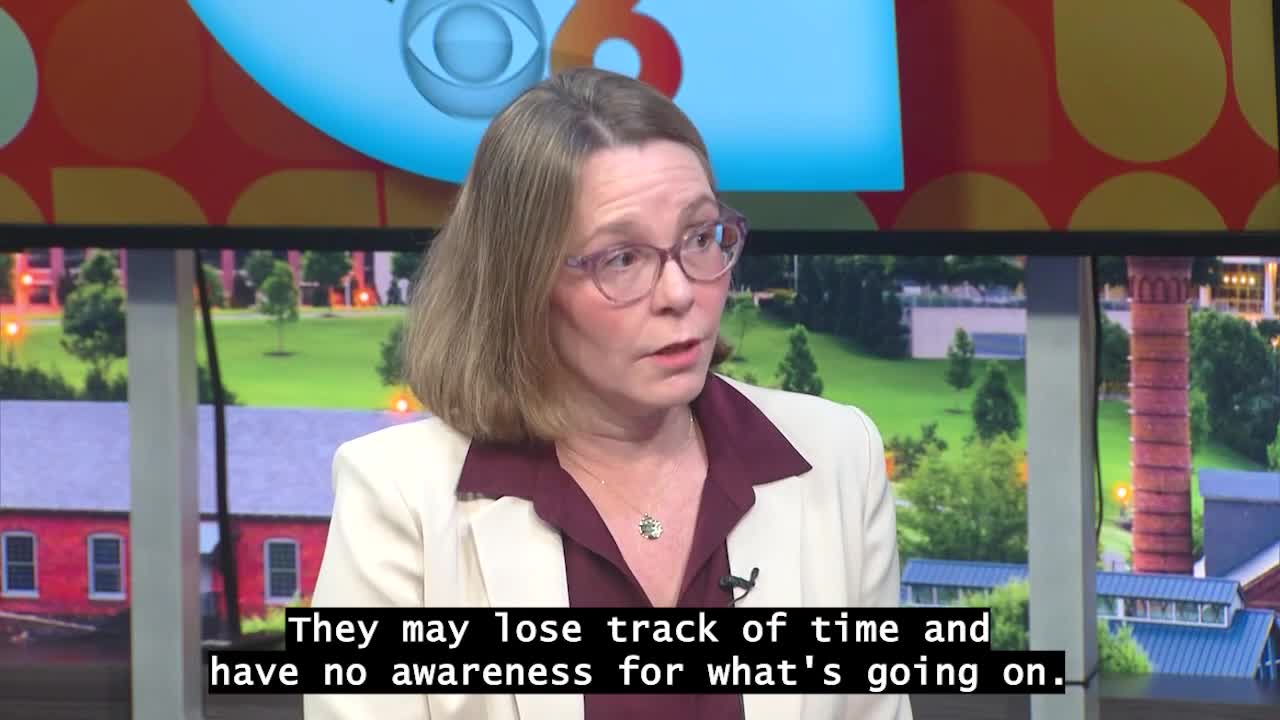
I think one message I'd like to get out there is not all seizures look the same. We often think of a seizure as seeing someone stiff and shaking or convulsing, but manifestations of seizures and the symptoms that somebody has, or the behavior that we may witness, really depend on the network of the brain involved – that electrical storm that I referenced before. Some symptoms that people may experience may be things such as staring. It may look like daydreaming. It may be a feeling of déjà vu or fear. People may actually think they're having a panic attack, but it's not a panic attack. It's a seizure. They may lose track of time and have no awareness of what's going on. So, it's really important that we understand the breadth of seizures is not just stiff and shaking. The symptoms for one patient may be different than for another patient.
For a given individual, those symptoms are pretty consistent across time. It's what we call stereotyped and most seizures last about 10 to 60 seconds. Some patients can have seizures once a day or once a week, and some patients can have them less frequently. Hopefully, with treatments, we can get patients seizure free.
If someone witnesses a seizure, what's the most important thing they should do?
The first thing you should do is make sure that person is safe. If they are having a seizure where they’re stiff and shaking, make sure they don't fall. Roll them to their side.
One misconception I've seen a lot and heard people talk about is putting something in their mouth. Do not ever put something in somebody's mouth when they're having a seizure.
The other thing that I recommend is try to keep track of how long it's going on. Now that can be a big ask, because it can feel very scary when somebody is having a seizure, particularly if somebody hasn't seen one before and it feels like an emergency. But do your best to keep track of how long it’s going on. Most seizures, as I noted before, last up to a minute. If a seizure is going on for greater than five minutes, that's a signal that we really need to get emergency help, and I recommend calling 911 in that case.
VCU Health is a Level 4 Epilepsy Center. What does that mean, and what makes care at VCU Health different for epilepsy patients?
We are accredited by the National Association of Epilepsy Centers (NAEC), and Level 4 is the highest designation, meaning we offer the most comprehensive care. We see patients across the spectrum in terms of disease acuity. And we’re able to provide thorough evaluation, treatments and diagnostic testing. We have an epilepsy monitoring unit at VCU Health where we record patient’s seizures in the hospital, in a safe place. This helps us understand more about their seizures and make sure we're pairing the right treatment with the right patient.
Over the course of my career, I often see patients too late. They've been suffering for years, and they haven’t had the opportunity to think about treatments. We want to see patients across the lifespan. It doesn't matter where they are in their disease. We want to see them as early as we can and make sure we're doing what’s right for them, offering them the best treatments.
To learn more about epilepsy care at VCU Health, visit vcuhealth.org.
 Facebook
 Instagram
 Threads
 Blue Sky
 X
 TikTok
 YouTube
