

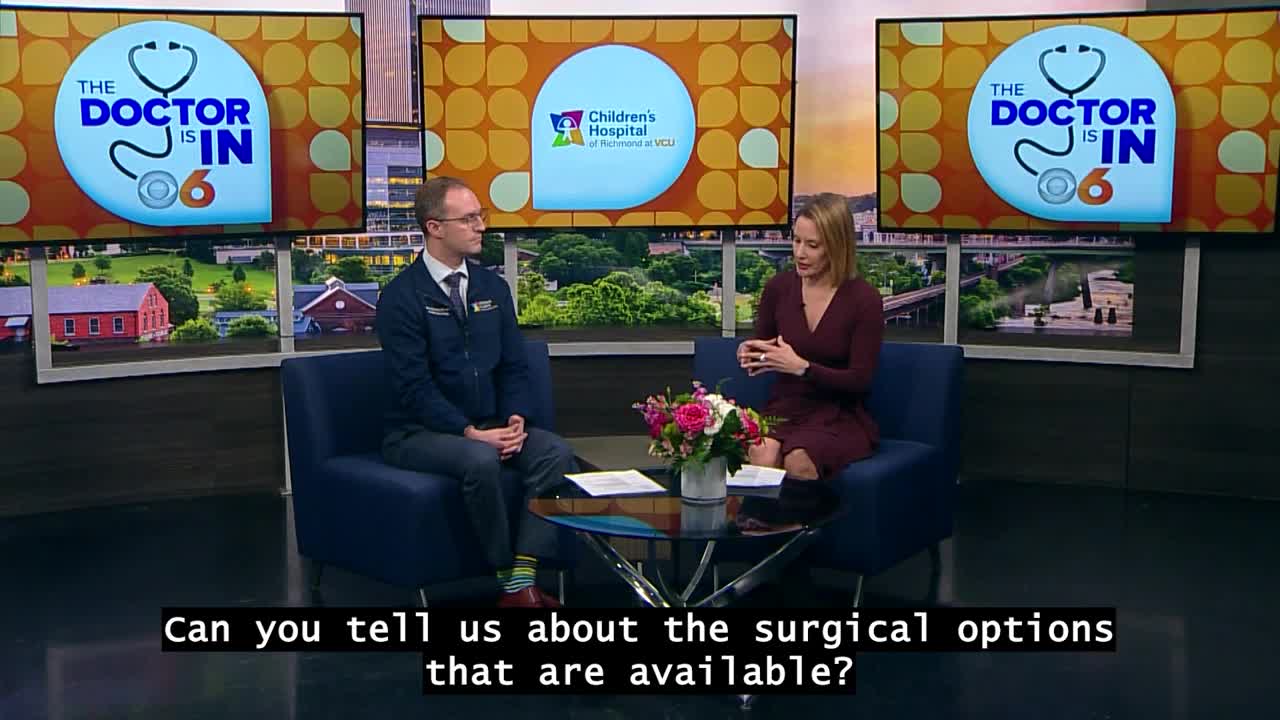

RICHMOND, Va. -- Dr. Samuel Casella, interventional cardiologist and director of pediatric catheterization at Children’s Hospital of Richmond at VCU answers these 4 questions about congenital heart defects and procedures are becoming less invasive and have better outcomes.
This segment is sponsored by Children's Hospital of Richmond at VCU.
What are congenital heart defects and how common are they?
Congenital heart defects are problems with how the heart forms before a child is born. They can consist of things like holes in the heart or tight or leaky valves or narrowing of the blood vessels that are leaving or returning to the heart. They occur and about 1 in 100 live births, and they can range in severity. Some heart defects are very minor and they'll have no symptoms at all. Other patients can have heart defects that are so severe they might need emergency surgery on the day that they're born.
Can you tell us about the surgical options that are available that might be necessary to repair a heart defect and the types of really the innovations that are happening at CHoR?
Up until recently, there were limited options and open-heart surgery was really the only way we could treat most defects. But as technology has advanced, we've been able to offer more things through less invasive means. With the invention of cardiac catheterization, we're able to go in through a tiny prick in the skin and we can then navigate through the patient's blood vessels and do things like close holes. We can also open narrow valves, widen narrow arteries and we can even actually replace valves through catheters without ever having to open the patient's chest.
What other types of groundbreaking procedures are you performing at Children's Hospital of Richmond at VCU?
One groundbreaking procedure involves patent ductus arteriosus. This is a connection that's supposed to be there in fetal life, and it's supposed to close after birth. But in premature infants, like those born between 22 and 23 weeks of age, that hole will not close in about 50% of patients. In the past, we only had medicines or surgery to treat those babies. The medicines only worked about half the time and surgery was associated with a lot of complications. But in 2019, the FDA approved their first device that we could close these holes with catheters.
Since then, we've been doing the procedure at CHoR and we've done it at the bedside for a great number of patients. We're able to close those holes 99% of the time using that device and avoiding open-heart surgery. It’s just so gratifying.
What other unique services does your heart team provide?
We offer the full gamut of services needed for a world-class pediatric cardiology program. We have amazing congenital heart surgery, and that's both for children and adults. We have interventional catheterization, which I direct, but we also have specialists for the electrical conduction of the heart which is called cardiac electrophysiology and advanced imaging like MRI and echocardiography.
We have a team of specialists who are really focused on diagnosing heart disease in patients before they're ever born. That way, we can tell families that their child has a heart problem, we can counsel them, and we can have all the resources ready to take care of that child before the day that they're born.
Children's Hospital of Richmond at VCU is located at 1000 East Broad Street.
For more information, give them a call at (804) 828-2467 or you can visit the website chrichmond.org.
This segment is sponsored by Children's Hospital of Richmond at VCU.
