


RICHMOND, Va. -- It's now 20 years since the development of a simple but powerful tool that's helped transform how liver disease is detected. Often called a silent condition, liver disease can progress without symptoms, but early detection is key to improving outcomes. At VCU Health, that effort is deeply rooted in innovation. In fact, the widely used Fibrosis-4, or FIB-4 index, was developed right here by Dr. Richard Sterling, chief clinical officer at the Stravitz-Sanyal Institute for Liver Disease and Metabolic Health. In a recent news segment, he shared how the tool came to be, why it continues to play such an important role in patient care and what people should know about protecting their liver health. Watch the interview and explore the questions and answers below.
You invented the FIB-4 index - why did you see a need for this kind of tool, and how has it changed care?
More than 20 years ago, the best way that we had to determine the amount of scarring, or fibrosis, in the liver was by performing a liver biopsy. At that time and during my training, I was doing about 20 liver biopsies a week. When I was doing them, I thought, “Who had the bright idea to stick a big needle into a very vascular organ?” That led to the development or my interest in developing a noninvasive way to see if someone had liver fibrosis.
Liver disease is often called “silent”. Who should be concerned about their liver health right now?
Well, as a hepatology or liver expert, I think everybody should be concerned about their liver. But there are people that should be more concerned. For example, anyone who might have been at risk for developing viral hepatitis, such as someone who had a history of illicit drug use or even intranasal drug use, or snorting. Even if it was 20 or 30 years ago, they should be checked to see if they have hepatitis B or C.
Today, the most common liver disease is metabolic dysfunction-associated steatotic liver disease (MASLD), formerly known as nonalcoholic fatty liver disease (NAFLD). People who are obese or have Type 2 diabetes or hypertension are at increased risk.
How can a simple calculation from routine blood work help doctors detect liver disease risk without invasive testing?
Well, it's very easy because the big advantage of the FIB-4 index is that it can be done with routine laboratory studies, and it doesn't require anything special. All you need is to have liver enzymes, your age and the platelet count, and you can calculate the FIB-4 index. It doesn't need to be done by a specialist. It could be done by a primary care doctor or any physician. And it can even be done by the patients themselves, if they have access to those labs. They can go online and calculate their own FIB-4.
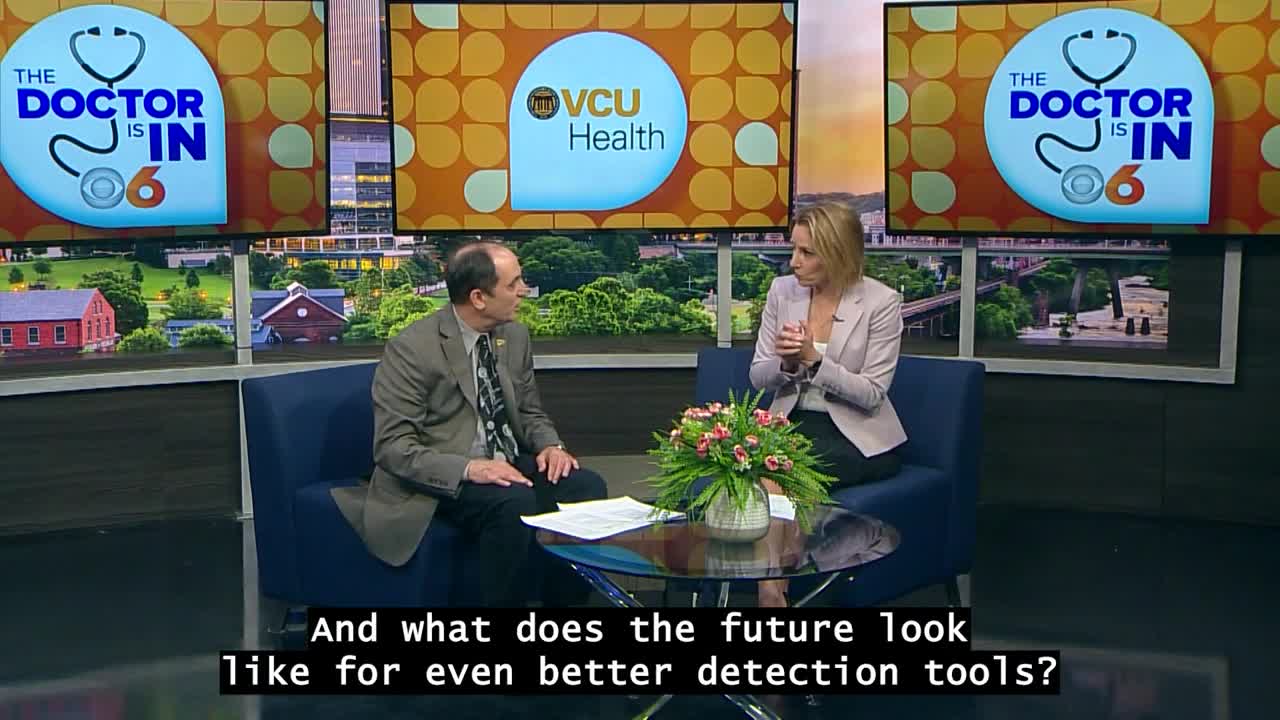
What should viewers do if they are concerned, and what does the future look like for even better detection tools?
I think it is important to empower patients to advocate for their own liver health. The first thing to do is ask their doctors when they see them, “What is my FIB-4?” If they don't have the blood work to be able to calculate it, ask the doctor to order it as part of their routine yearly testing. Once they have that information, if the FIB-4 is low, and we typically use a number of 1.3, then that can be monitored over time. You can have it done again, maybe at your next visit in a year.
If that FIB-4 score is elevated, you should ask the doctor to be referred to a liver specialist, or a gastroenterologist, to be further evaluated.
For more information, visit liverinstitute.medschool.vcu.edu.
