

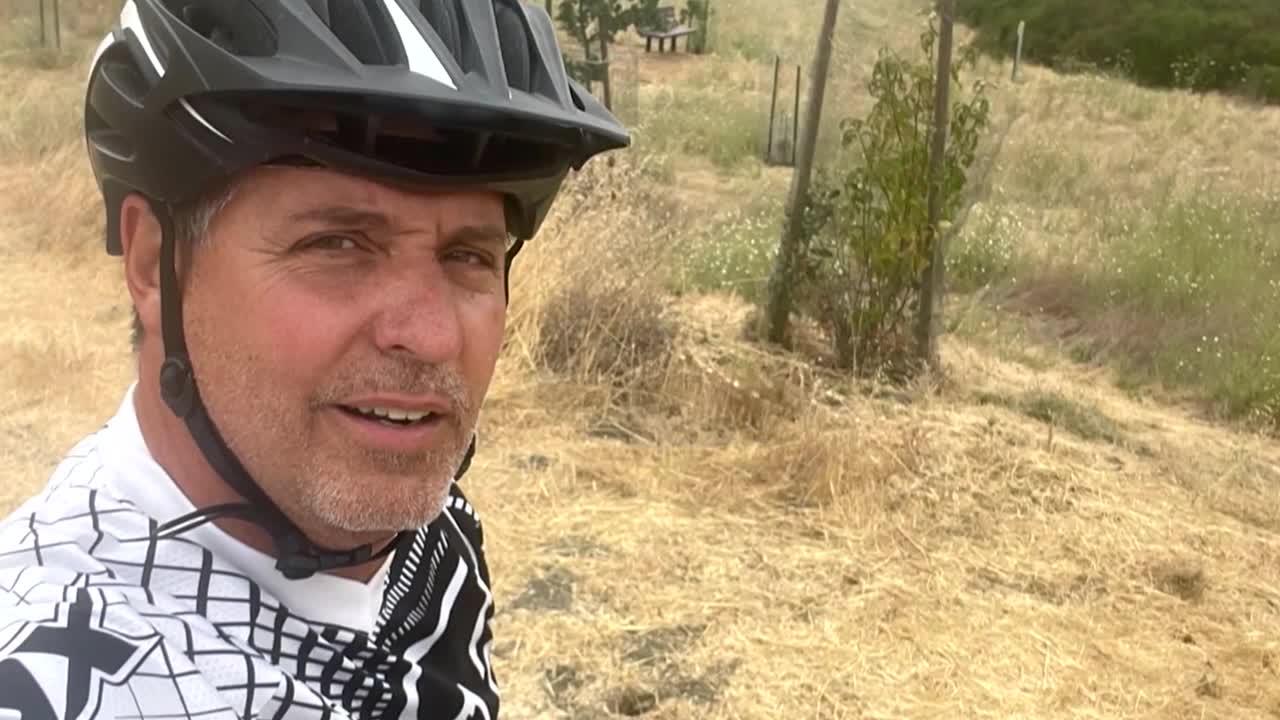


A mountain biker in his late 50s successfully overcame atrial fibrillation using a new heart procedure called pulse field ablation, as doctors report rising cases of the irregular heartbeat condition among younger patients.
Jerry Veggian enjoys mountain biking and other activities, but in his late 50s, he started experiencing concerning heart symptoms.
"Heart kind of beating erratic. It just kind of came and went. It wasn't something that was constant," Veggian told CBS News' Michael George.
I was diagnosed with atrial fibrillation, an irregular heartbeat that can lead to blood clots, stroke and heart failure. About 5 million Americans have AFib, and that number is expected to grow to more than 12 million in the next few years.
"We are starting to see a rise in atrial fibrillation in younger populations," said Dr. David Singh, a cardiac electrophysiologist at El Camino Health.
Singh says this could be due to more patients under 60 having risk factors like obesity, high blood pressure and diabetes, or more patients using wearables that can pick up irregular heartbeats like an Apple Watch.
"The question when we see that rise in prevalence, is that a true rise or could it be due to some other factor? It's probably a combination of both. We're both detecting it more because we have a better ability to detect the disease and an actual rise in the prevalence because people are just sicker at a younger age," Singh said.

CBS 6 is giving you a voice. Have a news tip or concern in your community?
Connect with WTVR: newstips@wtvr.com
Veggian tried medication for a few months, but his Apple Watch showed he was still having AFib. Singh recommended he have a pulse field ablation, which allows doctors to target the area of the heart causing the problem.
"What this does in many patients is it puts the AFib into remission. The most exciting thing that we have now is the development of new technologies for ablation that have made the procedure a lot safer and more effective," Singh said.
"Excellent. I had no episodes. Heart's been working good," Veggian said.
Three months after his ablation, Veggian is grateful that his heart is staying in normal rhythm.
Doctors say anyone can develop AFib, but the risk increases with age.


This story was initially reported by a journalist and has been converted to this platform with the assistance of AI. Our editorial team verifies all reporting on all platforms for fairness and accuracy. To learn more about how we use AI in our newsroom, click here.
