

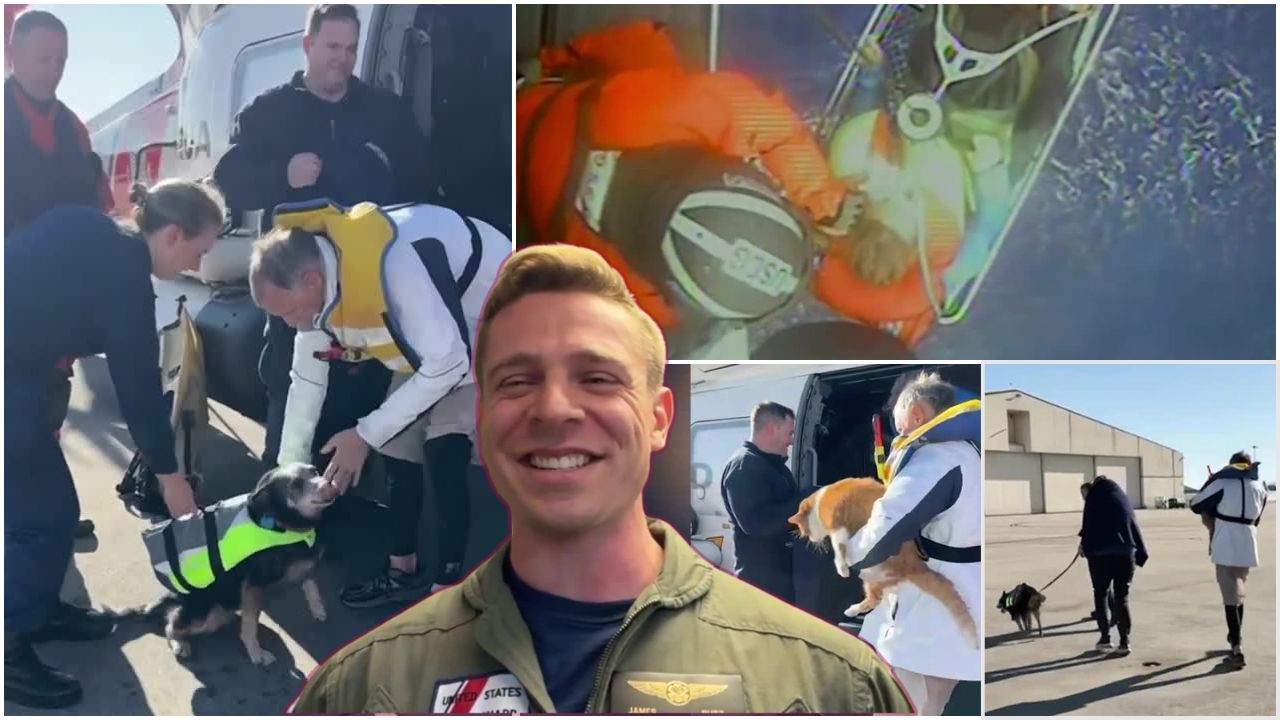


CAPE HATTERAS, NC — The U.S. Coast Guard saved two passengers along with their dog and cat from a 40-foot catamaran in distress 65 miles off the North Carolina coast last week.
The rescue marked a milestone for Aviation Survival Technician 2nd Class James Butz, who has been a rescue swimmer for four years but had never rescued pets before Tuesday's operation.
"It was my first dog and my first cat," Butz told WTKR. "I'm stoked to get them on the same case here; it was awesome."
The four-person Coast Guard helicopter crew from Air Station Elizabeth City responded to a distress call early the morning of Dec. 30 from passengers aboard the catamaran approximately 65 miles off Cape Hatteras. The vessel had encountered multiple problems that created a dangerous situation.
According to the Coast Guard, the catamaran had a torn jib sail but was initially able to make progress toward land using its diesel engine. However, conditions deteriorated when the couple discovered a small hole in the vessel and the weather worsened to include up to 18-foot seas. The passengers then activated their Emergency Position Indicating Radio Beacon (EPIRB) to signal for help.
The rescue crew faced challenging conditions during the approximately one-hour flight from their base.
"It was about 30 to 40 mph winds. It was about 10 to 15-foot seas," Butz said.
Once on scene, Butz entered the water and swam to the boat where the passengers and their pets were waiting. The rescue required careful coordination to safely transport both humans and animals.
"We elected to have the first survivor take the cat with them, so we ended up putting the cat in a dry bag to keep it safe," Butz explained. "And then after that, I swam back to the boat, and the second survivor was ready to go, and this one had a dog. Again, they were really well prepared. The dog had flotation as well, so it made our job super easy."
The operation required teamwork from the entire crew, with Butz in the water, pilots maintaining helicopter stability, and a flight mechanic operating the hoist system to bring everyone safely aboard.
Butz praised the passengers for their preparedness, particularly their use of proper safety equipment that enabled the rescue.
"Having a working EPIRB like these people did, having proper flotation is very key to safety," Butz said. "It's a life changer, especially out here. They call it the Graveyard of the Atlantic for a reason. Even the most prepared mariners, things go wrong really fast."
Butz said rescuing pets represents a rite of passage in his profession.
"We do it for a reason, it gives us purpose," Butz said. "To be able to go down and help those in their worst times, I couldn't ask for anything more. I'm glad they get to spend New Year's dry and safe. It's a great way to ring in the New Year."
📲: CONNECT WITH US
Blue Sky | Facebook | Instagram | X | Threads | TikTok | YouTube


This story was initially reported by a journalist and has been converted to this platform with the assistance of AI. Our editorial team verifies all reporting on all platforms for fairness and accuracy. To learn more about how we use AI in our newsroom, click here.
