

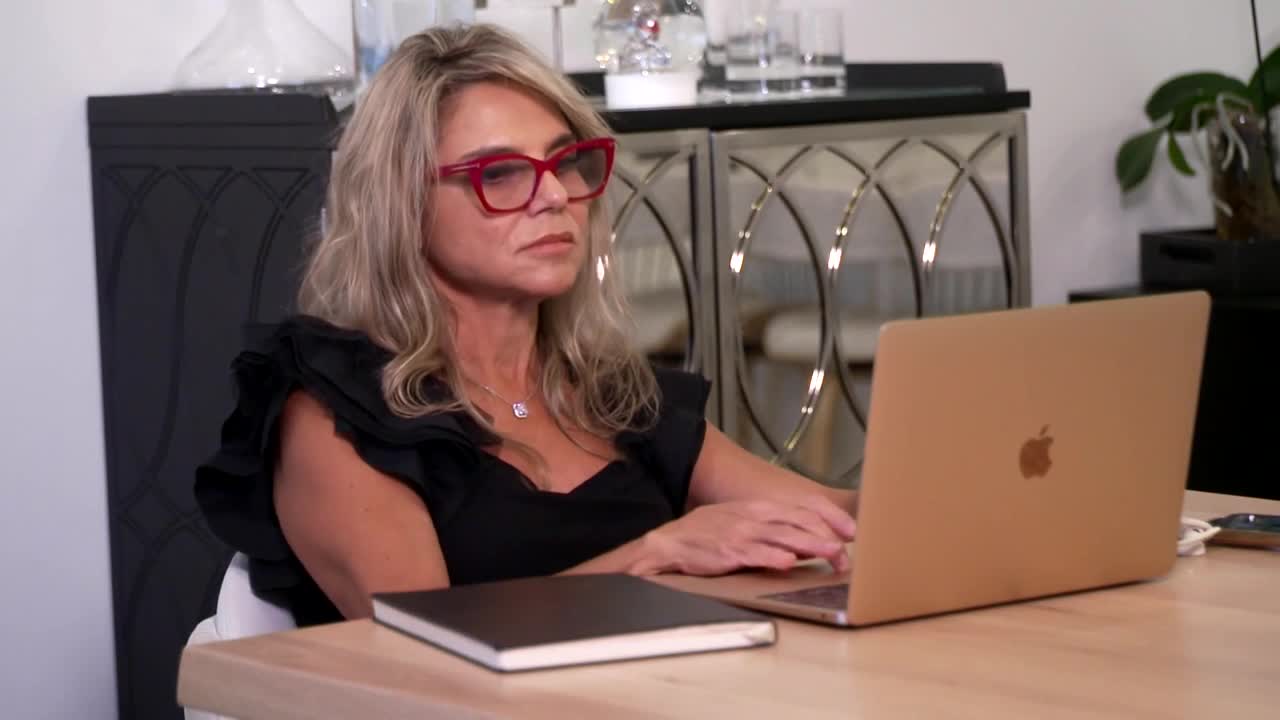


DELRAY BEACH, Fla — This time of year can be particularly difficult for people struggling with loneliness, an issue that has grown significantly in recent years. For Delray Beach, Florida resident Clemencia Carroll, the holidays used to amplify feelings of isolation.
"Life and socially everything is about happiness and family and when you don't have that it hits you hard," Carroll told CBS News' Cristian Benavides.
Carroll, who is 59, struggled with loneliness for the past 15 years. She lived far from family members and when she felt alone, she started to distance herself from loved ones.
"You feel hopeless, you feel worthless," Carroll said.
Her experience reflects a growing national trend. Forty percent of Americans 45 and older are lonely, according to a new AARP survey — that's 5% higher than when the survey was last conducted in 2018.
"People are reporting fewer friends and less involvement in groups and things of that nature," said Heather Nawrocki, vice president of Fun and Fulfillment at AARP.
The key predictors of loneliness include smaller social networks, a declining number of friends and mental health diagnoses.
According to the survey, there is also a gender gap, with men reporting they are significantly lonelier than women — 42% versus 37%.
"When we ask men about their participation in community activities, they seem to have less involvement, less people in their lives," Nawrocki said.
Finding community can be key in overcoming loneliness. For Carroll, therapy, moving closer to family and opening up her social circle has helped.
"Try to find somebody — anything that will lift you up — a friend, a neighbor that would give you purpose," Nawrocki said.
Carroll now spends part of her free time doing volunteer work and caring for her two rescue dogs, which has given her a sense of community and purpose.
The survey also found that loneliness rates were higher in rural versus urban areas, as well as in lower socioeconomic communities.
"People probably never speak to me again for the rest of their life," Schubring recalled about the pushback he received.
"You may have had the last laugh on that one," I noted.
"Yeah, probably did," he replied.
Schubring Jr. remembered the difficult times: "I remember getting called a lot of bad things, but my dad never wavered."
Today, Schubring's children work with "The Sons and Daughters of Pearl Harbor Survivors" to ensure the story of the attack continues to be told after the last survivors are gone.
"Lest we forget, is our motto," Crossley said.
When asked what they don't want people to forget, the family was unified in their response.
"The sacrifice," Schubring Jr. said.
"Absolutely," Crossley agreed.
"I mean, the sacrifice that was given you can't put a price on that, and you can't forget it," Schubring Jr. continued.
As we mark this day that still lives in infamy, Schubring's words serve as a powerful reminder: "You can't forget it." And for all who were there, two more words are equally important: "Thank you."


This story was initially reported by a journalist and has been converted to this platform with the assistance of AI. Our editorial team verifies all reporting on all platforms for fairness and accuracy. To learn more about how we use AI in our newsroom, click here.
